Volume 1
Herodotus : the fourth, fifth, and sixth books / With introduction, notes, appendices, indices, maps by Reginald Walter Macan.
- Herodotus
- Date:
- 1895
Licence: Public Domain Mark
Credit: Herodotus : the fourth, fifth, and sixth books / With introduction, notes, appendices, indices, maps by Reginald Walter Macan. Source: Wellcome Collection.
494/528 (page 366)
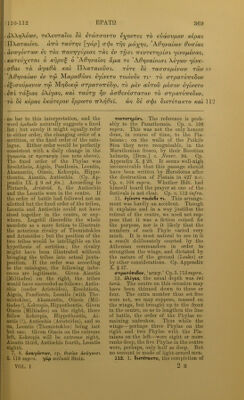
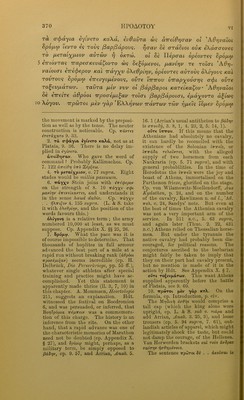
![VI 'A(j)iBvato9’ 7T/3o<? TOVTOV €\6mv cXcyc rdSe. “ip aol pvp KaWifxa'^e eart ^ KaraBovXioaaL '‘A6r}va<i 7) iXev6epa^ Trotij- 10 cravTa fivrjfxoavva XiirecrdaL e’9 top dirapra dpOpcoTToop /Slop ola ovSe 'AppLoBi6<; T€ Kal 'ApLaroyelrcop {XeiTrovai']. pvp yap B^ ov iyepoPTO AOrjpaLOi e? kLpBvpop T^Kovai pbeyLcrrop, Kal rjp p,ep ye v7roKV7/ru)(7L TOLCTL IS/lrjBoLCTi, BeBoKTai rd ’rreiaopraL irapaBeBopLepoL ^iTTiriy, rjp Be TrepLyeprjrai avrr] r] 7r6Xi<;, oltj re ean irpairr} tmp 15 ^XXrjPLBcop ttoXlcop yepecrdai. kco^ S)p Bp ravra old re eart yepeadai, kol ko)<; €9 ere roi tovtcop dppKei rdiP irp^ypidrcop to Kvpo^ e-^etp, PVP ep'^opbai ^pdacop. ppuecop tmp arparpySiP eoprcop BeKa Bi'ya y/poprai al ypcbpLat, rcop puep KeXevoPTWP roiP Be ov crvp^^dXXetp. pp puep pvp pip crvpi^dXcopiep, eXiropt^aL rupa errdenp 20 pceydXpp BiaaeLo-eiP epiTreavvaav tcl ^AOppaicap ^popppiara ware pipBicrat' pp Be crvpi^dXcopiep TrptP tl Kal craOpop ’AOppaicop piere^- erepoio-L eyyepeaOai, Oecop rd tcra pepiopreop oloi re elpiep irepiye- peaOaL rfj avpb^oXfj. ravra o)P irdpra 69 ae pvp relpeu Kal ck (xeo pprprai. pp ydp erv ypoopip rfj ipup irpoaOfj, ean rot irarpA 25 re eXevdepp Kal iroXi^ irpcorp rSip ep rfj 'EXXaSt* pp Be rpp rcop follow that the statement in the ’A8. To\. is based on historical testimony or tradition, as distinct from inference. The inference made in the nineteenth cent. P.c. may have been anticipated in the fourth cent. A.c. Cp. Appen- dices IX. § 13, X. § 5. 8. 4X0WV seems to carry out the assumption that the Polemarch had not been present at the previous council or debate : and so do the terms of the speech which follows. rdSe. This speech appears to be coloured by later ideas ; at least it may be doubted whether Miltiades would have shared the (later) popular view of the services of Harmodios and Aristo- geiton to the cause of liberty (cp. Thuc. 6. 54, and the Lives, Marcell. § 2, Anonym. § 1). The future augured for Athens may be thought unlikely before the event. There is, however, special point in the allusion. These Ge- phyraeans (5. 57 supra) were from Aphidna, like Kallimachos himself (Plutarch, Moral. 628), and in later times at least the Polemarch conducted the festival in their honour, ’Ad. ttoX. c. 58. The argument of Miltiades seems rather belated, if first urged at Vrana. (Cp. the case of Eretria, cc. 100, 101 supra.) It does not belong to Hdt.’s method to inform his hearers (or readers) from what source he derived knowledge of this intimate conference. He is, how- ever, rarely at a loss on these occasions, cp. 4. 137, 5. 49 supra, 3. 80, etc., etc. Iv crol reappears in the appeal of Themistokles to Eurybiades, 8. 60. Cp. ai, iK aio infra, and with o5 #7. ’Ad. cp. itAKlv dpxaLordrrjv, c. 106 supra. 11. Xetirovcri seel. Stein. 14. irpwTT]. Is this prophecy or his- tory ? 17. vvv ^pxopai 4>pdo-(ov. This in- formation might be useful for Hdt.’s public, but could hardly have been necessary from Miltiades to Kalli- machos. 19. (rrdo-iv. The justice of this ex- pectation (or reflection) is shown by the story of the shield, cc.' 115, 121- 124, and would in any case have been obvious in the light of Eretria, c. 101, Aigina, c. 49, and the state of jiarties in Athens itself. 22. 0€a)v TO. I'tra vepdvrwv, c. 11 supra. 25. irdXis irptoTT) tmv Iv Tjj 'EXXdSi: cp. Trpihrr] rdv '^Wrjvldwv ttoXLwv supra. The unhistorical character of this speech is discovered by these phrases, which not only betray the influence of later days, but are out of keeping even with the hypothetical situation. On the eve of](https://iiif.wellcomecollection.org/image/b24872416_0001_0494.jp2/full/800%2C/0/default.jpg)