Volume 1
Rariora : being notes of some of the printed books, manuscripts, historical documents, medals, engravings, pottery, etc., etc., collected (1858-1900). Vol. I[-III] / by John Eliot Hodgkin, F.S.A.
- John Eliot Hodgkin
- Date:
- [1902]
Licence: In copyright
Credit: Rariora : being notes of some of the printed books, manuscripts, historical documents, medals, engravings, pottery, etc., etc., collected (1858-1900). Vol. I[-III] / by John Eliot Hodgkin, F.S.A. Source: Wellcome Collection.
61/216 page 21
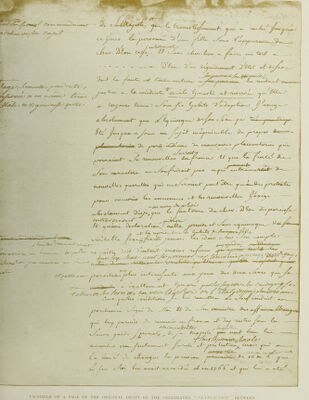
![their place, and regrets that he is going to be parted from the Duke: (c) March If, 1690, announcing the arrival of the French Fleet: and three others on the same subject; (6) the original draft of a letter, April If, 1690, written by the Duke of Tyrconnell to Barillon on the subject of resistance to William III.’s impending Invasion of Ireland, and of the urgency of French assistance ; (7) a most interesting holograph letter. May 29, 1690, from J. Porter to the Duke of Tyrconnell, on the state of England and the dislike ~ felt in that country for the Usurper, and promising a fleet of twenty frigates : and another dated June 29, 1690, in which he states that he has had great difficulty in procuring arms, apers. Qf svvords and pistols : “the Fleet will consist of thirty frigates, and is to be commanded by Monsieur Foran ” ; (8) a letter, June 10, 1690, from the Earl of Limerick to Duke of Tyrconnell, on matters connected with the sending of supplies to Limerick, etc.; (9) a holo- graph letter, June 27, 1690, from the Due D’Aumont to the Duke of Tyrconnell, stating that there were more than 40,000 men in the French Fleet. Ormonde Papers—Betrayal of the Allies by the English Ministers. The nucleus of this sub-collection was the purchase in 1892, at the sale of Dr. Webster’s MSS., of a batch of letters collected by him from time to time ; and round it have since grown accretions of sufficient number to render the little collection of sixty-one pieces of great importance for the illustration of one of the shabbiest transactions of modern times, in which the second Duke of Ormonde was himself an unwilling participator. Want of space prevents the mention of many letters of great value. (i) Original letter in French, June 4, 1712, from two of the deputies of the States General, Haerfolte and P. P. Vegilin Van Claerbergen, to the Duke of Ormonde, making a vigorous protest against the present inaction of the Duke, and asking him for a definite and precise indication of the nature of his orders from home, and requiring him to give no hindrance in their action to the troops in common employment, according to the principles of war and in accordance with solemn treaties ; (2) a holograph letter, June 4, 1712, from the Duke of Ormonde to the Lord Treasurer (Oxford): “ . . . I send this to let your Lordship know that I have done all that I could to keep secret and to disguise the orders that I received from her Majesty by Mr. Secretary St. fohn, but it is above 10 days since I received the Queens pleasure, and now I can’t make any more excuses for delaying entering upon action; when I was pressed to it I made my Lord Staffords sudden journey to England my excuse, and desired that I might hear from England before I undertook anything. I have been again press’d this day by two of the deputys in Ormonde master’s name to know if I would undertake anything in conjunction with them, p I still made the same answer that I had not heard from England,” etc., etc. : this is in ” * relation to the celebrated secret Restraining Orders, by which the English Ministers, who were in collusion with France, prevented Ormonde from taking advantage of the opportunity offered to the allied forces of England and Holland of a successful attack upon the French position; (3) a letter, June 29, 1712, from Robinson, Bishop of Bristol (Lord Privy Seal) to the Duke of Ormonde, describing the well-grounded discontent of the Ministers of the United Provinces at the attitude of the Queen of England, and their curiosity to know what is to be their lot ; (4) a holograph letter, Aug. 5, 1712, ixoto. liar ley, Earl of Oxford (Lord Treasurer) to the Duke of Ormo7tde : “ No pen or tongue is able to express the great pleasure I took in your Grace’s successes,(’) it was a very great satisfaction to see so much done for the Public, to see such an example of steady conduct in so great a nobleman & so courageous a heart is what has made you envied by some, dreaded by your Enemys, & applauded by al men of knowledg & understanding ” : [this laudation was the reward bestowed upon Ormonde for his servile participation in the traitorous conduct of the Ministers of the English Crown towards their allies the Dutch.] (^) The restraining of the English forces from cooperating with thefr allies the Dutch.](https://iiif.wellcomecollection.org/image/b29002771_0001_0075.jp2/full/800%2C/0/default.jpg)