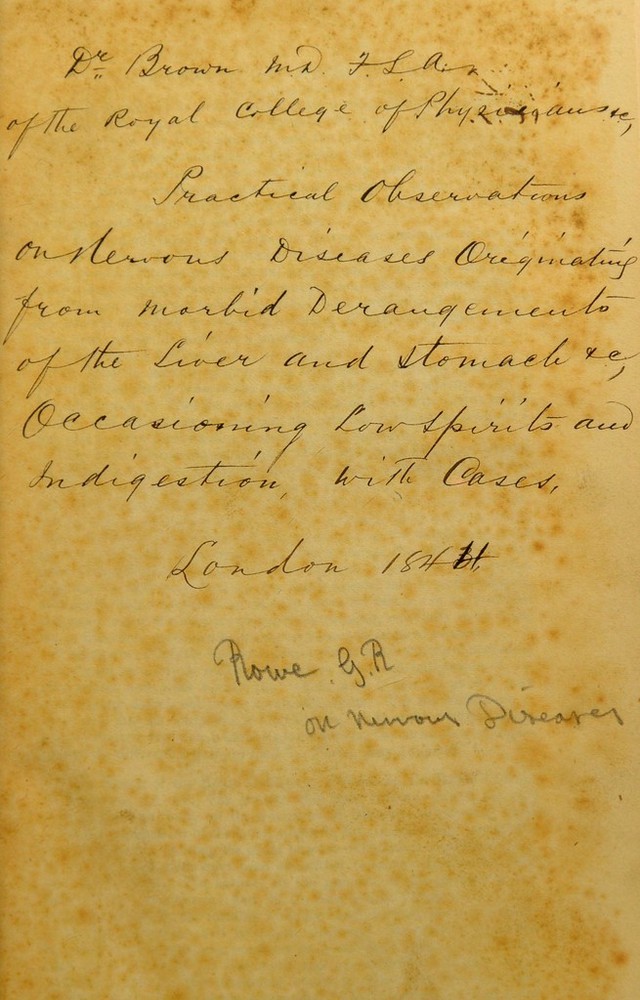
Nervous diseases, liver and stomach complaints, low spirits, indigestion, gout, asthma and disorders produced by tropical climates ... / by George Robert Rowe.
- Rowe, George Robert, 1792-1861.
- Date:
- 1844
Licence: Public Domain Mark
Credit: Nervous diseases, liver and stomach complaints, low spirits, indigestion, gout, asthma and disorders produced by tropical climates ... / by George Robert Rowe. Source: Wellcome Collection.
7/240 page 3
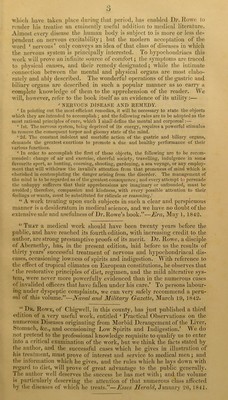
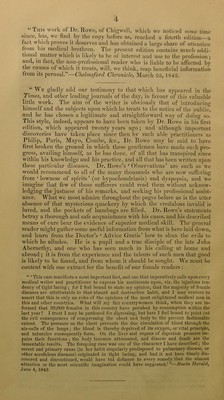
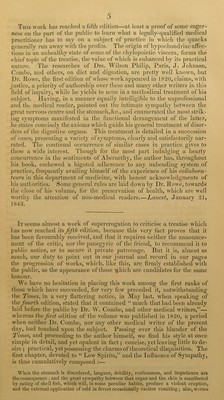
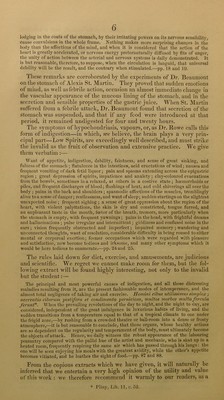
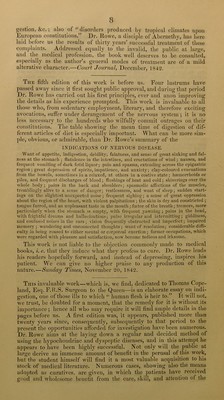
![v/]iicli have taken place diirino; that jieriod, lias enabled Dr. liowe to render his treatise an eminently useful addition to medical literature. Almost every disease the human body is subject to is more or less de- pendent on nervous excitability; but the modern acceptation of the \vord ‘ nervous ’ only conveys an idea of that class of diseases in which the nervous system is principally interested. To hypochondriacs this work will prove an infinite source of comfort; the symptoms are traced to physical causes, and their remedy designated; while the intimate connection between the mental and physical organs are most elabo- rately and ably described. The wonderful operations of the gastric and biliary organs are described in such a popular manner as to carry a complete knowledge of them to the apprehension of the reader. We will, however, refer to the book itself as an evidence of its utilitv:— ^ NERVOUS DISEASE AND REMEDY. ‘ In pointing out the most efficient remedies, it will be necessary to state the objects which they are intended to accomplish; and the following rules are to be adopted as the most rational principles of cure, wliich I shall define the mental and corporeal:— ‘ 1st. The nervous system, being deprived of its energy, requires a powerful stimulus to remove the consequent torpor and gloomy state of the mind. ‘ 2d. The constant indolent and morbific action of the gastric and biliary organs, demands the greatest exertions to promote a due and healthy performance of their various functions. ‘ In order to accomplish the first of these objects, the following are to be recom- mended: change of air and exercise, cheerful society, travelling, indulgence in some favourite sport, as hunting, coursing, shooting, gardening, a sea voyage, or any employ- ment that will withdraw the invalid’s attention from that proneness of mind which is cherished in contemplating the danger arising from the disorder. The management of the mind is to be regarded as of the greatest consequence; and every attempt to persuade the unhappy sufierers that their apprehensions are imaginary or unfounded, must be avoided therefore, compassion and kindness, with every possible attention to their feelings or wants, must be substituted for ridicule or reasoning.’ “ A work treating upon such subjects in such a clear and perspicuous manner is a desideratum in medical science, and we have no doubt of the extensive sale and usefulness of Dr. Rowe’s book.”—JEi'a, May 1, 1842. That a medical work should have been twenty years before the public, and have reached its fourth edition, with increasing credit to the author, are strong presumptive proofs of its merit. Dr. Rowe, a disciple of Abernethy, has, in the present edition, laid before us the results of thirty years’ successful treatment of nervous and hypochondriacal dis- eases, occasioning lowness of spirits and indigestion. With reference to the effect of tropical climates on European constitutions, he observes that * the restorative principles of diet, regimen, and the mild alterative sys- tem, were never more powerfully evidenced than in the numerous cases of invalided officers that have fallen under his care.’ To persons labour- ing under dyspeptic complaints, we can very safely recommend a peru- sal of this volume.”—Naval and Military Gazette, March 19, 1842. Dr. Rowe, of Chigwell, in this county, has just published a third cflition of a very useful work, entitled ‘ Practical Observations on the numerous Diseases originating from Morbid Derangement of the Liver, Stomach, &c., and occasioning Low Spirits and Indigestion.’ We do not pretend to the professional knowledge requisite to qualify us to enter into a critical examination of the work, but we think the facts stated by the author, and the successful cases Mdiich he gives in illustration of his treatment, must prove of interest and service to medical men; and the information which he gives, and the rules which he lays down with regard lo diet, will prove of great advantage to the public generally. The author well deserves the success he has met with; and the volume is particularly deserving the attention of that numerous class affected](https://iiif.wellcomecollection.org/image/b28708672_0007.jp2/full/800%2C/0/default.jpg)