Handbook of American Indians north of Mexico / edited by Frederick Webb Hodge.
- Date:
- 1907-1910
Licence: In copyright
Credit: Handbook of American Indians north of Mexico / edited by Frederick Webb Hodge. Source: Wellcome Collection.
976/1000 (page 958)
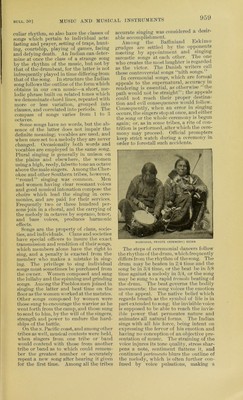
![Doc. Col. Hist., VII, 178, 1856. Monsi.—Vater, Mith., pt. 3, sec. 3, 367, 1816. Monsies.—German Flats Conference (1770) in N. Y. Doc. Col. Hist., VIII, 243, 1857. Monsys.—Loskiel, Hist. Mission United Breth., pt. 3, 119, 1794. Monthees.—Aupa- umut (1791) in Brinton, Lenape Leg., 45, 1885. Montheys.—Brinton, Lenape Leg., 36, 18a5. Mun- ceys.—Schoolcraft, Ind. Tribes, v, 495,1855. Mun- cies.—Writer of 1782 in Butterlield, Washington- IrvineCorr., 377, 1882. Muncy.—Rupp, West. Pa., 178, 1846. Munsays.—Hutchins (1778) in School- craft, Ind. Tribes, vi, 714,1857. Munsees.—Trader (1778) in Sehoolcraft, Ind. Tribes, iii, 561, 18.53. Mun-see-wuk.—Morgan, Coirsang. and Atlin.,289, 1871. Munses.—Croghan (1765) in Rupp, West Pa., app., 173, 1846. Munsey.—Easton Ccui- ference (1757) in N. Y. Doc. Col. Hist., vii, 285, 1856. Munseyis.—Vater., Mith., pt. 3, sec. 3, 367, 1816. Munsi.—Barton, New Views, x, 1798. Mun- sies.—Croghan (1768) in Rupp, West. Pa., app., 181, 1846. Munsy.—Smith, Boquet Exjied., 89, 1766. Nunseys.—Delaware treaty (1765) in N. Y. Doc. Col. Hist., vii, 741, 1856 (misiirint). Ptuksit.—Brinton, Lenape Leg., 39,1885 (‘Round foot’, referring to the Wolf; the totemic designa- tion of the Munsee). Took'-seat.—Morgan, Anc. Soc., 172, 1878 (‘Wolf’, one of the three Dela- ware gentes; according to Brinton the.se divi- sions are wo< gentes). Wemintheew.—Aujiaumut (1791) in Brinton, Lenai>e Leg., ‘20,1885 (Mahican name). Wolf tribe of the Delawares.—The Mun- see have frequently been .so called. Muoc. A Cliuiuashan village on one of the Santa Barbara ids., Cal., jirohably Santa Rosa, in 1542. Muoc.—Cabrillo, Narr. (1542) in Smith, Colec. Doc. Fla., 186, 1857. Muoe.—Tavlor in Cal. Farmer, Apr. 17, 1863. Mupu. A populous Chuniashan village stated by Indians to have been at Santa Paula, Ventura co.. Cal. Mupu arroyo drains into the Saticoy. See Taylor in Cal. Fanner, July 24, 1863. (ri. \v. ii.) Murek. A Yurok village on Klamath r.. Cab, 12 or 13 in. below the mouth of the Trinity. Moor-i-ohs.—McKee in Sen. Ex. Doc. 4, 32d Cong., spec. se.ss., 194, 1853. Moo-ris.—Ibid., 162. Morai- uh.—Gibbs in Schoolcraft, Ind. Tribes, iii, 138, 1853. Morias.—McKee in Sen. Ex. Doc. 4, 32d Cong., spec, .sess., 193,1853. Mo-ri-ohs.—Ibid., 161. Mrh.—Powers in Overland Monthly, viii. .530,1872. Murek,—A. L. Kroeber, inf’n, 19()5. Mur-iohs.— Meyer, Nach dem Sacramento, 282, 1855. Muruam. A former Texas tribe, numer- ous members of which were baptized dur- ing the first half of the 18th century at the San Antonio missions. One individual by this name was liaptized in 1707 at Mission San Francisco Solano, on the Rio Grande. At San Antonio their liajitism was first recorded under “ Baptisms of the llyer- bipiamos” (Frvij)iames) with those of the Frvipiames destined for Mission San Xavier de Naxera, called the “ Ilyerbipi- amo suburb” (1721-26). The records show that in their gentile state tlie Mu- ruam intermarried with these Frvipiames, who were Tonkawan, and who came from Rancherfa Grande (p. v.). This points to the conclusion that the Muruam were Tonkawan. A diliicultv is raised, how- ever, by the faet that at the Frvipiame suburb were also numerous Ticmamares, some of which tribe had been baptized at San Francisco Solano mi.'jsion and were apparently natives of that region (Records of Mission San xVntonio de Valero, MS.). After 1726 the Muruam neophytes were incorporated underMis.sioiA’alero(ibid.). Their name is most frequently found in the baptismal liooks of this mission be- fore the year 1730, but members of the tribe were still living there as late as 1775. Compare who may have been identical. (ii. k. h. ) Moroame.—Ba]>tismal Records, oi». cit. Moru- ames.—Ibid. Muruam.—Ibid. Muruami.—Ibid. Murzibusi. The Bean clan of the Yoki (Rain) phratry of the Ilojii. See Patki. Mu'r-zi-bu-si.—Stephen in 8tb Rep. B. A. E., 39, 1891. Mus (‘niesquite’). Given by Bourke (Jour. xVm. Folk-lore, ii, 181, 1889) as a clan (properly gens) of the Mohave, (j. v. Musalakun. A name, originally that of a eaiitain or chic‘f of one of the villages in the vicinity of Cloverdale, Cal., applied to all the Porno living along Russian r. from Preston southward to the vicinity of Geyserville. (s. a. b.) Maj-su-ta-ki-as.—.McKee (1851) in .Sen. Ex. Doc.4, 32(fCong., s|)cc. ses.s., 141,18.53. Masalla Magoons.— Bancroft, Nat. Race.x, i,419, 1874. Mi-saP-la Ma- gun'.—I’owers in (’out. N. .V. Elhnol., ni, 183, 1877. Mu-sal-la-kun'.—Ibid. Muscongus. A village on the coast of iMaine in 1616, iirobably belonging to the xibnaki. It .seems to have been near Mu.scongus id., in Lincoln co. Muskoncus.—Smith (1624) in Me. Hi.st. Soc. Coll., V, 1.55, 18.57. Nusconcus.—Smith (1616) in Ma.s.s. Hist. Soc. Coll., 3d s., vi, 107, ls37. Nuscoucus,— Smith (1629), Va., II, 183. rcpr. 1819. Nuskoncus.— Ibid., 173. Nuskoucus.—Ibid., 192. Muscupiabit (‘pinon ]fiace’). Men- tioned by Rev. J. Cavalleria (Hist. San Bernardino Yah, 39, 1902) as a village (probably Serrano) at a ])lace now called Muscupiabe, near San Bernardino, .s. C'al. Musgrove, Mary. See Poxomirortli. Musbalatubbee. A Choctaw chief, born in the last half of the 18th century. He was ]iresent at Washington, D.in Dec., 1824, as one of the Choctaw ilele- gation, where he met and became ac- quaintt'd with Lafayette on his hist visit to till' United States. lie led his war- riors agtiinst the Cret'ks in connection with .Tackson in 1812. He signed as lead- ing chief tlu' tieaty of Choctaw Trading House, ]\Iiss., Oct. 24, 1816; of Tri-aty Ground, 5Iiss., Oct. 18, 1820; of Wash- ington, D. C., Jan. 20, 1825; and of Danc- ing Rabbit Creek, I\Iiss., Sept. 27, 1830. He dic'd of smallpox at the agency in Arkansas, Sept. 30, 1838. His name 5vas later ajiplied to a district in Indian Ter. Mushkoniatawee. A (Montagnais vil- lage on the s. coast of Labrador.—Stearns, Labrador, 271, 1884. Music and Musical instruments. Indian music is coextensivi' with tribal life, for every public ceremony, as well as each inqiortant act in the career of an indi- vidual, has its accomjianiment of song. The music of each ceremony has its [>e-](https://iiif.wellcomecollection.org/image/b24881739_0976.jp2/full/800%2C/0/default.jpg)