Volume 2
A dictionary of the English language: in which the words are deduced from their originals, and illustrated in their different significations by examples from the best writers. To which are prefixed, a history of the language, and an English grammar / by Samuel Johnson.
- Samuel Johnson
- Date:
- 1755
Licence: Public Domain Mark
Credit: A dictionary of the English language: in which the words are deduced from their originals, and illustrated in their different significations by examples from the best writers. To which are prefixed, a history of the language, and an English grammar / by Samuel Johnson. Source: Wellcome Collection.
1130/1176
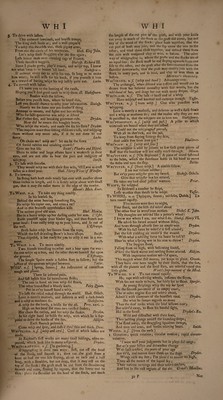
![Religion is matter of our freeft choice ; and if men will obftinately and wilfully fet themfelves againft it, there is no remedy. Tillotfon’s Serm. 2. By deiign ; on purpofe. 1 hat will carry us, if we do not wilfully betray our fuccours, through all difficulties. Hammond. If you do not wifully pafs over any of your greater of¬ fences, but confefs particularly, and repent ferioufly of them, God will more eafily pafs by your lefler infirmities. Bp TayU This let him know ; Left, wilfully offending, he pretend Surprifal. Milton. Wi'lfulness. n. f. [from wilful.'] Obftinacy; ftubbornnefs; perverfenefs. So full of wilfulnefs and felf-liking is our nature, that with¬ out fome definitive fentence, which being given, may hand* fmall hope there is that ftrifes will end. Hooker. Thy caufelefs ruth reprefs ; He that his forrow fought through wilfulnefs, And his foe fetter’d would releafe again, Deferves to tafte his folly’s fruit. Fairy Queen. Never hydra-headed wilfulnefs So foon did lofe his feat, and all at once. As in this king. Shakefpeare. A ftiff and ftubborn obftinacy, is not fo much firmneis and refolution, as wilfulnefs. L’EJlrange. That is not haftily to be interpreted obftinacy or wilful- nefsy which is the natural produdt of their age. Locke. Wi'lilv. adv. [from wily.] By ftratagem; fraudulently. They did work wilily, and went and made as if they had been ambaffadors. Jcf Wili'ness. n. f. [from wily.] Cunning; guile. The ungodly, for his own luft, doth perfecutc the poor : let them be taken in the crafty wilinefs that they have ima¬ gined. . Pfalm x. 2. She fupplied the weaknefs of force by wilinefs of art, and advantage of treaty. How. Foe. Forejl. WILL. n. f. [pilla, Saxon; wille, Dutch.] I. Choice; arbitrary determination. IVill is the power, which the mind has to order the con- fideration of any idea, or the forbearing to confider it, or to prefer the motion of any part of the body to its reft, and vice verfa. _ _ Locke's Works. Two principal fountains there are of human actions, know¬ ledge and will; which willy in things tending towards any end, is termed choice. Hooker, b. i. Is it her nature, or is it her will. To be fo cruel to an humble foe ? If nature, then fhe may it mend with (kill; If willy then (he at will may will forego. Spenfer. Thefe things have a fhew of wifdom in will worfhip and humility. Col. ii. 23. Will holds the fceptre in the foul. And on the paffions of the heart doth reign. Sir J. Dav. The truth is, fuch a man underftands by his willy and be¬ lieves a thing true or falfe, merely as it agrees or difagrees with a violent inclination ; and therefore, whilft that inclina¬ tion lafts in its ftrength, he dilcovers nothing of the different degrees of evidence. Atterbury. 2. Difcretion ; choice. Go then the guilty at thy will chaftize. Pope. 3. Command ; direction. At his firft fight the mountains are ftiaken, and at his will the fouth wind bloweth. Ecclef. xliii. 16. 4. Difpofition ; inclination ; defire. I make bold to prefs upon you with fo little preparation. Your welcome; what’s your will ? Shakefpeare. He hath a willy he hath a power to perform. Drummond. He faid, and with fo good a will to die, Did to his bread the fatal point apply, It found his heart. Dryden. 5. Power ; government. / Deliver me not over unto the will of mine enemies. Pfal. He had the will of his maid before he could go; he had the maftery of his parents ever fince he could prattle; and why, now he is grown up, muft he be reftrained ? Locke. 6. Divine determination. I would give a thoufand furlongs of fea for an acre of barren ground. The wills above be done ; but I would fain die a dry death. Shakefpeare. 7. Teftament; difpofition of a dying man’s effects. Another branch of their revenue ftill 1 Remains, beyond their boundlefs right to kill, C I heir father yet ali,ve, impower’d to make a will. Dryd. j Do men make their laft wills by word of mouth only? Stephen’s Sermons. 8. Goon-will. favour; kindnefs. I’ll to the dodtor, he hath my good-willy And none but he to marry with Nan Page. Shake/p. . 9. Good-w//. Right intention. Some preach Chrift of envy, and fome of good will. Phil. i. 15. t • 1 10. lLt-wtll. Malice; malignity. 11. [Contracted from William.] Will with a wifp, Jack with a lanthorn. * Will with the wifp is of a round figure, in bignefs like th£ flame of a candle ; but fometimes broader, and like a bundle of twigs fet on fire. It fometimes gives a brighter light than that of a wax-candle; at other times more obfeure, and of a purple colour. W hen viewed near at hand, it (hines lefs than at a diftance. I hey wander about in the air, not far from the (urface of the earth; and are more frequent in places that are undtuous, mouldy, marftiy, and abounding with reeds. They haunt burying places, places of execution, dunghills. They commonly appear in fumnier, and at the beginning of autumn, and are generally at the height of about fix feet from the ground. Now they dilate them¬ felves, and now contradt. Now they go on like waves, and rain as it were fparks of fire ; but they burn nothing. They follow thofe that run away, and fly from thofe that follow them. Some that have been catched were obferved to confift of a finning, vifeous, and gelatinous matter, like the fpawn of frogs, not hot or burning, but only fhining ; fo fhat the matter feems to be phofphorus, prepared and raifed from putrified plants or carcaffes by the heat of the fun ; which is condenfed by the cold of the evening, and then (hines. Mufch. Will-a-wifp niifleads night-faring clowns, O’er hills and finking bogs. Gay. To Will, y. a. {wilgariy Gothick ; pillan, Saxon ; willen, Dutch.] I. To defire that anything fhould be, or be done. To willy is to bend our fouls to the having or doing of that which they fee to be good. Hooker. Let Richard be reftored to his blood. As will the reft ; fo willeth Winchefter. Shakefpeare. I (peak not of God’s determining his own will, but his pre¬ determining the adts of our will. There is as great difference betwixt thefe two, as betwixt my willing a lawful thing my- felf, and my inducing another man to do that which is un¬ lawful. Hammond on Fundamentals. Whofoever wills the doing of a thing, if the doing of it be in his power, he will certainly do it; and whofoever' does not do that thing, which he has in his power to do, does not properly will it. South. A man that fits ftill, is faid to be at liberty, becaufe he can walk if he wills it. Locke. 2. To be inclined or refolved to have. She’s too rough for me ; There, there, Hortenfio, will you any wife ? Sbakefp. 3. To command ; to diredi. St. Paul did will them of Corinth, every man to lay up fomewhat on the Sunday, and to referve it in ftore for the church of Jerufalem, for the relief of the peor there. Hooker• How rarely does it meet with this time’s guife, When man was willed to love his enemies. Sbakefp. Our battle is more full of names than yours. Our men more perfedt in the ufe of arms. Our armours all as ftrong, our caufe the beft ; Then reafon wills our hearts lhould be as good. Sbakefp. Fie willed him to be of good comfort, prornifing to be- ftow upon him whatioever he fhould win. Knolles. If they had any bufinefs, his Majefty willed that they fhould attend. Clarendon. ’'Pis your’s, O queen 1 to will The work, which duty binds me to fulfil. Dryden. 4. It has a loofe and flight fignification. Let the circumftances of life be what, or w7here they will, a man fhould never negledt improvement. Watts. 5. It is one of the figns of the future tenfe; of which it is difficult to fhow or limit the fignification. I will come. I am determined to come ; importing choice. Thou wilt come. It muft be fo that thou muft come ; im¬ porting neceffity Wilt thou come ? Haft thou determined to come ? import¬ ing choice. He will come. He is refolved to come ; or it muft be that he muft come, importing either choice or neceffity. It will come. It muft fo be that it muft come; importing neceffity. The plural follows the analogy of the fingular. Wi'lli and Vili, among the Englifh Saxons, as <viele at this day among the Germans, fignified many. So willtelmus is the defender of many : wifred, peace to many; which ate anlwered in fenfe and fignification by Polymachus, Poly¬ crates, and Polyphilus. Gib. Camd. Wi’li.ing. adj. [from will.] 1. Inclined to any thing. He willing to pleafe one in authority, forced all his (kill to make the refemblance of the beft fafhion. Wifd. Some other able, and as willing, pays The rigid fatisfadtion. Milton. Can any man truft a better fupport under affliction, than the friendfhip of Omnipotence, w ho is both able and willing, and knows how to relieve him ? Bentley. 2. Pleated . y](https://iiif.wellcomecollection.org/image/b30451541_0002_1131.jp2/full/800%2C/0/default.jpg)