Volume 2
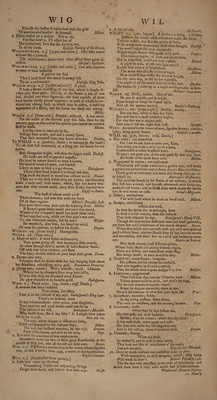
A dictionary of the English language: in which the words are deduced from their originals, and illustrated in their different significations by examples from the best writers. To which are prefixed, a history of the language, and an English grammar / by Samuel Johnson.
- Samuel Johnson
- Date:
- 1755
Licence: Public Domain Mark
Credit: A dictionary of the English language: in which the words are deduced from their originals, and illustrated in their different significations by examples from the best writers. To which are prefixed, a history of the language, and an English grammar / by Samuel Johnson. Source: Wellcome Collection.
1146/1176
![Wo'odsare. n.f T he froth called woodfare, being like a kind of fpittle, is found upon herbs, as lavender and fage. Bacon. Wo odseere. n. J. [wood and fere.] The time when there is no fap in the tree. brom May to O&ober leave cropping, for why, In ivoodfeere, whatfoever thou croppeft fhall die. Tuffetr. Wo'odSorrel. n.f [oxys, Latin.] A plant. The characters are : it hath a bell-fhaped flower, confifting of one leaf, having its brim wide expanded, and cut into fe- veral divifions: the pointal, which rifes from the flowercup, becomes an oblong membranous fruit, divided into feminal cells, opening outward from the bafe to the top, and inclofing feeds, which often ftart from their lodges, by reafon of the elaftick force of the membrane which involves them. Miller. Woo'dwarn.n.f. [wood and ward.] A forefter. Wo'ody. adj. [from wood] 1. Abounding with wood. Thou haft led me up A woody mountain, whofe high top was plain. Milton. Oft in glimmering bow’rs and glades He met her, and in fecrct fliades Of woody Ida’s inmoft grove. Milton. Four times ten days i’ve pafs’d Wand’ring this woody maze, and human food Nor rafted, nor had appetite. Milton's Paradife Regain'd. Diana’s woody realms he next invades, And, erodes through the coniecrated fhades, Addifon. 2. Ligneous; confifting of wood. In the woody parts of plants, which are their bones, the principles are fo compounded as to make them flexible without joints, and alfo elaftick. Grew. Herbs are thofc plants whofe ftalks are foft, and have nothing woody in them, as grafs and hemlock. . Locke. 3. Relating to woods. With the woody nymphs when fbe did play. Fairy fueen. All the fatyrs fcorn their woody kind, And henceforth nothing fair but her on earth they find. Fairy fueen. Woo'er. n.f. [from woo.] One who courts a woman. The wooers moft are touckt in this oftent. To whom are dangers great and imminent. Chapman. Ariftippus faid, that thofe that ftudied particular fciences, and negleCted philofophy, were like Penelope’s wooers, that made love to the waiting woman. Bacon's Apophthegms. Ufurping wooers felt his thund’ring fword, And willing nations knew their native lord. Creech. Woof. n.f. [from wove.] 1. The fet of threads, that crofles the warp ; the weft. 7 he placing of the.tangible parts in length or tranfverfe, as in the warp and the woof of textile, is more inward or more outward. Bacon's Natural Hifory. 2. Texture; cloath. A veft of purple flow’d, Iris had dipp’d the woof. Milton's Paradife Lof. I muft put off Thefe (ny Iky-robes, fpun out of Iris’ woof. Milton. To fpread the pall beneath the regal chair, Of fofteft woof is bright Alcippe’s care. Pope's Odyffey. Woo'ingly. adv. [from wooing.] Pleafingly; fo as to invite ft ay. 7 he temple-haunting martlet does approve, By his lov’d manlionry, that heaven’s breath Smells w-oingly here. Shake/. King Lear. WOOL. n.f. [pul, Saxon ; wollen, Dutch.] 1. 7 he fleece of flheep ; that which is woven into cloath, Bafe-minded wretches, for refpedf of gain, fome paultry wool may yield you, to let fo much time pafs without know¬ ing perfectly her eftate. Sidney. A gown made of the fineft wool, Which from our pretty lambs we pull; Fair lined flippers for the cold. With buckles of the pureft gold. Raleigh. Concerning their complaint for price of wool, he would give order that his commillioners fhould caufe clothiers to take wool, paying only two parts of the price. Hayward. Struthium is a root ufed by the wool-drefiers. Arhuthnot. 2. Any fhort thick hair. In the cauldron boil and bake; IVool of batt and tongue of dog. Sbakefp. Macleth. Wo'olfel. n.f. [wool and fell.] Skin not ftripped of the wool. Wool and woolfels were ever of little value in this king- dom- . Davies on Ireland. Wo'ollew. adj. [from wool.] Made of wool not finely dreffed, and thence ufed likewife for anything coarfe. I was wont To call them woollen vaflals, things created To buy and fell with groats. * Sbakefp. Coriolanus. I could not endure a huiband with a beard on his face: I had rather lye in woollen. Sbakefp. Much Ado about Nothing. IVoollen cloth will tenter, linen fcarcely. Bacon. At dawn of day our general cleft his pate, Spite of his woollen night-cap. j Woo'LLHN. n.f. Cloath made of wool. } Ilis breeches were of rugged woollen, And had been at the fiege of Bullen. Hudibras. Odious. in woollen ! ’twould a faint provoke 1 Nd, let a charming chintz and Bruflbls lace Wrap my cold limbs and (hade my lifelefs face. Pete He is a bel-efpnt and a woollen draper. Swift Woolsack* \n'f' twool> Pack> andfack.] 1. A bag of wool; a bundle of wool. 2. The feat of the judges in the houfe of lords. At bar abufive, on the bench unable Knave on the woolfack, fop at council-table. Drxden. 3. Any thing bulky without weight. ' Chaos of prefbyt’ry, where laymen guide With the tame woolpack clergy by their fide. Clcaveland Wo olward. adv. [wool and ward.] Jn wool. Not ufed * 1 have no fhirt: I go woolward for penance. Sbakefteare Wo'olly. adj. [from wool.] , Jp e’ r. Confifting of wool; cloathed with wool. When the work of generation was Between thefe vjoolly breeders, The fkilful fhepherd peel’d me certain wands. Shdkefpeare. Some few, by temp’rance taught, approaching flow. To diftant fate by eafyjourneys go: Gently they lay ’em down, as ev'ning fheep On their own woolly fleeces foftly fleep. Drydcn. 2. Refembling wool. What fignifies My fleece of woody hair, that now uncurls ? Shakefpeare. Nothing profits more Than frequent fnows : O may’ft thou often fee . Thy furrows whiten’d by the woolly rain, Nutritious! J. Philips WORD. n.f. [popb, Saxon ; woord., Dutch.] 1. A Tingle part of fpeech. If you ipeax three words, it will three times report you the three words. iW. . As conceptions are the images of things to the mind within itfelf, fo are words or names the marks of thofe conceptions to the minds of them we converfe with. South's Sermons. Amongft men who confound their ideas with words, there muft be endlefs difputes, wrangling, and jargon. Locke. Each wight who reads not, and but fcans and fpells. Each word catcher that lives on fyllables. Pot,, 2. A fhort difcourfe. P Shall I vouchfafe your worfhip a word or two ? Two thoufand, and I’ll vouchfafe thee the hearing. Shak. A word, Lucilius, How he receiv’d you. Sbakefp. Julius Cafar. A friend who fhall own thee in thy loweft condition, anfwer all thy wants, and, in a word, never leave thee. South. In a word, theGofpel defcribes God to us in all refpedls fuch a one as we would wifh him to be. Tillctfon. 3* Falk; difcourfe. Why fhould calamity be full of words? —Windy attorneys to their client woes ! Let them have fcope, though what they do impart Help nothing elfe, yet theydo eafe the heart. Shak. R. III. If you diflike the play, Pray make no words on’t ’till the fecond day, Or third be paft; for we would have you know it. The lofs will fall on us, not on the poet. Denham. Ceafe this contention : be thy words fevere. Sharp as he merits; but the fword forbear. Dryden. If words ace fometimes to be ufed, theyrought to be grave, kind, and fober, reprefenting the ill, or unbecominenefs of the faults. Zcofc. If I appear a little word-bound in my firft folutions, I hope it will be imputed to the long difufe of fpeech. Spectator. 4. Difpute; verbal contention. In argument upon a cafe, Some words there grew ’twixt Somerfet and me. Sbakefp. 5. Language. hound you no difpleafure by word or countenance ? Sbakefp. 111 write thee a challenge, or I’ll deliver thy indignation to him by word of mouth. S ha kef. Twelfth Night. He commanded the men to be ranged in battalions, and rid to every fquadron, giving them fuch words as were proper to the occafion. Clarendon. An eafy way, by word of mouth communicated tomo.Boyle. 6. Promife. Obey thy parents, keep thy word]uf[\y, fwear not. Shakef. I take your princely word for thefe redrefles. ■—I give it you, and will maintain my word. Shak. H. IV. 7'heduke fhall wield his conqu’ring fword, 7 he king fhall pafs his honeft word. Dryden. 7. Sigfial; token. Every foldier, kill his prifoners; Give the word through. Shak. Henry V.](https://iiif.wellcomecollection.org/image/b30451541_0002_1147.jp2/full/800%2C/0/default.jpg)