Orion, or, Researches into the antiquity of the Vedas / by Bal Gangadhar Tilak.
- Bal Gangadhar Tilak
- Date:
- 1916
Licence: Public Domain Mark
Credit: Orion, or, Researches into the antiquity of the Vedas / by Bal Gangadhar Tilak. Source: Wellcome Collection.
66/248 page 50
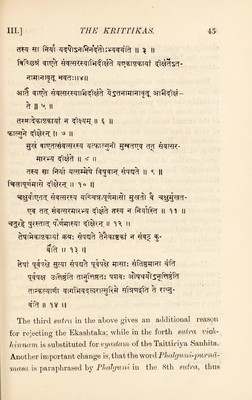
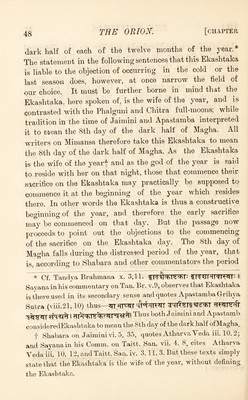
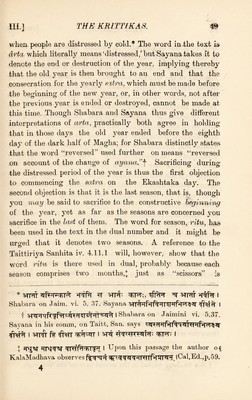
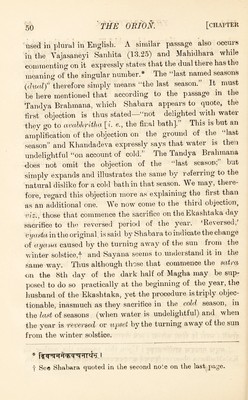
![used in plural in English. A similar passage also occuis in the Yajasarieyi Sanhita (13.25) and Mahidhara while commenting on it expressly states that the dual there has the meaning oi the singular number.* The “last named seasons (dual)” therefore simply means “the last season. It must be here mentioned that according to the passage m the Tandy* Brahmana, which Shabara appears to quote, the first objection is thus stated—“not delighted with water they go to avcibhrithci [i. e., the final bath]. This is but an amplification of the objection on the ground of the “last season” and Khandadeva expressly says that water is then undelightful “on account of cold.’ The Tandya Brahmana •does not omit the objection of the “last season, but simply expands and illustrates the same by referring to the natural dislike for a cold bath in that season. We may, there¬ fore, regard this objection more as explaining the fiist than as an additional one. We now come to the third objection, viz,, those that commence the sacrifice on the Ekashtaka day sacrifice to the reversed period of the year. Reveised, vyasta in the original, is said by Shabara to indicate the change of ayana caused by the turning away of the sun from the winter solstice,j* and Sayana seems to understand it in the same way. Thus although those that commence the satico on the 8th day of the dark half of Magha may be sup¬ posed to do so practically at the beginning of the year, the husband of the Ekashtaka. yet the procedure is triply objec¬ tionable, inasmuch as they sacrifice in the cold season, in the last of seasons (when water is undelightful) and when the year is revevsed or upset by the turning away of the sun from the winter solstice. * I t Sec Shabara quoted in the second note on the last page.](https://iiif.wellcomecollection.org/image/b29827401_0066.jp2/full/800%2C/0/default.jpg)


 No text description is available for this image
 No text description is available for this image
 No text description is available for this image