The Croonian lectures on some points in the pathology of rheumatism, gout and diabetes : delivered at the Royal College of Physicians, London, March 30, April 1, 6, 1886 / by P. W. Latham, M.A., M.D., F.R.C.P.
- Peter Wallwork Latham
- Date:
- 1887
Licence: Public Domain Mark
Credit: The Croonian lectures on some points in the pathology of rheumatism, gout and diabetes : delivered at the Royal College of Physicians, London, March 30, April 1, 6, 1886 / by P. W. Latham, M.A., M.D., F.R.C.P. Source: Wellcome Collection.
Provider: This material has been provided by University of Bristol Library. The original may be consulted at University of Bristol Library.
69/136 page 61
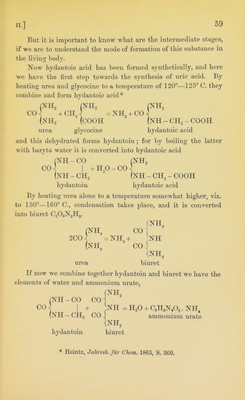
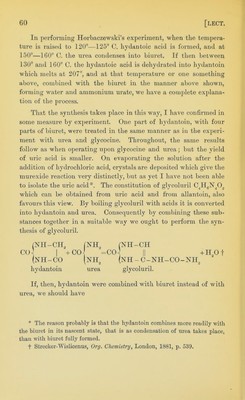
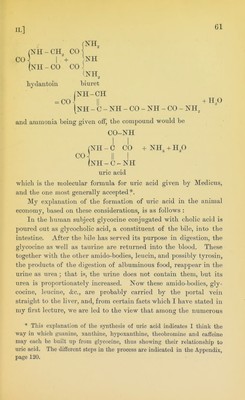
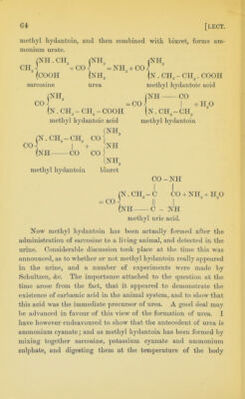
![|N'H NH Lydantoin biuret (NH-CH = CO. 11 + H..0 NH - C - NH - CO - NH - CO - NH, and ammonia being given off, the compound would be CO-NH (NH - c CO + NH3 + up CO] II 1 Inh-c-nh uric acid which is the molecular formula for uric acid given by Medlcus, and the one most generally accepted*. My explanation of the formation of uric acid in the animal economy, based on these considerations, is as follows : In the human subject glycocine conjugated with cholic acid is poured out as glycocholic acid, a constituent of the bile, into the intestine. After the bile has served its purpose in digestion, the glycocine as well as taurine are returned into the blood. These together with the other amido-bodies, leucin, and possibly tyrosin, the products of tlie digestion of albuminous food, reappear in the urine as urea ; that is, the urine does not contain them, but its urea is proportionately increased. Now these amido-bodies, gly- cocine, leucine, &c., are probably carried by the portal vein straight to the liver, and, from certain facts which I have stated in my first lecture, we are led to the view that among the numerous * This explanation of the synthesis of uric acid indicates I think the way in which guanine, xanthine, hypoxanthine, theobromine and caffeine may each be built up from glycocine, thus showing their relationship to uric acid. The different steps in the process are indicated in the Appendix, page 120.](https://iiif.wellcomecollection.org/image/b21445278_0069.jp2/full/800%2C/0/default.jpg)
 No text description is available for this image
 No text description is available for this image
 No text description is available for this image