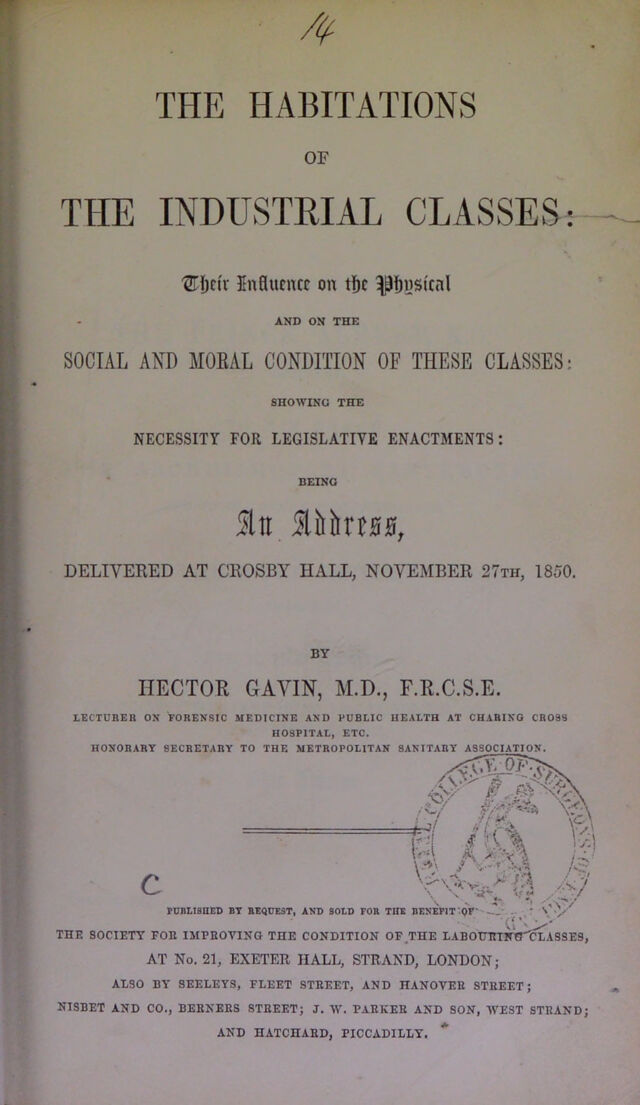
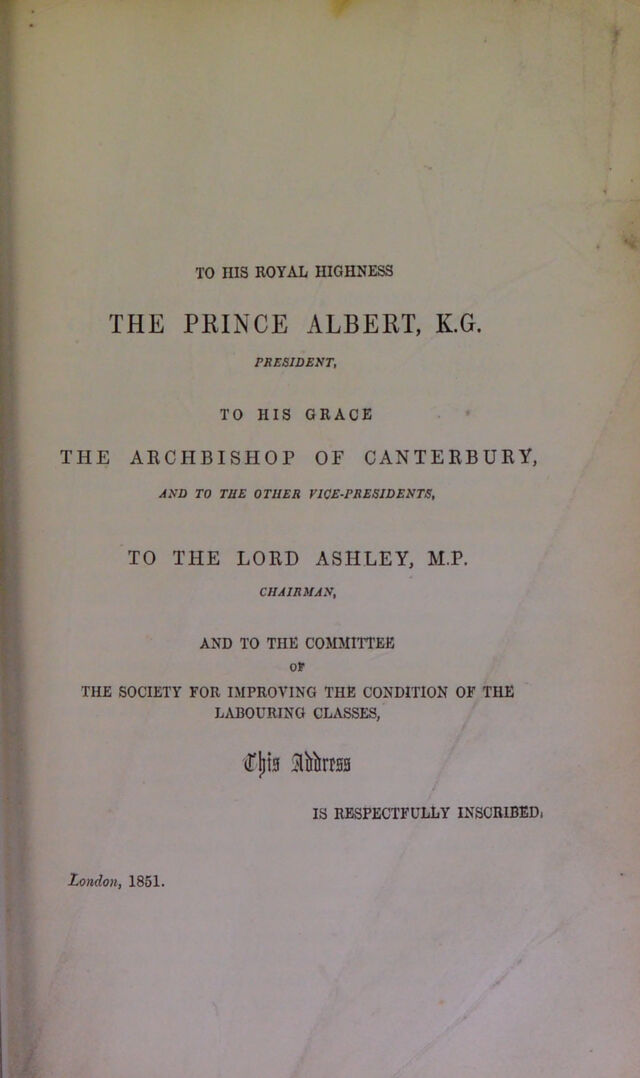
The habitations of the industrial classes : their influence on the physical and on the social and moral condition of these classes, showing the necessity for legislative enactments : being an address, delivered at Crosby Hall, November 27th, 1850 / by Hector Gavin.
- Hector Gavin
- Date:
- [1851]
Licence: Public Domain Mark
Credit: The habitations of the industrial classes : their influence on the physical and on the social and moral condition of these classes, showing the necessity for legislative enactments : being an address, delivered at Crosby Hall, November 27th, 1850 / by Hector Gavin. Source: Wellcome Collection.
Provider: This material has been provided by The Royal College of Surgeons of England. The original may be consulted at The Royal College of Surgeons of England.
68/94 page 70
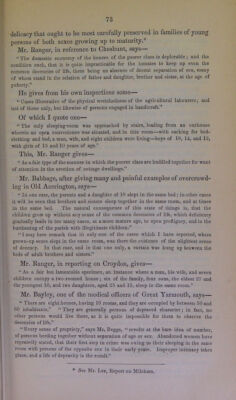
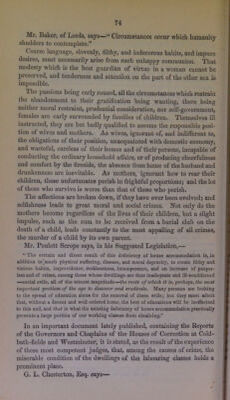
![cause the females to use the stimulants I have named.’’ “ I think there is no doubt that those (districts) in the worst sanitary condition are lowest ns to their social and moral state.” The Chief Constable of Wolverhampton says— “ I have ever found in those districts where there is the greatest amount of filth, deficiency of comfort, want of proper accommodation in dwellings, and an absence of cleanliness amongst the inhabitants, that there prevail much the largest amount of drunkenness and disorderly conduct.” The Relieving Officer of Dover states— “ I have not the slightest hesitation in affirming that there is a most decided direct connexion between confined districts, bad sanitary arrangements, poverty, and vice. In such districts the moral state of the inhabitants is most deplorable. As the youth from these places grow to manhood they become habitual paupers; brought up to no regular employment, grossly ignorant and reckless, their time is spent between the union-workhouse and the gaol.” ” If the Government wish to prevent the increase of a most debased and vicious population, they will take measures, if not to sweep away these nests of vice and disease already built, at any rate to prevent similar places from being erected in future. The Rev. G. Dugard, M.A., ineumbent of Barnard Castle, and a magistrate, says, in referenee to the social condition of the working and poorer classes there— “ Their wretched homes are abodes of filth, with all the miserable concomitants of squalid poverty; their progeny, the children of shame, defiled from their very infancy, ‘ find in these lowest depths a lower deep,’ and so from generation to generation they continue shameless, godless, and reprobate, and lost, utterly lost, to all hope of amend- ment ; for there is no sin which hardens the heart like the sin of uncleanness.” The Rev. F. F. Clarke, curate of Hartshill, Stoke-upon-Trent, says— “ I find that dirt, want, drunkenness, and disease go together. I have no doubt but that, with improved residences, the improvements would lead to improved morals. Mr. Rawlinson says— “The first consideration ought to be—os to the best means of securing health at home. Comfort and all social virtues ore more or less involved in this.” ]\Ir. Vivian, the clergyman of Torquay, says— “ I should say that the morals of the poorer classes will be in strict proportion to the comfort of their habitations.” The Wigan Sanitary Association thus speak— “ It is invariably found that, in proportion as a people are cleanly and comfortable in their homes, they are more moral and virtuous. So intimate is the connexion between cleanliness and morals, that no virtuous man can reside for any length of time in a filthy dwelling or neighbourhood, without his morals becoming as bad os the neighbourhood.” Dr. Southwood Smith says— “ We all know how greatly a clean, fresh, and well-onlercd house tends to make the members of the family sober, peaceable, and considerate of the feelings and happiness of each other. Hence orise self-respect, a due regard for property, for the laws of our](https://iiif.wellcomecollection.org/image/b22334622_0070.jp2/full/800%2C/0/default.jpg)