Mental differences in certain immigrant groups : psychological tests of south Europeans in typical California schools with bearing on the educational policy and on the problems of racial contacts in this country / by Kimball Young.
- Kimball Young
- Date:
- [1922]
Licence: Attribution-NonCommercial 4.0 International (CC BY-NC 4.0)
Credit: Mental differences in certain immigrant groups : psychological tests of south Europeans in typical California schools with bearing on the educational policy and on the problems of racial contacts in this country / by Kimball Young. Source: Wellcome Collection.
18/106 page 16
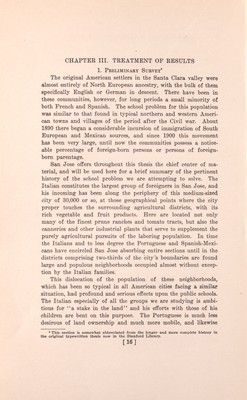
![CHAPTER III. TREATMENT OF RESULTS 1. Preliminary Survey' The original American settlers in the Santa Clara valley were almost entirely of North European ancestry, with the bulk of them specifically English or German in descent. There have been in these communities, however, for long periods a small minority of both French and Spanish. The school problem for this population was similar to that found in typical northern and western Ameri can towns and villages of the period after the Civil war. About 1890 there began a considerable incursion of immigration of South European and Mexican sources, and since 1900 this movement has been very large, until now the communities possess a notice able percentage of foreign-born persons or persons of foreign- born parentage. San Jose offers throughout this thesis the chief center of ma terial, and will be used here for a brief summary of the pertinent history of the school problem we are attempting to solve. The Italian constitutes the largest group of foreigners in San Jose, and his incoming has been along the periphery of this medium-sized city of 30,000 or so, at those geographical points where the city proper touches the surrounding agricultural districts, with its rich vegetable and fruit products. Here are located not only many of the finest prune ranches and tomato tracts, but also the canneries and other industrial plants that serve to supplement the purely agricultural pursuits of the laboring population. In time the Italians and to less degree the Portuguese and Spanish-Mexi- cans have encircled San Jose absorbing entire sections until in the districts comprising two-thirds of the city’s boundaries are found large and populous neighborhoods occupied almost without excep tion by the Italian families. This dislocation of the population of these neighborhoods, which has been so typical in all American cities facing a similar situation, had profound and serious effects upon the public schools. The Italian especially of all the groups we are studying is ambi tious for “a stake in the land” and his efforts with those of his children are bent on this purpose. The Portuguese is much less desirous of land ownership and much more mobile, and likewise 9 This section is somewhat abbreviated from the longer and more complete history in the original typewritten thesis now in the Stanford Library. [ 16 ]](https://iiif.wellcomecollection.org/image/b18026205_0019.JP2/full/800%2C/0/default.jpg)
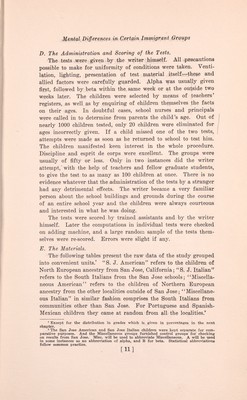
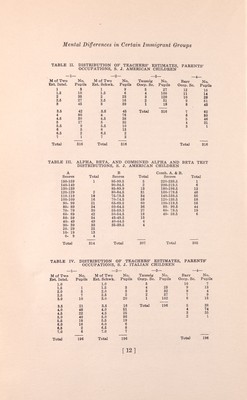
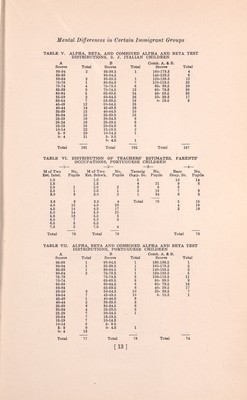
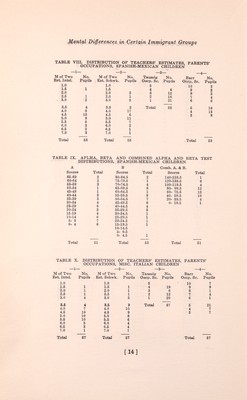
 No text description is available for this image
 No text description is available for this image
 No text description is available for this image