[Report 1905] / Medical Officer of Health, Rotherham County Borough.
- Rotherham (England). County Borough Council
- Date:
- 1905
Licence: Attribution 4.0 International (CC BY 4.0)
Credit: [Report 1905] / Medical Officer of Health, Rotherham County Borough. Source: Wellcome Collection.
30/40 page 30
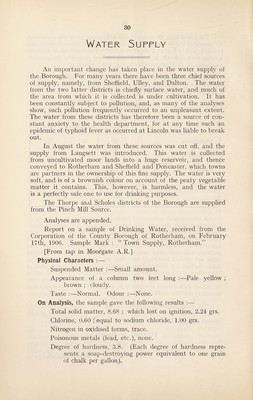
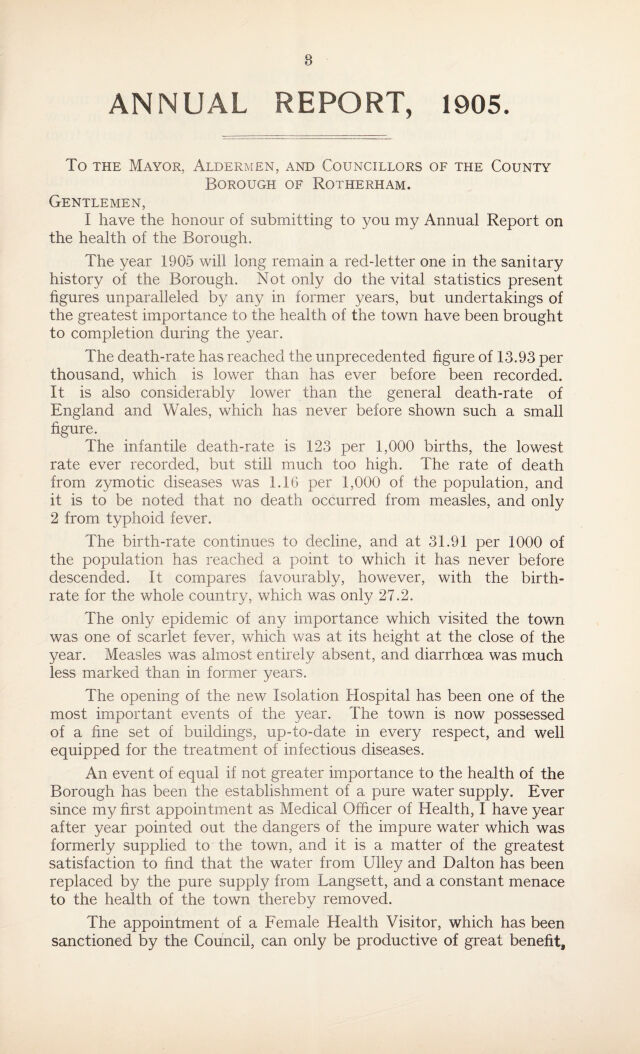
![Water Supply An important change has taken place in the water supply of the Borough. For many years there have been three chief sources of supply, namely, from Sheffield, Ulley, and Dalton. The water from the two latter districts is chiefly surface water, and much of the area from which it is collected is under cultivation. It has been constantly subject to pollution, and, as many of the analyses show, such pollution frequently occurred to an unpleasant extent. The water from these districts has therefore been a source of con¬ stant anxiety to the health department, for at any time such an epidemic of typhoid fever as occurred at Lincoln was liable to break out. In August the water from these sources was cut off, and the supply from Langsett was introduced. This water is collected from uncultivated moor lands into a huge reservoir, and thence conveyed to Rotherham and Sheffield and Doncaster, which towns are partners in the ownership of this fine supply. The water is very soft, and is of a brownish colour on account of the peaty vegetable matter it contains. This, however, is harmless, and the water is a perfectly safe one to use for drinking purposes. The Thorpe and Scholes districts of the Borough are supplied from the Pinch Mill Source. Analyses are appended. Report on a sample of Drinking Water, received from the Corporation of the County Borough of Rotherham, on February 17th, 1906. Sample Mark : “ Town Supply, Rotherham.” [From tap in Moorgate A.R.] Physical Characters :— Suspended Matter :—Small amount. Appearance of a column two feet long :—Pale yellow ; brown ; cloudy. Taste :—Normal. Odour :—None. On Analysis, the sample gave the following results :— Total solid matter, 8.68 ; which lost on ignition, 2.24 grs. Chlorine, 0.60 ; equal to sodium chloride, 1.00 grs. Nitrogen in oxidised forms, trace. Poisonous metals (lead, etc.), none. Degree of hardness, 3.8. (Each degree of hardness repre¬ sents a soap-destroying power equivalent to one grain of chalk per gallon).](https://iiif.wellcomecollection.org/image/b30042483_0030.jp2/full/800%2C/0/default.jpg)