[Report 1928] / Medical Officer of Health, Rochester City and Port.
- Rochester (Kent, England). City and Port Authority.
- Date:
- 1928
Licence: Attribution-NonCommercial 4.0 International (CC BY-NC 4.0)
Credit: [Report 1928] / Medical Officer of Health, Rochester City and Port. Source: Wellcome Collection.
22/40 page 20
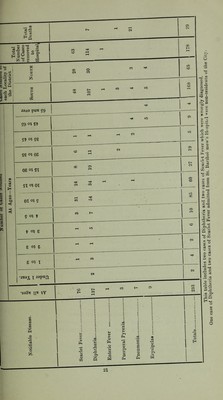
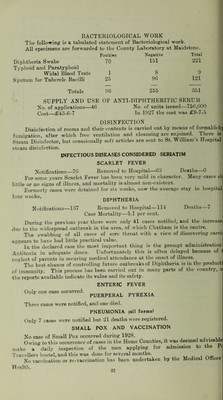
![The total number of prosecutions was 6, and fines, including costs, were impc as follows :—2 Whiskey cases, £5 and £2. Milk prosecutions, 10/- in each of four cases. In addition to the above, six samples of Milk were reported by the Analyst being deficient in fat. In one case the deficiency was so small as to raise the do as to any fat abstraction having occurred. Another sample was supplied by a householder, and there were no means proving that the Milk was as delivered. In a third case the retailer declared that the Milk was as received by him, air test sample on delivery confirmed this. In this case the deficiency was less thar per cent., and an improvement was secured. The other three cases of fat deficiency occurred under like circumstances to aforesaid, but as the deficiency was greater, further steps were taken. In conjunct with the County Officials, the farm was visited, the milking of the cows was supervis and samples were taken at the sheds. It was proved that the whole bulk of the M was deficient in fat. Individual tests were next made, and ultimately the source the trouble was traced to two Friesian cows, which were yielding an abundant sup] of Milk of poor quality, that of one being 50 per cent, deficient as compared w the minimum standard. The Milk from these cows was fed to calves, and the wh bulk of the Milk was improved by replacing the Friesians with Guernsey cows. Additionally to the above sampling, the Food and Drugs Inspector submitt 66 samples to the Gerber Test for fat contents. Some of these were examined at t request of retailers, who were doubtful of the quality of the Milk. These included s samples from Friesian cows, and as in the before mentioned cases there was a seric deficiency of fat. The cowkeeper was referred to the the County Agricultui Organiser for advice, and an improvement was secured and maintained. PUBLIC HEALTH (PRESERVATIVES IN FOOD) REGULATIONS 1927 Prior to the issue of these Regulations, the use of preservatives in various foo had become so general and so unrestricted in character that many articles in an eai stage of putrifac-tion were treated with some form of preservative which retarded t process, and which allowed unscrupulous traders to put on the market foods whi were unfit for human consumption. Many objections to the Regulations have been put forward, and for the mr part have proved to be groundless. Their inevitable effect must be to lead to great care in the production and preparation of perishable foods. Strict cleanliness and purity are essential from start to finish. The following samples of food were purchased for tests under these Regulations Beef Sausages ... 8 Saveloys ... 1 Beef Sausage Meat 1 Ginger Beer ... 3_ 13 Two samples of beef sausages contained Sulphur Dioxide in permissible quantity and a declaration of the use of preservatives was made by notice exhibited at the tir of sale. One sample of Ginger Beer contained Benzoic Acid in permissible quantity. F. PREVALENCE OF, AND CONTROL OVER, INFECTIOUS AND OTHER DISEASES Infectious diseases are divided into two categories, those which are notifiab and those which are not. The latter class includes two diseases which are vei serious and fatal amongst young children, viz, Measles and Whooping Cough. Infectious diseases are to-day better understood, better controlled and betti treated than in the past, but they still present many baffling problems. The growl of population, increased facilities for intercourse and travelling, and overcrowding many aspects all form obstacles to the success of preventive measures. The following Table shews the number of cases notified, removed to Hospital, ar](https://iiif.wellcomecollection.org/image/b30038789_0024.jp2/full/800%2C/0/default.jpg)