[Report 1904] / Medical Officer of Health, Salop / Shropshire County Council.
- Shropshire Council
- Date:
- 1904
Licence: Attribution 4.0 International (CC BY 4.0)
Credit: [Report 1904] / Medical Officer of Health, Salop / Shropshire County Council. Source: Wellcome Collection.
46/100 (page 32)
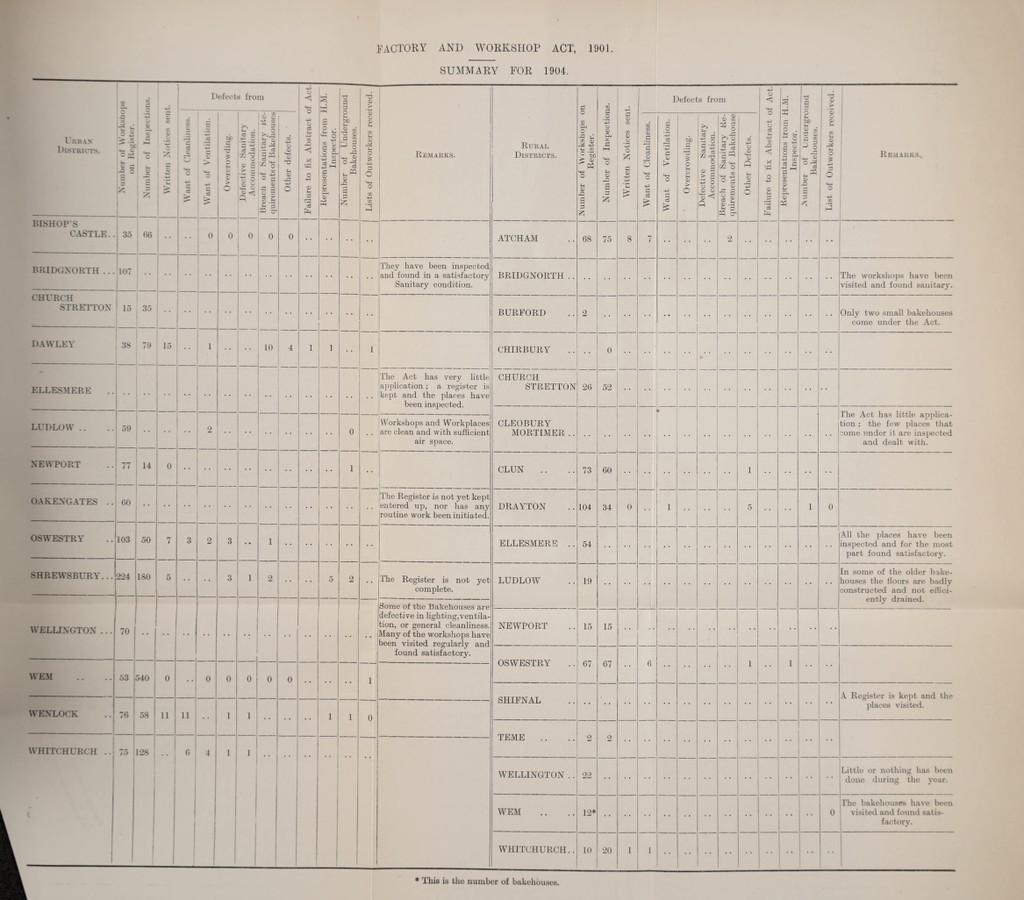
![measures as are possible will be taken to prevent the sale of tulierculous milk in the county from these farms. I wrote to Liverpool for co])ies of the Veterinary Inspectors’ reports. The lighting and ventilation of the cowsheds at both farms is condemned, and one of them is described as very dirty. Neither farm is said to be visited by any officer of the Local Sanitary Authority. Report for 2nd quarter, igoq.—I have received communications from the City of Liverpool that milk from three farms in Shropshire had been found to be contaminated with tubercle. The farms were situated in the rural districts of Atcham, lillesmere, and Oswestry. In each case I communicated with the Clerk to the District Council. In one instance only (Atcham) was an order made bv the Corporation of Liverpool, prohibiting the sale of milk in that citv. On inquiry 1 found that the sale of milk from this farm was only temporary, and had been given up entirely. The Fdlesmere farmer has satisfied the Liverpool Authorities that he is taking 2)roper precautions. With regard to the Oswestry farm, T have nor orceived a coj)}' of any Order made, so presumably satisfactory jorecautions have been taken. The .\tcham and Oswestry farms are reported as being in an insanitary condition, and it is mentioned that they are not visited bv anv officer of the sanitarv authority. This question of a ])ure milk supirly is a matter of vital consequence to the large towns, and unless the inspection of cowsheds and of dairy cattle by local authorities is done in a \-erv different manner from what is has been done in the past, we may expect to see the insjjection b\- officials frOm the towns become general throughout the country. As stated above there is no inspection of dairv cattle by the authorities of this county. Yet it is now perfectly established that the milk of cows with tuberculous udders mav give tuberculosis to human beings, and that by inspection a large projwrtion of these can be eliminated from the herds. Dr. Whitaker in his report on Shifnal, referring to tuberculosis, savs : “ There are no opportu¬ nities yet available in this county for testing the milk which is sold, in order to determine how far the danger may be there, though such tests are very desirable.” If such examinations would be followed up by veterinary inspection of the cattle, from which the milk has come and with isolation of the dangerous animals, I should strongly advise the county council to provide facilities for examination as in other infectious diseases. Examination, however, if not followed up bv projier action would be useless. I would advise that the districts of the county be notified that they may submit to Birmingham University samples of milk for examination for tuberculosis, on the under¬ standing that proper subsequent action is taken and that the countv council be notified of such action. It seems to me that the real solution of this 2)roblem, although at present the law does not permit of it, is to place the inspection of dairv cattle under the County Council. It is possible that it might be efficiently worked in conjunction with the inspection under the Contagious Diseases Animals Acts. INSPECTION. On Table V. are given the particulars of insiiection. In my 1902 and 1903 reports I have called attention to the small amount of inspection in the Wellington Rural District and the Wem Rural District. In the Wem Rural District there has been some improvement and the Medical Officer of Health says : ” By the end of the present year we hope to have made a thorough house- to-house inspection, when a more full report can be made u2)on house accommodation.” In the Wellington Rural District the inspecrion shews practically no improvement. From recent inspections I have made in the Hadlev district I am strongly of opinion that a more frequent house-to-house inspection is necessary. At Whitchurch assistance has been given to the Inspector of Nuisances so that now he is in a position to properlv cope with the work. At Oakengates the jvosts of Nuisance Inspector and Surveyor have been separated and separate officials who gi\’e their whole time to the work, appointed. Dr. Gepp recommends an assistant inspector for Shrewsbury, and considering the great desirability of making a continuous hou.se-to-house inspection, and the large amount of new work under the Factory and Workshops Act, if the inspection is to be done efficiently, there can be no doubt as to the advisability of making this appointment.](https://iiif.wellcomecollection.org/image/b30086450_0046.jp2/full/800%2C/0/default.jpg)