Beauty in woman: analysed and classified : with a critical view of the hypotheses of the most eminent writers, painters, and sculptors / by Alexander Walker.
- Alexander Walker
- Date:
- 1892
Licence: Public Domain Mark
Credit: Beauty in woman: analysed and classified : with a critical view of the hypotheses of the most eminent writers, painters, and sculptors / by Alexander Walker. Source: Wellcome Collection.
299/396 page 257
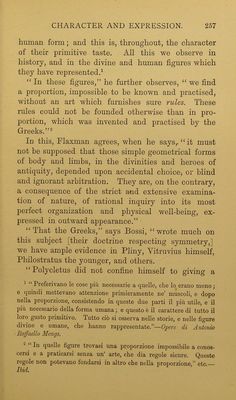
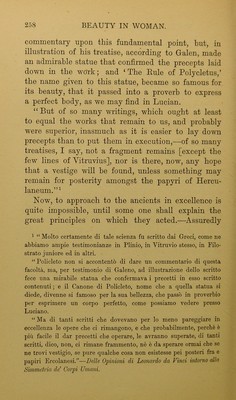
![human form; and this is, throughout, the character of their primitive taste. All this we observe in history, and in the divine and human figures which they have represented.^ “ In these figures,” he further observes, “ we find a proportion, impossible to be known and practised, without an art which furnishes sure rules. These rules could not be founded otherwise than in pro- portion, which was invented and practised by the Greeks.”^ In this, Flaxman agrees, when he says,. “ it must not he supposed that those simple geometrical forms of body and limbs, in the divinities and heroes of antiquity, depended upon accidental choice, or blind and ignorant arbitration. They are, on the contrary, a consequence of the strict and extensive examina- tion of nature, of rational inquiry into its most perfect organization and physical well-being, ex- pressed in outward appearance.” “That the Greeks,” says Bossi, “wrote much on this subject [their doctrine respecting symmetry,] we have ample evidence in Pliny, Vitruvius himself, Philostratus the younger, and others. “Polycletus did not confine himself to giving a ^ “ Preferivano le cose piu necessarie a quelle, che lo^ erano meno j e quindi mettevano attenzione primieramente ne’ muscoli, e dopo nella proporzione, consistendo in queste due parti il piu utile, e il piu necessario della forma umana; e questo h il carattere di tutto il loro gusto primitivo. Tutto ci6 si osserva nelle storie, e nelle figure divine e umane, che hanno rappresentate.”—Opere di Antonio Eaffaello Mengs. 2 “ In quelle figure trovasi una proporzione impossibile a conos- cersi e a praticarsi senza un’ arte, che dia regole sicure. Queste regole non potevano fondarsi in altro che nella proporzione,” etc. Ibid.](https://iiif.wellcomecollection.org/image/b28050964_0299.jp2/full/800%2C/0/default.jpg)