Volume 2
Cyclopædia of India and of eastern and southern Asia, commercial, industrial and scientific : products of the mineral, vegetable and animal kingdoms, useful arts and manufactures / edited by Edward Balfour.
- Date:
- 1857
Licence: Public Domain Mark
Credit: Cyclopædia of India and of eastern and southern Asia, commercial, industrial and scientific : products of the mineral, vegetable and animal kingdoms, useful arts and manufactures / edited by Edward Balfour. Source: Wellcome Collection.
72/872 page 1268
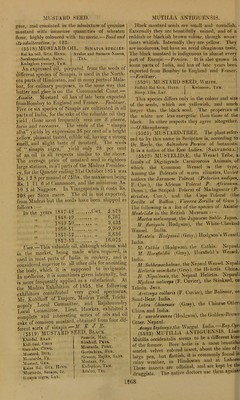
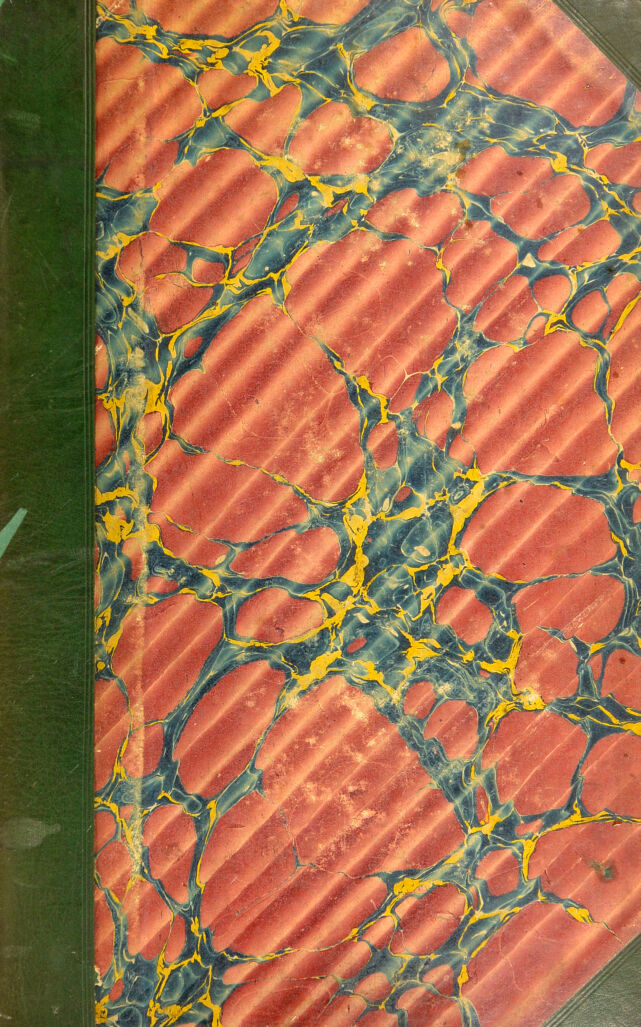
![MUSTARD SEED. MUTILLA ANTIOUKMSrS. in the admixture of genuine gree, and consisted mustard with immense quantities of wheaten Hour, highly coloured with turmeric.—Food and itt adulteration, p. 123. (5518) MUSTARD OIL. Sinapis species. Avaloe anil Sursavn Noona, Thu Kai ka teil, Guz. Hind. Sarahapatailum, Sans. Kadaghoo ytinney, Tam. An expressed oil, prepared from the seeds of different species of Sinapis, is used in the North- ern parts of liindostan, and in many parts of Mala- bar, for culinary purposes, in the same way that butter and ghee is on the Coromandel Coast.— Ainalie. Mustard oil has of late been exported fromBombay to England and France.—Faulkner. Five or six species of Sinapis are cultivated in all parts of India, for the sake of the valuable oil they vield : those most frequently seen are S. plauca, 'toria and racemosa. The seeds of the “ sinapis alba” yields by expression 30 per cent of a bright yellow’ pleasant tasted, edible oil, having a strong ’smell, and slight taste of mustard. The seeds of “ sinapis nigra,” yield only 28 per cent of an oil in all respects similar to the above. The average price of mustard seed in eighteen large stations, in a'd parts of the Madras Presiden- cy,lor the Quarter ending 31st October 1 85-1 was Ks', 1 2 8 per maund of 25lbs., the maximum being lls! 1116 atCannanore, and the minimum As. 10 5 at Nagpore. In Vizagapatarn it costs lls. 20S per Sicca carce. The oil is not exported, from Madras but the seeds have been shipped as follows :— in the years 1847-48 Cwt , 1848-49 „ 1849-50 „ 1 1850-51 „ , 1851-52 „ „ 1852-53 „ jjggs, This valuable oil, although seldom sold in the market, being made when required, is used in most parts of India in cookery, and is considered superior to all other oils foi anointing the bodv, which it is supposed to invigorate. In medicine, it is sometimes given internally, but is move frequently applied as a rubefacient. At the Madras Exhibition of 1855, the following- exhibitors contributed very good specimens, Mr KohlhotT of Tanjore, Madras Tariff, '1 nchi- nopolv Local Committee, and Rajahmundry Local Committee. Lieut, llawkes, exhibited a complete and interesting series of oils and oil cake of common mustard, obtained born lour dif- ferent sorts of sinapis.-—M. & X R' (55191 MUSTARD SEED, Black. Sasavie, Mai.. Sirshuff, l’sus. Mostanla, Poky. 5,823 6,767 9,435 9,909 3,636 16,075 (5519) K-hirdal. Arad. Kidi-tsai, Chin Gan-aha, Cyng. Mosterd, l)ur, Moutarde, Fg. Muatert, Geh. Kalee Kai, Guz. UlNT). Mostarda, Senapa, It. jrjiuapis nigra, Lav. Gortschiza, Bus. Sirsomi, Rajika, Sans. Mostaza, Sr. Kadaghoo, Tam. Avaloo, Tee. Black mustard seeds arc small and roundish. « Externally they are beautifully veined, and of a reddish or blackish brown colour, though some- times whitish. Internally they are yellow. They are inodorous, but have an acrid oleaginous taste, The black mustard is indigenous in almost every part of Europe—Pereira. It is also grown in some parts of India, and has of late years been exported from Bombay to England and France. —Faulkner. (5-520) MUSTARD SEED, White. Sufteid ltiii Guz, Hind. | Kndoouuo, Tam. Siunp Alba, Cat. This species differs only in the colour and size of the seeds, which are yellowish, and much larger than the black seed. The properties of the white are less energetic than those of the black. In other respects they agree altogether. —O'Shnnghnessy. (5521) MUSTARD-TREE. The plant refer- red to by this name in Scripture is, according to i Dr. Royle, the Sulradora Persian of botanists. It is a native of the East Indies. [Salvadoua.] (5522) MUSTELIDzE, the Weasel Tribe, a: family of Digitigrade Carnivorous Animals, of- which the Common IVensel is the type, Among the Polecats of warm climates, Cuvier ■ notices the Javanese Polecat (Putorius nndipes, F. C«v.)t the African Polecat. P. Africans. Desm), the Striped Polecat of Madagascar (P. driatus, Cuv.), and the Cape Polecat (the Zorille of Button; Fiverra Zorilla of Gum ). The following is a list of the species ot Asiatic Mustelida in the British Museum Maries melanopus, the Japanese Sable. Japan. M. Jlaviyula (Hodgson), the White-Cheeked Weasel. India. Mustela Hodysouii (Gray,) 1 Iodgson’s 11 easel. India. M. Catkin (Hodgson), the Cathia. NepauL M. llorsfieldii (Gray), llorstteld’s Weasel. India. r M. Subhemaehalana, the Nepnul II easel. Nepal. Helictis moschata (Gray), the Helictis. China. 11. Nipatensis, the Nepaul Helictis.. Nepaul. Mydaus meliceps (F. Cuvier), the Stinkard, or Teledu. Java. Arctonyx collars (F. Cuvier)* the Balisaur, ot Sand-Bear. India. . Lutrn Chinensis (Gray), the Chinese Otter China and India. L. aurohrnnnea (Hodgson), the Golden-Grown Otter. Nepaul. _ Aonyxleptonyx.Wte IVargul. Indw:—■Eng.Cfi (5523) MUTILLA ANTlGUENblS, I min Mutilla occidentalis seems to be a different kino of the former. Beer botie is a most beautiln, scarlet velvet colored insect, about the size ot ; lar-e pea, but flattish, it is commonly found h rainv weather, in liindostan and at Lahore- These insects arc officinal, and arc kept by tti< druggists. The native doctors use them agains- 1868](https://iiif.wellcomecollection.org/image/b28708921_0002_0072.jp2/full/800%2C/0/default.jpg)