[Report 1898] / Medical Officer of Health, Rotherham County Borough.
- Rotherham (England). County Borough Council
- Date:
- 1898
Licence: Attribution 4.0 International (CC BY 4.0)
Credit: [Report 1898] / Medical Officer of Health, Rotherham County Borough. Source: Wellcome Collection.
12/32 page 12
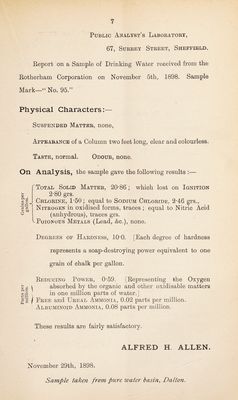
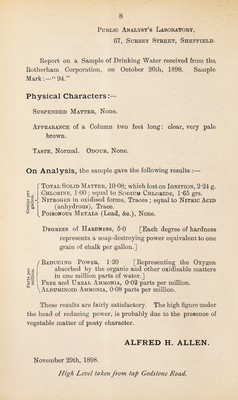
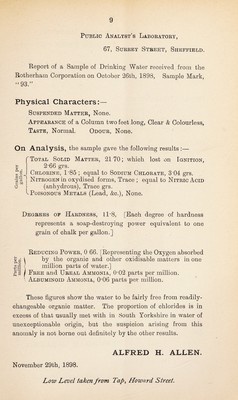
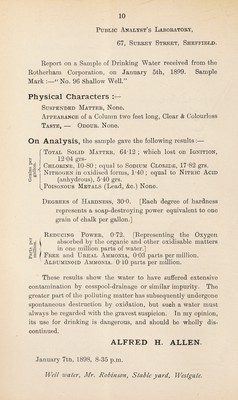
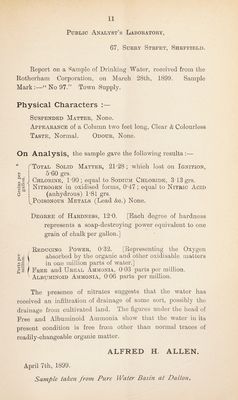
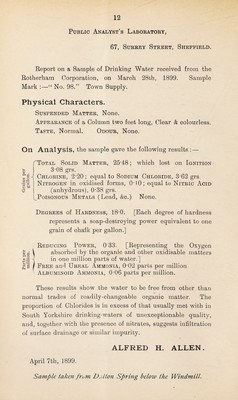
![Public Analyst’s Laboratory, 67, Surrey Street, Sheffield. Report on a Sample of Drinking Water received from the Rotherham Corporation, on March 28th, 1899. Sample Mark :—“ No. 98.” Town Supply. Physical Characters. Suspended Matter, None. Appearance of a Column two feet long, Clear & colourless. Taste, Normal. Odour, None. On Analysis, the sample gave the following results : — f Total Solid Matter, 25-48; which lost on Ignition S3 | 3-08 grs. Chlorine, 2-20; equal to Sodium Chloride, 3-62 grs. | Nitrogen in oxidised forms, 0*10; equal to Nitric Acid o | (anhydrous), 038 grs. ^Poisonous Metals (Lead, &c.) None. Degrees of Hardness, 18-0. [Each degree of hardness represents a soap-destroying power equivalent to one grain of chalk per gallon.] / Reducing Power, 0 33. [Representing the Oxygen « s [ absorbed by the organic and other oxidisable matters < in one million parts of water.] I Free and Ureal Ammonia, 0-02 parts per million Albuminoid Ammonia, 0-06 parts per million. These results show the water to be free from other than normal trades of readily-changeable organic matter. The proportion of Chlorides is in excess of that usually met with in South Yorkshire drinking-waters of unexceptionable quality, and, together with the presence of nitrates, suggests infiltration of surface drainage or similar impurity. ALFRED H. ALLEN. April 7th, 1899. Sample takeyi from Dalton Spring below the Windmill.](https://iiif.wellcomecollection.org/image/b3004246x_0012.jp2/full/800%2C/0/default.jpg)