[Report 1968] / Medical Officer of Health, Hawarden R.D.C.
- Hawarden (Wales). Rural District Council.
- Date:
- 1968
Licence: Attribution 4.0 International (CC BY 4.0)
Credit: [Report 1968] / Medical Officer of Health, Hawarden R.D.C. Source: Wellcome Collection.
4/32 (page 2)
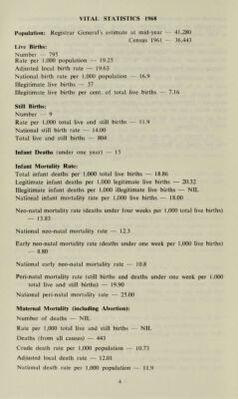
![Mr. Chairman, Ladies and Gentlemen, I have the honour to present to you the Annua] Report on the Health of the Hawarden Rural District for the year 1968. The Registrar General's estimate of the population at mid-year 1968 was 41,280, an increase of 1,050 over the previous year. The Birth and Death Rates are based on this population estimate, whilst for comparison with other Districts, comparability factors of 1.02 for Births and 1.12 for Deaths are applied. Live births for the year numbered 795, giving a birth rate of 19.25 per thousand population, the national rate being lower at 16.9. There were 15 more births, compared with 1967. Deaths amounted to 443, giving a death rate of 10.73 per thousand population. The national death rate was higher, at 11.9 per thousand. There were 15 deaths of infants under one year of age (compared with 15 in 1967). The death rate of infants per thousand live births was 18.86, compared with the national rate of 18.0. Of the infant deaths, seven occurred in the first week after birth. The chief causes of death (all ages) were diseases of the heart and circulatory system (Nos. 13 to 18 in the table) 231 of the 443 total, and cancer 84. Circulatory deaths rose by 26 and cancer deaths by 14. Accidents accounted for 10 deaths, 6 being motor accidents, and 4 other accidents, a reduction of 6 compared with 1967. There were no reports of diphtheria, whooping cough or of poliomyelitis in the District, but the need for immunisation of infants against these diseases continues. There were 206 notifications of infectious diseases, which included 178 cases of measles, pneumonia 5, scarlet fever 3, dysentery 14, food poisoning 3, and paratyphoid fever 1. In addition, there was one case of Pulmonary Tuberculosis. Once more, housing matters occupied much of the time of the Health Department. Visiting and inspection of houses consume a great deal of time. Many of the applicants for Council houses take up residence with their parents, often aggravating overcrowding. Others move into unsuitable accommodation, and complain about the conditions under which they are living. The caravan sites continue to be a source of complaint by some of the occupiers. One can doubt the wisdom of allowing the establishment of sue1’ sites in the first place, as it appears that caravan dwelling is little better than grossly sub-standard housing. The trend of legislation appears to be in favour of modernising of old houses, in place of the clearance policies which prevailed a few years ago. In view of the deplorable slowness of building methods today, this new](https://iiif.wellcomecollection.org/image/b2884662x_0004.jp2/full/800%2C/0/default.jpg)