Content advisory
This digitised material is free to access, but contains information or visuals that may:
- include personal details of living individuals
- be upsetting or distressing
- be explicit or graphic
- include objects and images of objects decontextualised in a way that is offensive to the originating culture.
Licence: In copyright
Credit: Nice, France. Source: Wellcome Collection.
24/66
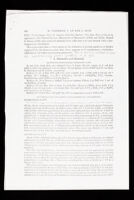
![004 H. FRIEDMAN, P. LU AND A. RIC1Í • ** • carried out at 2 to 4°C. The paste was suspended in 1 ml. of medium IV (containing 10 Hg DNase/ml. (Worthington)) per gm of 22. coZ¿. The alumina and cell debris was pelleted at 27,000 g for 20 min. The supernatant was saved and the pellet of alumina and cellular debris was re-extracted twice more with 0-5 ml. of medium IV (with 10 fig DNase/ml.) per g of E. coli . The combined supernatants were clarified twice at 27,000 g for 30 min. The native 50 s and 30 s ribosomal subunit s used for the in vit ro binding and incorpora tion experiments were separated from the 70 s material by zone sedimentation on a 36 ml. 15 to 30% (w/w) sucrose-medium IV gradient in a Spinco SW27 rotor for 14 hr at 95,000 g. The appropriate peaks were pooled and the subunits were pelleted after a 48-hr centrifuga- tion at 80,000 g in a Spinco rio. 30 rotor. These ribosomes were resuspended in medium IV frozen in liquid nitrogen and stored at — 20°C. The native ribosomes used for the measurement of the transfer UNA to 5 s RNA ratios were made by layering 6-ml. portions of the extract from the alumina-ground cells onto 5 ml. of 15% sucrose-medium IV in IEC 10-ml. polycarbonate tubes. These were centri - fuged for 12 hr at 160,000 g in the Spinco TioO rotor. The pellets were resuspended in medium IV and then layered onto a 1145-ml. 10 to 40% glycerol gradient in a BXV-5 zonal rotor. The material was centrifuged at 20,000 rev./mm for 20 hr. The ribosomal particles were concentrated by ultrafiltration in an Amiconi 400 with XM50 membranes. Salt-washed (NPLC1) ribosomes were prepared by the method of Iwasaki, Sabol, Wahba 6 Ochoa (1968). The final ribosomal pellet was resuspended in medium IV and stored at ~20 °C. (e) UNA extraction and in vitro amino-acid incorporation RNA from ribosomes and phage R17 were extracted according to a modified procedure of Oda & Joklik (1907). The solution containing the RNA was made 0*2 m in NaCI and 1% in sodium dodecyl sulfate and allowed to stand at room temperature for 15 min. It was precipitated with 2 vol. of ethanol at — 18 : G overnight. The precipitate was pelleted at 1000 g for 10 min at 2°G and resuspended in 1 ml. of 0*05 m -sodium acetate, 0-01 M-Na 2 EDTA (pli 5-1) and 1% sodium dodecyl sulfate. Sodium Perchlorate was added to 0-5 m and the solution was deproteinized twice with an equal volume of a 24:1 (v/v) solution of chloroform and isoamyl alcohol. The aqueous phase was made 0-2 M in NaCi and the RNA was precipitated with 2 vol. ethanol at — 18°C overnight. The precipitate was pelleted and lyophilized. The recovery of material absorbing at 200 am was 80 to 100%. Amino-acid incorporation in a cell-free system primed by R17 RNA was assayed in 0-1 -ml. reaction mixtures containing 0-05 M-Tris-HCl (pH 7-7), 0-06 m-KCl, 0-006 m -reduced glutathione, 1*1 x 10 m of each of 19 amino acids other than alanine, 1-1 x 10 5 M[ 1 ' i O]alanine (123 mGi/m-mole), 5 x 10 4 m- GTP, 1-1x10 3 m -ATP, 0-018 M-creatine phosphate, 0-1 mg creatine kinase/ml. 5-6 x 10 6 m ~tRNA (E. coli Kl2, stripped, Genera/ Biochemicals), 0-1 mg folinic acid/ml. (calcium salt) 4 A 2Q0 R17 RNA /mL, 0 -6 mg super natant protein/ml. and ribosomes as indicated. The magnesium acetate concentration was corrected to account for that added with the ribosomes and supernatant to a final concentration of 0-012 m. Incubations were carried out at 37 °C for 90 min and stopped with 0* 1 ml. of 0-2 m -Nu OR ; the incubation was continued for another 30 min at 37°C. A solution (2 ml.) oí 10% trichloroacetic acid— 1% Gasammo acids was added and, after cooling for 30 to 60 min at 0 C C, the precipitates were filtered on Millipore filters and counted on a Nuclear Chicago gas-flow low background counter. The supernatant (8-IOOj and initiation factors were prepared as described bv Iwasaki et al. (1988). (f) Polyacrylamide gel electrophores-is Cylindrical gels used for the analysis of 4 s and. 5 s RNA contained 7% acrylamide and 0-15 5% A,A '-me^ylenebisacrylamide. They were polymerized as described by Peacock 6: Dingman (100)7/. About 3 ^l 2 eo units of RNA were run on a gel 8 cm long and 6 mm in diameter. The gels were run at room temperature for 80 min in the Peacock & Dingman bufier plus 0-25% sodium dodecyl sulfate at 4 mA/gel. Gels were scanned at 260 nm in a Gilford model 240 spectrophotometer equipped with a linear transport. The transfer RNA standard was E. coli stripped soluble RNA](https://iiif.wellcomecollection.org/image/b18182604_PP_CRI_E_1_19_10_0024.jp2/full/800%2C/0/default.jpg)
 No text description is available for this image
 No text description is available for this image
 No text description is available for this image