Content advisory
This digitised material is free to access, but contains information or visuals that may:
- include personal details of living individuals
- be upsetting or distressing
- be explicit or graphic
- include objects and images of objects decontextualised in a way that is offensive to the originating culture.
Licence: In copyright
Credit: Nice, France. Source: Wellcome Collection.
27/66
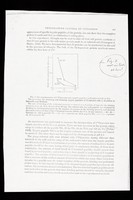
!['■.■'l'ïSF&fcr''-. w J — • • . . 7 . , • # a r \ \ - ¿S£¿¿ a: .'y; - Ú :Ws&£•¡•-•¿ú'-.-vV'»'i—.' « é *i ,V* IÍWVÍA-V'Í ' -:'^'.r / •;$&& -- V- .*» Iv-W -á-ülv'i;' ' Ä.:ü-. »• ?«- ; >** «.' >*. VA,.- ^V'íri; í ->.'V^V^-¿.í¿^CVvt J .¿-U :¿'/ó.¿iÍV4.'k.kv^ > .; CVft&*UòL T E M F E Pv A T ü R E C O JS ï R OL OF 1NITIA Ï ì O X 007 appearance of specific tryptic peptides of the protein, one can show that the complete protein is made and that no reinitiation is taking place. In this experiment, rifampin can be used to shut off host cell protein synthesis so that f2 coat protein is the only major protein made in an infected cell (Fromageot & Zinder, 1968). We have demonstrated that f2 proteins can be synthesized in the cold in the presence of rifampin. The bulk of the f2-dependent protein synthesis occurs within the first hour at 5°C. J s e 1-0 i o ! O (D CJ h- o 05 0 o o CD CI 'à O 0 Tyr 58 Tyr42 0 15 • »'-t-n _ ^ . Z srt Gsf** (/\ ZMK , / ) ¿>¿< LUJJ ' V. —O 30 Time Ü t 6 C C ( miri) -i 3 •1 F ig . 2. The incorporation of [ 11 C]tyrosinc into try p tic peptides in f2-infected cells at 6°C. The procedure for obtaining and counting tryptic peptides of f ,2 - infected cells is described, in Materials and Methods. The rate of labeling of the indicated tyrosines is plotted as a function of time for the labeling intervals; 0 to 13> 10 to 20 and 20 to 40 min. The relative fate for each peptide was obtained by dividing its disintegrations/inin by the number of minutes in the labeling interval, and plotting the result relative to that of the C-terminal tyrosine 129 for the 0 to 13-min interval. — Tyrosine no. 129 in peptide Ti —rj—D—* tyrosine no. 58 in peptide T9: —Q—Q—, tyrosine no. 42 in peptide TS. «35 •? \ \ J I ! » i A I I J i i An experiment was performed to measure the incorporation of [ 14 C]tyrosine into tryptic peptides of the f2 coat protein. There are four tyrosines in the protein which occur at residues 42 (in peptide T8), 58 (in T9), 85 (in T10) and 129 (in Tl) (Weber, 1966,). Tryptic peptide T10 is in the trypsin-resistant core of the protein and cannot be resolved. The other three can be separated by electrophoresis at pH 3-5. The phage-infected cells were labeled with [ 14 C]tyrosine during different time intervals in the cold and the entry of the radioactive label into the tryptic peptides was determined. If there is reinitiation of proteins, the amount of radioactivity in each peptide should be the same during either pulse or continuous labeling. If there is no reinitiation, the amount of label found in C-terminal peptides should exceed that- found in internal peptides, and at- late times, there should be no labeline of N-terminal peptides. The amount of label found in N- terminal relative to C-terminal peptides is thus a measure of the residual amount of initiation which can occur. Since there is no tyrosine in a peptide near the amino terminus of the protein, labeling was performed at late times, in this way t he l ibeling of the internal tryptic peptides (tyrosines no. 42 and no. 58) served as a measure of reinitiation. The two internal tryptic peptides are so 6 near each other in the protein that their labeling pattern should be virtually identical and they therefore serve as a check on each other and on the experimental methods.](https://iiif.wellcomecollection.org/image/b18182604_PP_CRI_E_1_19_10_0027.jp2/full/800%2C/0/default.jpg)

 No text description is available for this image
 No text description is available for this image
 No text description is available for this image