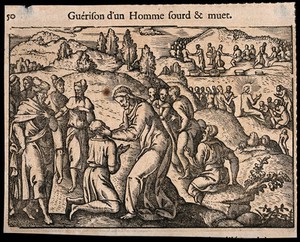
Among the many healing miracles of Christ that are described in the New Testament, there is only one description of the healing of 'a deaf and mute man'. The scene is also rarely portrayed in early modern art, which can perhaps be associated with the relative lack of stigma and social integration of prelingually deaf people as compared to other types of sensory and physical disabilities. Although early modern philosophical and theological discourses considered prelingually deaf people less intelligent, sources documenting their everyday lives and actual legal and religious status do not confirm this bias. In the middle, and background, of Leclerc's print, are the miracle of loaves and fishes and the sermon on the mount. The combination of these episodes underscores the exegetical interpreation of Christ's healing miracles as expressions of his mercy. This created a model for almsgivers, in which the performance of works of mercy was akin to New Testament healing miracles, depriving people with disabilities of agency and accentuating the importance of charitable deeds for benefactors. (Source: Barbara Kaminska and Jess Bailey, Historians of Netherlandish Art conference workshop 2024).
Woodcut on verso numbered 49, of the "Guérison de la fille de la Chananée"