The wonders of the universe : a record of things wonderful and marvelous in nature, science, and art / introduction by Charles Barnard.
- Date:
- [1885], ©1885
Licence: Public Domain Mark
Credit: The wonders of the universe : a record of things wonderful and marvelous in nature, science, and art / introduction by Charles Barnard. Source: Wellcome Collection.
116/448
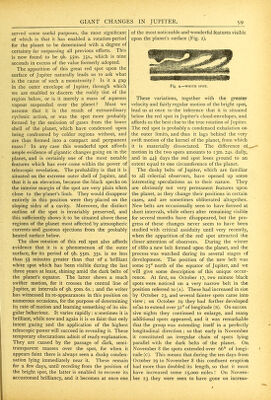
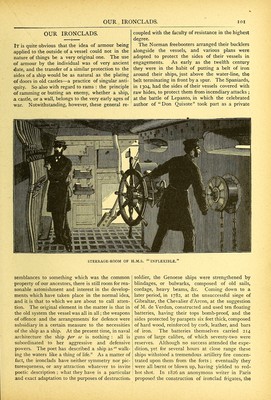
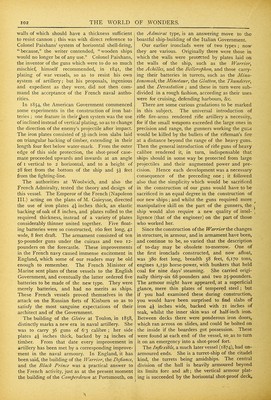
![far more inventive talent where they are carried separate from the person, and probably every portion of a ship and its furniture has at some time or other served as a hiding-place. Cigars strung together end to end on a long line have been found dropped betvi'een the outer and inner skin of the vessel ; blocks of wood, ships' fenders, and other articles, including even a loaf of bread, are here shown hollowed out and stuffed with contraband tobacco. Even the rigging has helped in the work, for here are ships' blocks, with wheels inside, instead of being constructed of iron, made of com- pressed tobacco. Our attention is next directed to a pigeon cage, which at one time belonged to a certain enterprising stewardess, who added to her income by carrying pigeons from Rotterdam. Pigeons not being subject to any tax, one was clearly at liberty to do so ; but unfortunately it was found that the cage had a false bottom, under which was concealed a quantity of Cavendish tobacco. We may mention that the same birds have more recently been detected as aiders if not abettors to the smuggler. Two dozen carrier pigeons were let off regularly from Belgium to find their way across the French frontier : each bird being burdened with about fifteen grammes of tobacco in the form of a coil. One of t]je birds fell exhausted in the Seine, and this led to a dis- covery of the system, which was speedily stopped. Another still more cunning:, and bold way of cheat- ing the revenue is represented by a cake of material which well imitates the oil-cake upon which cattle are fattened. A large quantity of this stuff was imported, but was found on exami- nation to consist of compressed snuff. The duty on oil-cake was about a penny per pound, while that on snuff was three shillings or more ; so that the substitution of one for the other left a con- siderable margin for profit on the transaction. Sometimes the smugglers have been too cautious to trust their goods inside the vessel, for bladders of spirit and tobacco, and in other cases lo^ster- pots full of various articles, have been found float- ing, but attached to a cord below the water-line. For many years it was customary to destroy the goods smuggled, and they were taken to a furnace in the London docks which was crowned by a huge chimney-shaft. This receptacle was known as the Queen's tobacco-pipe, and sometimes it emitted its fragrant smoke for many days together. Of late years this wasteful procedure has ceased, and the forfeited tobacco has been consigned to the commissariat officers for distribution among our soldiers when on active service. As we have already hinted, smuggling is on the decline. Such cases as now come before our magistrates are of the most commonplace character, and bear very little of that romance about them which used to hang about the doings of the bold buccaneer. Not long ago, a parcel of tobacco weighing 34 lbs. was dropped on the beach at New Brighton, and re- mained unclaimed. This proves in a measure that the Customs officers are well on the alert. There is little likelihood that the ingenious methods of smuggling goods which we have enumerated will ever be repeated. GIANT CHANGES IN JUPITER. Manifold as are the wonders displayed amongst the celestial bodies, there are few perhaps of more striking interest than that exhibited by the largest planet of our solar system—Jupiter. Apart from his enormous bulk, which enables his leading features to be discerned with telescopes of very moderate capacity, he shows unmistakeable evi- dence that his surface is in a state of great com- motion. Highly-coloured markings of large extent and definite outline appear on his disc, and give rise to a remarkable series of phenomena very difficult of explanation, but which are certainly, the outcome ,of marvellous forces such as have no analogy upon the surface of our own earth. This is rendered patent by very recent results of tele- scopic scrutiny directed to this planet, and is more- over corroborated by former observations. Fig. I.—THE RED SPOT. In 1878 there appeared a large red spot on Jupiter's southern hemisphere, and this curious formation has certainly caused the planet to receive more attention than at any other period since the invention of the telescope. The spot we allude to is of extraordinary size, the approximate dimensions being 29,000 miles in length and 8,300 in breadth. It is elliptical in form, with tapering ends, and the major axis lies perfectly parallel with the dusky belts of the planet. The early history of this singular object is merged in doubt, for when in July, 1878, it first conspicuously attracted notice, it was already well developed, and we cannot trace its - earlier stages of formation from prior observations. We may, however, safely assume that in 1877 the spot could not have been visible under the same bold aspect as that which immediately led to its detection in the summer of 1878. During the four years which have now elapsed this object has preserved its integrity of figure and persistency of appearance. It is now fainter than formerly, and black specks are visible at the ends (Fig. i). We may infer that these changes indicate the approaching disappearance of the spot. It has](https://iiif.wellcomecollection.org/image/b21498830_0116.jp2/full/800%2C/0/default.jpg)