A literal interlineal translation of the first four books of Celsus De medicina; with "Ordo" and text: translated from the text selected for the examination of candidates at Apothecaries' Hall, and other public boards; in which the elliptical constructions are completed by supplying the suppressed words, shewing the relations and concords of the different words with each other / with an introduction ... by Robert Venables.
- Aulus Cornelius Celsus
- Date:
- 1837
Licence: Public Domain Mark
Credit: A literal interlineal translation of the first four books of Celsus De medicina; with "Ordo" and text: translated from the text selected for the examination of candidates at Apothecaries' Hall, and other public boards; in which the elliptical constructions are completed by supplying the suppressed words, shewing the relations and concords of the different words with each other / with an introduction ... by Robert Venables. Source: Wellcome Collection.
29/326 page 13
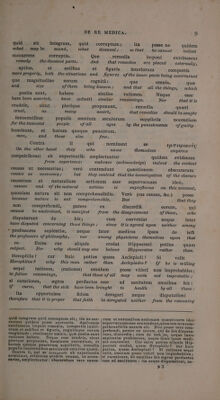
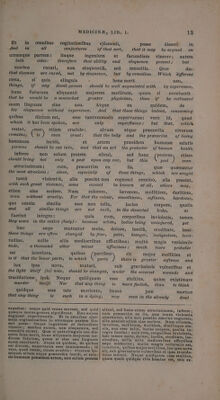
![Et in omnibus cogitationibus — ejismodi, posse disseri in And in ail conjectures of that sort, that it may be argued on utramque partem: itaque ingenium et facundiam vincere; autem both sides: therefore that ability and eloquence = prevail; but morbos curari, non eloquentia, sed remediis. Que dis- that diseases arecured, not by eloquence, but by remedies. Which different creta, si’ quis elinguis . bene norit usu, things, if any dumbyperson should be well acquainted with by experience, hunc futurum aliquant6é majorem medicum,- quam si excoluerit that he wouldbe a somewhat greater physician, than if he cultivated suam linguam sine usu. Atque ea quidem, de his eloquence without experience. And that those things indeed, concerning quibus dictum est, esse tantummodo supervacua; verd id, quod which it has been spoken, are only superfiuous; but that, which restat, esse, etiam crudele: alvum atque precordia vivorum remains, is even cruel: that the belly and the precordia of living hominum incidi, et artem przsidem humanz _ salutis persons should be cut into, and thatanart the protector of human health inferre non solum_. pestem alicui, sed hanc pestem etiam should bring not only a@ pest uponany one, but this pest even atrocissimam ; cum, presertim ex iis, que querantur the most atrocious; since, especially of those things, which are sought tanta violentia, alia possintnon cognosci omnind, alia possint, with such great violence, some cannot be known ataill, others Mays etiam sine scelere. Nam colorem, levorem, mollitiem, duritiem, even without cruelty. For that the colour, smoothness, softness, hardness, que omnia similia esse) non tava. inciso corpore, qualia and all similar things are not such, in the dissected body, as fuerint integro: quia cum, corporibus inviolatis, tamen they were in the entire (body): because when, bodies being uninjured, yet hec sepe mutentur metu, dolore, inedia, cruditate, __ lassi- these things are often changed by fear, pain, hunger, indigestion, lassi- tudine, mille aliis mediocribus affectibus; multd magis verisimile tude, a thousand other minor affections; much more probable est interiora, : quibus Ree) sit major mollities et is it that the inner parts, to which parts thereis greater softness and lux ipsa nova, mutari, sub gravissimis vulneribus et the light itself (is) new, should be changed, under the severest wounds and trucidatione ; ipsa. Neque quidquam esse stultius, quam existimare murder itself. Nov that any thing is more foolish, than to think quidque esse tale moriente, immo jam mortuo that any thing is such ina dying, nay even in the already dead == eee expediat: neque quid venas moveat, sed quid | alicui, sed hance etiam atrocissimam, inferre ; queque maotus genera significent. Hecautem|cum presertim ex jis, que tanta violentia cognosci experimentis. Et in omnibus ejus- | querantur, alia non possint omnino cognosci, modi cogitationibus in utramque partem dis-| alia possint etiam sine scelere. Nam colorem, seri posse: itaque ingenium et facundiam levorem, mollitiem, duritiem, similiaque om- vincere ; morbos autem, non eloquentia, sed | nia, non esse talia, inciso corpore, qualia in- remediis curari. Quz si quis elinguis usu dis- | tegro fuerint: quia cum, corporibus inviolatis, creta bene norit, hunc aliquanto majorem me- | hee tamen metu, dolore, inedia, cruditate, las- dicum futurum, quam si sine usu linguam | situdine, mille aliis mediocribus affectibus suam excoluerit. Atque ea quidem, de quibus Seepe mutentur; multo magis verisimile est, est dictum, supervacua esse tantummodo; id]} interiora, quibus major mollities, luxipsa nova vero, quod restat, etiam crudele: vivorum ho- sit, sub gravissimis vulneribus et ipsa trucida- minum alvum atque precordia incidi, et salu-| tione mutari, Neque quidquam esse stultius, tis humane presidem artem, non solum pestem! quam quale quidque vivo homiue est, tale ex-](https://iiif.wellcomecollection.org/image/b33283941_0029.jp2/full/800%2C/0/default.jpg)