A literal interlineal translation of the first four books of Celsus De medicina; with "Ordo" and text: translated from the text selected for the examination of candidates at Apothecaries' Hall, and other public boards; in which the elliptical constructions are completed by supplying the suppressed words, shewing the relations and concords of the different words with each other / with an introduction ... by Robert Venables.
- Aulus Cornelius Celsus
- Date:
- 1837
Licence: Public Domain Mark
Credit: A literal interlineal translation of the first four books of Celsus De medicina; with "Ordo" and text: translated from the text selected for the examination of candidates at Apothecaries' Hall, and other public boards; in which the elliptical constructions are completed by supplying the suppressed words, shewing the relations and concords of the different words with each other / with an introduction ... by Robert Venables. Source: Wellcome Collection.
35/326 page 19
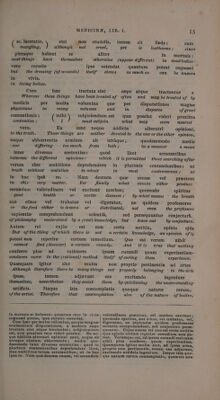
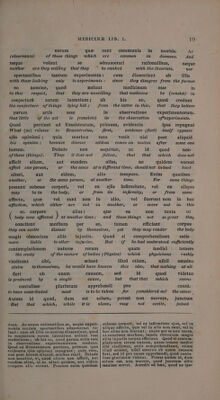
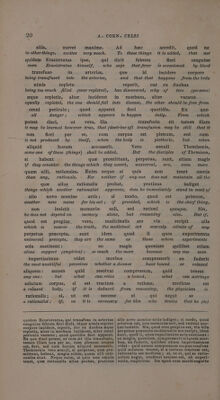
![eorum que sunt communia in morbis. Ac (observance) of those things which are common in diseases. And neque volunt _ se adnumerari rationalibus, neque neither ave they willing thatthey ° be ranked with the theorists, nor spectantibus tantum experimenta: cum dissentiant ab illis with those looking only toexperiments: since they disagree from the former eo nomine, quod nolunt medicinam esse in tn this respect, that they are unwilling that medicine be (consist) in conjectura rerum latentium; ab his eo, quod = credunt the conjecture of things lying hid; from the latter in this, that they believe parum artis esse in observatione experimentorum. that littie of the art is (consists) in the observation offexperiments. Quod pertinet ad Erasistratum, primum, evidentia ipsa repugnat What (as) relates to Erasistratus, Sirst, evidence (fact) itself opposes ejis opinioni ; quia morbus Taro venit nisi post aliquid his opinion; because disease seldom comeson unless after some one horum. Deinde non sequitur, ut id quod non of these (things). Then it does not follow, that that which doesnot afficit: alium, aut eundem alias, ne quidem noceat affect one persons or the same ata different time, should not indeed hurt alteri, aut eidem, alio tempore. Enim quedam another, or the same person, at another time. For some things possunt subesse corpori, vel ex ejfis infirmitate, vel ex aliquo may be in the body, or from tts infirmity, or «from some affectu, que vel sunt non in alio, vel fuerunt non in hoc affection, which either are not in another, or were not im this sc. corpore alias ; que ea non tanta ut ( body now affected at another time; and thosethings not sogreat thay concitent morbum per se, tamen efficiant corpus they can excite disease by themselves, yet they may render the body magis obnoxium aliis injuriis. Quod si comprehendisset satis more liable to other injuries. But if hehad understood sufficiently contemplationem nature rerum quam medici temere the study of the nature of bodies (Physics) which physicians rashly vindicant sibi, scisset illud etiam, nihil omnino claim tothemselves, he would have known this also, that nothing atail fieri ob unam causam, sed id quod. videtur is produced by a single CAUSE y but thatthat which seems contulisse plurimum apprehendi pro causa. to have contributed most istobetaken for (considered as) the cause 4 Autem id quod, dum _ est solum, potest non movere, junctum But that which, while it is alone, may not excite, joined subesse corpori, vel ex infirmitate ejus, ve] ex aliquo affectu, qu vel in alio non sunt, vel in hoe alias non fuerunt; eaque per se non tanta, ut concitent morbum, tamen obnoxium magis aliis injuriis corpus efficiant. Quod si contem- plationem rerum nature, quam temere medici sibi vindicant, satis comprehendisset, etiam illud scisset, nihil omnino ob unam causam fieri, sed id pro causa apprehendi, quod contu dant. Ac neque rationalibus se, neque experi- menta tantum spectantibus adnumerari vo- lunt: cum ab illis eo nomine dissentiant, quod in conjectura rerum latentium nolunt esse medicinam; ab his eo, quod parum artis esse in observatione experimentorum § credunt. Quod ad Erasistratum pertinet, primum ipsa evidentia ejus opinioni repugnat; quia raro, nisi post horum aliquid, morbus venit. Deinde | fi é C 1 non sequitur, ut, quod alinm non afficit, aut | lisse plurimum videtur. Potest autem id, dum eundem alias, id ue ajteri quidem, aut eidem | solum est, non movere, quod junctum aliis tempore alio noceat. Possunt enim quedam | maxime movet. Accedit ad hxc, quod ne ipse](https://iiif.wellcomecollection.org/image/b33283941_0035.jp2/full/800%2C/0/default.jpg)