Thirty-sixth annual report of the directors of James Murray's Royal Asylum for Lunatics, near Perth. June, 1863.
- James Murray's Royal Asylum for Lunatics
- Date:
- 1863
Licence: Public Domain Mark
Credit: Thirty-sixth annual report of the directors of James Murray's Royal Asylum for Lunatics, near Perth. June, 1863. Source: Wellcome Collection.
58/112 (page 52)
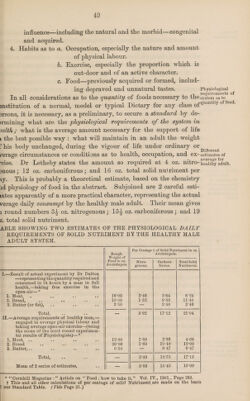
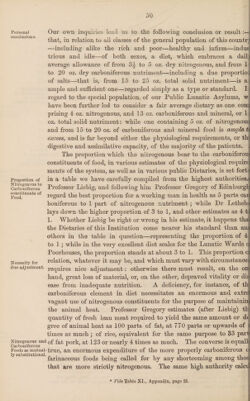
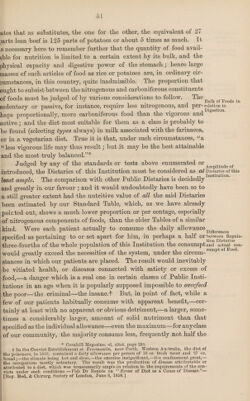
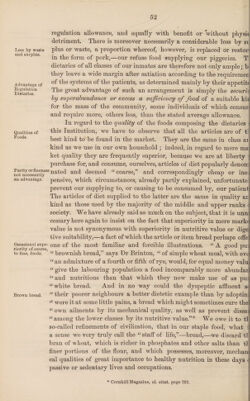
![regulation allowance, and equally with benefit or without physic detriment. There is moreover necessarily a considerable loss by si; plus or waste, a proportion whereof, however, is replaced or restor in the form of pork,— our refuse food supplying our piggeries. T dietaries of all classes of our inmates are therefore not only ample; b they leave a wide margin after satiation according to the requiremer of the systems of the patients, as determined mainly by their appetiti The great advantage of such an arrangement is simply the securk by superabundance or excess a sufficiency of food of a suitable kii for the mass of the community, some individuals of which consul and require more, others less, than the stated average allowance. In regard to the quality of the foods composing the dietaries « this Institution, we have to observe that all the articles are of t] best kind to be found in the market. They are the same in class ai kind as we use in our own household ; indeed, in regard to mere ma ket quality they are frequently superior, because we are at liberty purchase for, and consume, ourselves, articles of diet popularly denon; not necesfarUy688 na^e(^ and deemed “ coarse,” and correspondingly cheap or ine an advantage, pensive, which circumstances, already partly explained, unfortunate prevent our supplying to, or causing to be consumed by, our patient The articles of diet supplied to the latter are the same in quality ar kind as those used by the majority of the middle and upper ranks • society. We have already said so much on the subject, that it is unn cessary here again to insist on the fact that superiority in mere mark* value is not synonymous with superiority in nutritive value or dige tive suitability,—a fact of which the article or item bread perhaps offe Occasional snpe- one of the most familiar and forcible illustrations. “ A good nux riority of coarse, t . o jr to Hue, foods. “ brownish bread,” says Dr Brinton, “ of simple wheat meal, with evi “ an admixture of a fourth or fifth of rye, would, for equal money valu “ give the labouring population a food incomparably more abundar “ and nutritious than that which they now make use of as pm “ white bread. And in no way could the dyspeptic affiuent si Brown bread. “ their poorer neighbours a better dietetic example than by adoptin were it at some little pains, a bread which might sometimes cure the “ own ailments by its mechanical quality, as well as prevent diseai “among the lower classes by its nutritive value.”* We owe it to tl so-called refinements of civilization, that in our staple food, what i, a sense we very truly call the “ staff of life,”—bread,—we discard tl bran of wheat, which is richer in phosphates and other salts than tl finer portions of the flour, and which possesses, moreover, mechan cal qualities of great importance to healthy nutrition in these days » passive or sedentary lives and occupations. Losa by waste and surplus. Advantage of Regulation Dietaries. Qualities of Foods, * Cornhill Magazine, ol. citat. page 292.](https://iiif.wellcomecollection.org/image/b30302316_0058.jp2/full/800%2C/0/default.jpg)