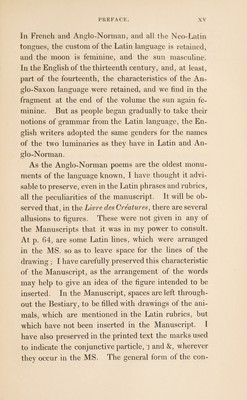
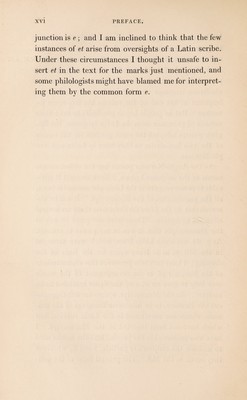
Popular treatises on science written during the Middle Ages, in Anglo-Saxon, Anglo-Norman, and English / Edited from the original manuscripts by Thomas Wright.
- Thomas Wright
- Date:
- 1841
Licence: Public Domain Mark
Credit: Popular treatises on science written during the Middle Ages, in Anglo-Saxon, Anglo-Norman, and English / Edited from the original manuscripts by Thomas Wright. Source: Wellcome Collection.
22/164 (page 2)
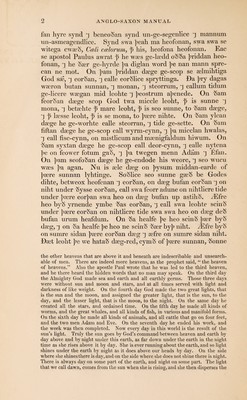
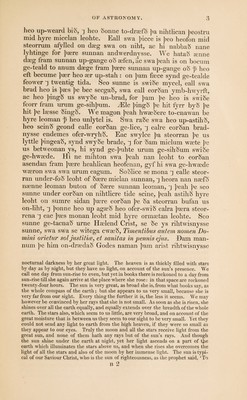
![o fan hyre syncl j beneoSan synd un-ge-segenlice y mannum un-asmeagendlice. S3Tnd swa peah. ma heofonan, swa swa se witega cwae^S, C&li caelorum, p his, heofona heofonan. Eac se apostol Paulus awrat p he waes ge-lsedd J?riddan heo¬ fonan, j he haer ge-hyrde pa diglan word pe nan mann spre- can ne mot. On ]?am ]mddan daege ge-scop se aelmihtiga God sae, j eorSan, j ealle eorSlice spryttinga. Da pry dagas waeron butan sunnan, ^ monan, j steorrum, ^ eallum tidum ge-licere waegan mid leohte j ]?eostrum a];enede. On &m feorban daege scop God twa miccle leoht, p is sunne ^ mona, j betaehte p mare leoht, p is seo sunne, to 'ham daege, y p laesse leoht, p is se mona, to J?aere nihte. On ham ylcan daege he ge-worhte ealle steorran, j tide ge-sette. On ham fiftan daege he ge-scop eall wyrm-cynn, j pa. micclan hwalas, eall fisc-cynn, on mistlicum and maenigfaldum hiwum. On ham syxtan daege he ge-scop eall deor-cynn, ealle nytena pe on feower fotum gah, j pa twegen menn Adam 3 Efan. On ]?am seofohan daege he ge-endode his we ore, 3 seo wucu waes pa agan. Nu is aelc daeg on ]?ysum middan-earde of };aere sunnan lyhtinge. Sohlice seo sunne gaeh be Godes dihte, betweox heofenan y eorhan, on daeg bufan eorhan j on niht under hysse eorhan, eall swa feorr adune on nihtlicre tide under ]?aere eor)?an swa heo on daeg bufan up astihh. JEfre heo byh yrnende ymbe has eorhan, j eall swa leohte scinh under ]?aere eorhan on nihtlicre tide swa swa heo on daeg deh bufan urum heafdum. On ha healfe ]?e heo scinh ]?aer byh daeg, on ha healfe pe heo ne scinh haer by}> niht. ^Efre byh on sumre sidan |?aere eorhan daeg 3 aefre on sumre sidan niht. f)aet leoht pe we hatah daeg-red, cymh of J?aere sunnan, honne the other heavens that are above it and beneath are indescribable and unsearch¬ able of men. There are indeed more heavens, as the prophet said, “ the heaven of heavens.” Also the apostle Paul wrote that he was led to the third heaven, and he there heard the hidden words that no man may speak. On the third day the Almighty God made sea and earth and all earthly germs. Those three days were without sun and moon and stars, and at all times served with light and darkness of like weight. On the fourth day God made the two great lights, that is the sun and the moon, and assigned the greater light, that is the sun, to the day, and the lesser light, that is the moon, to the night. On the same day he created all the stars, and ordained time. On the fifth day he made all kinds of worms, and the great whales, and all kinds of fish, in various and manifold forms. On the sixth day he made all kinds of animals, and all cattle that go on four feet, and the two men Adam and Eve. On the seventh day he ended his work, and the week was then completed. Now every day in this world is the result of the sun’s light. Truly the sun goes by God’s command between heaven and earth by day above and by night under this earth, as far down under the earth in the night time as she rises above it by day. She is ever running about the earth, and so light shines under the earth by night as it does above our heads by day. On the side where she shines there is day, and on the side where she does not shine there is night. There is always day on some part of the earth, and night on some part. The light that we call dawn, comes from the sun when she is rising, and she then disperses the](https://iiif.wellcomecollection.org/image/b29292244_0022.jp2/full/800%2C/0/default.jpg)