Popular treatises on science written during the Middle Ages, in Anglo-Saxon, Anglo-Norman, and English / Edited from the original manuscripts by Thomas Wright.
- Thomas Wright
- Date:
- 1841
Licence: Public Domain Mark
Credit: Popular treatises on science written during the Middle Ages, in Anglo-Saxon, Anglo-Norman, and English / Edited from the original manuscripts by Thomas Wright. Source: Wellcome Collection.
39/164 (page 19)
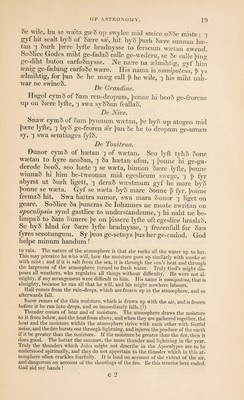
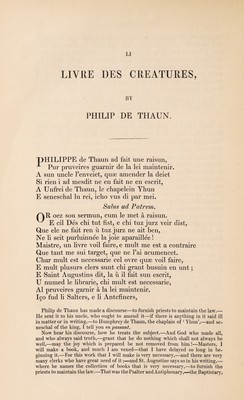
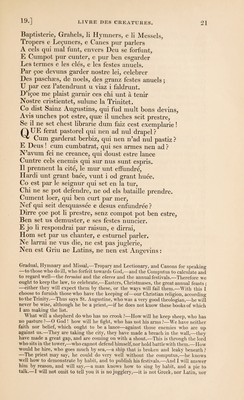
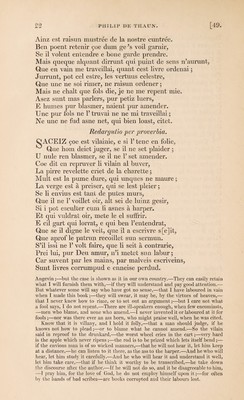
![(Sc wile, lm sc waeta gteb up SYylce mid smice oSSe miste; gyf hit sealt byS of fere s<£, hit by S purh fere sunnan hse- tan d Surh |?aere lyfte bradnysse to ferscum waetan awend. SoSlice Godes miht ge-fadaS ealle ge-wederu, se 3e ealle ]?ing ge-diht buton earfofeysse. Ne naere na aelmihtig, gyf him aenig ge-fadung earfo^e waere. His nama is omnipotens, p ys aelmihtig, for J?an «e he maeg call f he wile, j his miht nah- war ne swincft. JJe (Jranaine. Hagol cymS of “Sam ren-dropum, ponnc hi beo S ge-frorene up on fere lyfte, j swa sy Sban feallao. De Nive. Snaw cym$ of fem J?ynnum waetan, pe byb up atogen mid j^aere lyfte, ^ by 6 ge-froren aer J?an ^Se he to dropum ge-urnen sy, 3 swa semtinges fylb. De Tonitrua. Dunor cym3 of haetan 3 of waetan. Seo lyft tyhS £one waetan to hyre neofen, 3 fe haetan ufon, j jmnne hi ge-ga- derode beob, seo haete y se waeta, binnon fere lyfte, ];onne winnaS hi him be-tweonan mid egeslicum swege, j p fyr abyrst ut Surh ligett, y dera^S woestmum gyf he mare byS Jionne se waeta. Gyf se waeta byb mare Sonne p fyr, J;onne fremaS hit. Swa hattra sumor, swa mara Sunor y liget on geare. SoSlice fe Jmneras Se lohannes ne moste awritan on apocalipsin synd gastlice to understandenne, j hi naht ne be- limpaS to Sam Sunere pe on Jdssere lyfte oft egeslice braslaS. Se byS hlud for Saere lyfte bradnysse, 3 frecenfull for Saes fyres sceotungum. Sy ]?eos ge-setnys ]?us her ge-endod. God helpe minum handum! to rain. The nature of the atmosphere is that she sucks all the water up to her. This may perceive he who will, how the moisture goes up similarly with smoke or with mist; and if it is salt from the sea, it is through the sun’s heat and through the largeness of the atmosphere turned to fresh water. Truly God’s might dis¬ poses all weathers, who regulates all things without difficulty. He were°not al¬ mighty, if any arrangement were difficult to him. His name is omnipotcns, that is almighty, because he can all that he will, and his might nowhere labours. Hail comes from the rain-drops, which are frozen up in the atmosphere, and so afterwards fall. Snow comes of the thin moisture, which is drawn up with the air, and is frozen before it he run into drops, and so immediately falls. (?) Thunder comes of heat and of moisture. The atmosphere draws the moisture to it from below, and the heat from above, and when they are gathered together, the heat and the moisture within the atmosphere strive with each other with fearful noise, and the fire bursts out through lightning, and injures the produce of the earth if it be greater than the moisture. If the moisture be greater than the fire, then it does good. The hotter the summer, the more thunder and lightning in the year. Truly the thunders which John might not describe in the Apocalypse are to be understood spiritually, and they do not appertain to the thunder which in this at¬ mosphere often crackles fearfully. It is loud on account of the extent of the air, and dangerous on account of the shootings of the fire. Be this treatise here ended. God aid my hands ! c 2](https://iiif.wellcomecollection.org/image/b29292244_0039.jp2/full/800%2C/0/default.jpg)