Popular treatises on science written during the Middle Ages, in Anglo-Saxon, Anglo-Norman, and English / Edited from the original manuscripts by Thomas Wright.
- Thomas Wright
- Date:
- 1841
Licence: Public Domain Mark
Credit: Popular treatises on science written during the Middle Ages, in Anglo-Saxon, Anglo-Norman, and English / Edited from the original manuscripts by Thomas Wright. Source: Wellcome Collection.
53/164 (page 33)
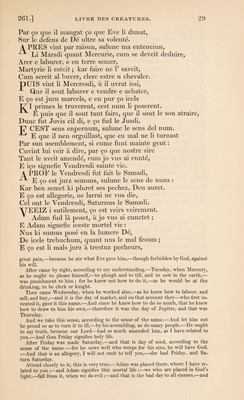
![AUGUSTUS Cesar, chi puis Tout a garder, La gent de Rumanie e la terre en baillie, [A] Aust icel mois posat sun num li reis. Pur 50 que il venqui cel mois sun enemi, Chi mult guerrie, e lunges travaillie. Mais 50 dit Servius, que li bers Romulus, Quant nums lur enposat, tut issi les numat, Julium, Quintilem, Augustum, Sextilem. Tj^ YITOYRE, e Septembre, e Novembre, e Decembre, P[l]uis sunt apele, char dune sunt tempeste; E que pluie apelum en Francesche raisun, Co est Latins imber, dum est dit September. Saciez des altres mois si sunt numert tuz treis, E pur cez achaisuns furent truvet cez nuns. Nen voil ore plus traiter, altre voil cumencer. T I Griu dient calo, e li Latins voco, Co est apelum en Francesche raisun; E Romulus, qui ert reis, ruvat que chascun mois Fust kalende apelet, par trestut sun regnet; E sulunc nos raisuns 50 est apeleisuns. E ben saciez que est veirs, kar enz en chascun mois Uns evesques gardout cum la lune alout; E quant nuvele esteit, as Rumains le diseit, E dune sacrefiouent, aprof 50 apelouent Trestuz icels del regnet a Rume la citet. E cels asemblemenz chi esteient des genz, Nunes les apelouent, pur 90 que se asemblouent. E quant cil desevrouent, cels jurz ides clamouenL E ore inustruns brevement tut lur ordenement: Saciez que en Jenver, pur 90 que ert premier, Ses chalendes poserent, dis e nof Fen dunerent; And Augustus Caesar, who afterwards had the government—of the Roman peo¬ ple, and the land in keeping,—as king gave his name to the month of August,— because he vanquished his enemy in that month,—who warred much and laboured long.—But Servius says that the good Romulus,—when he gave them names, named them as follows,—Julius, Quintilis, Augustus, Sextilis. And October, September, November, December,—were called rains, for then there are tempests;—and what we in French call pluie (rain),—that is in Latin imber, from which is derived September.—Know that the three other months are named thus,—and for these reasons were invented these names.—I will not say any more about them, but will begin another subject. The Greeks said ica\a>, and the Latins voco,—that is apelum (we call) in French]; —and Romulus, who was king, ordered that each month—should be called kalends, throughout his kingdom ;—and according to our language that is callings.—And know well that it is true, for in every month—a bishop watched how the moon went;—and when it was new, he announced it to the Romans,—and then they sa¬ crificed, after which they called—all those of the kingdom to the city of Rome.— And these assemblies of people,—they called nones, because they assembled.—And when they separated, those days they called ides.—And now we will show briefly all their arrangement:—know that in January, because it was the first,—they placed D](https://iiif.wellcomecollection.org/image/b29292244_0053.jp2/full/800%2C/0/default.jpg)