Licence: Attribution-NonCommercial 4.0 International (CC BY-NC 4.0)
Credit: The works. Source: Wellcome Collection.
Provider: This material has been provided by Royal College of Physicians, London. The original may be consulted at Royal College of Physicians, London.
34/418
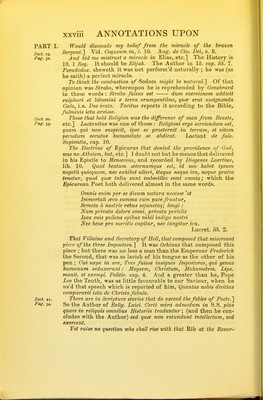
![PART I. Would disswade my belief from the miracle of the brazen Sect. ig. Serpent.] Vid. Coqueum in, I. 10. Aug. de Civ. Dei, c. 8. Pag. 3a. And bid me mistrust a miracle in Elias, etc.] The History is 18. 1 Reg. It should be Elijah. The Author in 16. cap. lib. 7. Pseudodox. sheweth it was not perform'd naturally ; he was (as he saith) a perfect miracle. To think the combustion of Sodom might be natural.] Of that opinion was Strabo, whereupon he is reprehended by Genebrard in these words: Strabo falsus est dum eversionem addicit sulphuri et bitumini e terra erumpentibus, quae erat assignanda Coelo, i.e. Deo irato. Tacitus reports it according to the Bible, fulminis ictu arsisse. Sect. to. Those that held Religion was the difference of man from Beasts, etc.] Irac<an<iMS was one of those : Religioni ergo serviendum est, quam qui non suspicit, ipse se prostemit in terram, et vitam pecudum secutus humanitate se abdicat. Lactant de fals. Sapientia, cap. 10. The Doctrine of Epicurus that denied the providence of God, was no Atheism, but, etc. ] I doubt not but he means that delivered in his Epistle to Menceceus, and recorded by Diogenes Laertius, lib. 10. Quod beatum eeternumque est, id nec habet ipsum negotii quicquam, nec exhibet alteri, itaque neque ira, neque gratia tenetur, quod quee talia sunt imbecillia sunt omnia; which the Epicurean Poet hath delivered almost in the same words. Omnia enim per se divum natura neces-ie 'st Immortali cevo summa cum pace fruatur, Semota a nostris rebus sejunctaq; longe : Nam privata dolore omni, privata periclis Ipsa suis pollens opibus nihil indiga nostri Nec bene pro meritis capitur, nec tangitur ira. Lucret. lib. 2. That Villaine and Secretary of Hell, that composed that miscreant piece of the three Impostors.] It was Ochinus that composed this piece ; but there was no less a man than the Emperour Frederick the Second, that was as lavish of his tongue as the other of his pen; Cui scepe in ore, Tres fuisse insignes Impostores, qui genus humanum seduxerunt: Moysem, Christum, Mahnmetem. Lips, monit. et exempl. Politic, cap. 4. And a greater than he, Pope Leo the Tenth, was as little favourable to our Saviour, when he us'd that speech which is reported of him, Quantas nobis divitias comparavit ista de Christo fabula. Sect. ax. There are in Scripture stories that do exceed the fables of Poets.] P<v- 34- So the Author of Relig. Laid. Certe mira admodum in S. S. plus quam in reliquis omnibus Historiis traduntur ', (and then he con- cludes with the Author) sed quce non retundunt intel/ectum, sed exercent. Yet raise no question who shall rise with that Rib at the Resur-](https://iiif.wellcomecollection.org/image/b22650349_0001_0036.jp2/full/800%2C/0/default.jpg)