Licence: Attribution-NonCommercial 4.0 International (CC BY-NC 4.0)
Credit: The works. Source: Wellcome Collection.
Provider: This material has been provided by Royal College of Physicians, London. The original may be consulted at Royal College of Physicians, London.
49/418
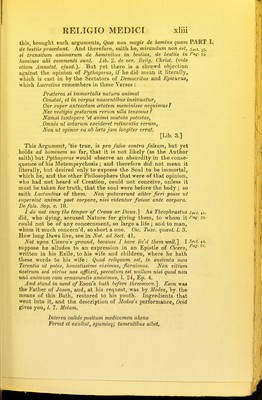
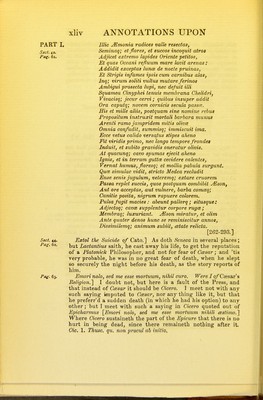
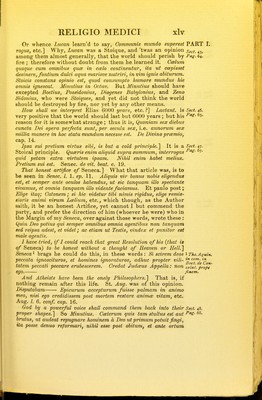
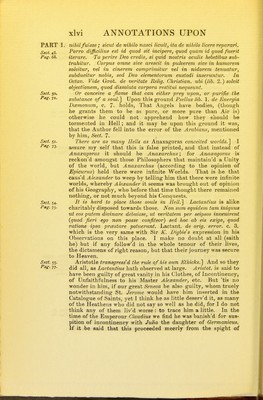
![this, brought such arguments, Quce non magis de homine quam PART I. de bestiis procedunt. And therefore, saith he, mirandum non eat, sect. 37. si transitum animarum de hominibus in bestius, de bestiis in Pag- 55- homines alii commenti sunt. Lib. 2. de ver. Relig. Christ, (vide etiam Annotat. ejusd.). But yet there is a shrewd objection against the opinion of Pythagoras, if he did mean it literally, which is cast in by the Sectators of Democritus and EpicuruSf which Lucretius remembers in these Verses : Prceterea si immortalis natura animai Constat, et in corpus nascentibus insinuatur, Gur super anteactam eetatem meminisse nequimusf Nec vestigia gestarum rerum ulla tenemus ? Namsi tantopere 'st animi mutata potestas, Omnis ut actarum excideret retinentia rerum, Non ut opinor ea ab Iceto jam longiter errat. [Lib. 3.] This Argument, 'tis true, is pro /also contra falsum, but yet holds ad hominem so far, that it is not likely (as the Author saith) but Pythagoras would observe an absurdity in the conse- quence of his Metempsychosis; and therefore did not mean it literally, but desired only to express the Soul to be immortal, which he, and the other Philosophers that were of that opinion, who had not heard of Creation, could not conceive, unless it must be taken for truth, that the soul were before the body ; so saith Lactantius of them. Non putaverunt aliter fieri posse ut supersint animce post corpora, nisi videntur fuissc ante corpora. De/als. Sap. c. 18. / do not envy the temper of Crows or Daws.'] As Theophrastus Sect. 41. did, who dying, accused Nature for giving them, to whom it ^'v- 59- could not be of any concernment, so large a life ; and to man, whom it much concern'd, so short a one. Cic. Tusc. quast. I. 3. How long Daws live, see in Not. ad Sect. 41, Not upon Cicero's ground, because I have liv'd them well.'] I -S^'- suppose he alludes to an expression in an Epistle of Cicero, written in his Exile, to his wife and children, where he hath these words to his wife: Quod reliquum est, te sustenta mea Terentia ut potes, honestissime viximus, floruimus. Non vitium nostrum sed virtus nos afflixit, peccatum est nullum nisi quod non una animum cum ornanientis amisimus, 1. 24, Ep. 4. And stand in need 0/Eson 8 bath before threescore.'] Esonvr&s the Father of Ja.ion, and, at his request, was by Medea, by the means of this Bath, restored to his youth. Ingredients that went into it, and the description of Medea's performance, Ovid gives you, /. 7. Metam. Interea calido positum medicamen aheno Fervet et exultut, spumisq; tumentibus albet.](https://iiif.wellcomecollection.org/image/b22650349_0001_0051.jp2/full/800%2C/0/default.jpg)