Zoological philosophy / by J.B. Lamarck ; translated, with an introduction by Hugh Elliot.
- Lamarck, Jean Baptiste Pierre Antoine de Monet de.
- Date:
- 1914
Licence: In copyright
Credit: Zoological philosophy / by J.B. Lamarck ; translated, with an introduction by Hugh Elliot. Source: Wellcome Collection.
Provider: This material has been provided by Royal College of Physicians, London. The original may be consulted at Royal College of Physicians, London.
233/512 (page 137)
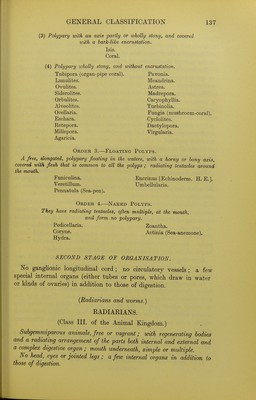
![(3) Polypary with an axis partly or wholly stony, and covered ivith a bark-like encrustation. Isis. Coral. (4) Polypary ivholly stony, and without encrustation. Tubipora (organ-pipe coral). Pavonia. Lunulites. Meandrina. Ovulites. Astrea. Siderolites. Madrepora. Orbulites. Caryophyllia. Alveolites. Turbinolia. Ocellaria. Fungia (mushroom-coral). Eschara. CycloHtes. Retepora. Dactylopora. Millepora. Virgularia. Agaricia. Order 3.—Floating Polyps. A free, elongated, polypary floating in the waters, with a horny or bony axis, covered with flesh that is common to all the polyps ; radiating tentacles around the mouth. Fimiculina. Encrinus [Echinoderm. H. E.]. Veretillum. Umbellularia. Pemiatula (Sea-pen). Order 4.—^Naked Polyps. They have radiating tentacles, often multiple, at the mouth, and form no polypary. Pedicellaria. Zoantha. Coryne. Actinia (Sea-anemone). Hydra. SECOND STAGE OF ORGANISATION. No ganglionic longitudinal cord; no circulatory vessels; a few special internal organs (either tubes or pores, whicli draw in water or kinds of ovaries) in addition to those of digestion. (Radiarians and worms.) RADIARIANS. (Class III. of the Animal Kingdom.) Subgemmiparous animals, free or vagrant; with regenerating bodies and a radiating arrangement of the parts both internal and external and a complex digestive organ ; mouth underneath, simple or multiple. No head, eyes or jointed legs ; a few internal organs in addition to those of digestion.](https://iiif.wellcomecollection.org/image/b22651433_0233.jp2/full/800%2C/0/default.jpg)