Zoological philosophy / by J.B. Lamarck ; translated, with an introduction by Hugh Elliot.
- Lamarck, Jean Baptiste Pierre Antoine de Monet de.
- Date:
- 1914
Licence: In copyright
Credit: Zoological philosophy / by J.B. Lamarck ; translated, with an introduction by Hugh Elliot. Source: Wellcome Collection.
Provider: This material has been provided by Royal College of Physicians, London. The original may be consulted at Royal College of Physicians, London.
235/512 (page 139)
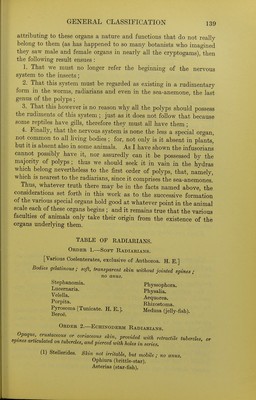
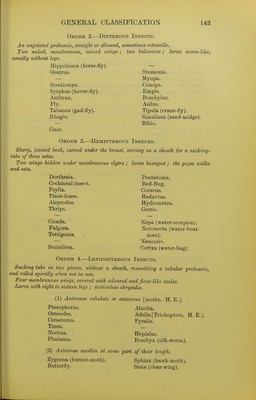
![attributing to these organs a nature and functions that do not really belong to them (as has happened to so many botanists who imagined they saw male and female organs in nearly all the cryptogams), then the following result ensues : 1. That we must no longer refer the beginning of the nervous system to the insects ; 2. That this system must be regarded as existing in a rudimentary form in the worms, radiarians and even in the sea-anemone, the last genus of the polyps ; 3. That this however is no reason why all the polyps should possess the rudiments of this system ; just as it does not follow that because some reptiles have gills, therefore they must all have them; 4. Fmally, that the nervous system is none the less a special organ, not common to all hving bodies ; for, not only is it absent in plants,' but it is absent also in some animals. As I have shown the infusorians cannot possibly have it, nor assuredly can it be possessed by the majority of polyps; thus we should seek it in vain in the hydras which belong nevertheless to the first order of polyps, that, namely, which IS nearest to the radiarians, since it comprises the sea-anemones.' Thus, whatever truth there may be in the facts named above, the considerations set forth in this work as to the successive formation of the various special organs hold good at whatever point in the animal scale each of these organs begins ; and it remains true that the various faculties of animals only take their origin from the existence of the organs underljnng them. TABLE OF RADIARIANS. Order 1.—Soft Radiarians. [Various Coelenterates, exclusive of Anthozoa. H. E.] Bodies gelatinous ; soft, transparent shin without jointed spines ; no anus. Stephanomia. Physsophora. Lucernaria. Physalia. y^^^' Aequorea. ^°P^**- Rhizostoma. Pyrosoma [Tunicate. H. E.]. Medusa (jelly-fish). Order 2.—Echinoderm Radiarians. spines articulated on tubercles, and pierced with holes in series. (1) SteUerides. Skin not irritable, but mobile ; no anus. Ophiura (brittle-star). Asterias (star-fish).](https://iiif.wellcomecollection.org/image/b22651433_0235.jp2/full/800%2C/0/default.jpg)