Content advisory
This digitised material is free to access, but contains information or visuals that may:
- include personal details of living individuals
- be upsetting or distressing
- be explicit or graphic
- include objects and images of objects decontextualised in a way that is offensive to the originating culture.
Licence: In copyright
Credit: Monod, Jacob, Lwolf: Nobel Prize Lectures. Source: Wellcome Collection.
43/69
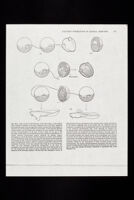
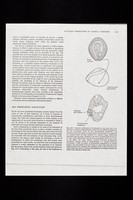
![Fig. 3.6.4 Major events in the derivation of the basic layout of the embryo from conditions inherent in the egg. Diagrams (a) to (d) show sequential developmental stages from the egg to the neurula, viewed from similar angles, to illustrate the cell movements involved in gastrulation. Cross-hatching indicates vegetal regions and the dotted area represents the 'grey crescent' of the egg. (a) Egg. Transplantation of the grey crescent region of one egg to the prospective belly region of a second fertilized egg promotes the appearance of a second, normally proportioned embryo alongside the primary embryo developing as usual in association with the original grey crescent of the recipient egg |71. (b) Blastula stage. During this stage the egg cleaves to form some tens of thousands of cells. A cavity is formed in the animal hemisphere, (c) Gastrula stage. Transplantation (from a white to a similarly staged black embryo) of the immediate derivatives of the grey crescent (the dorsal lip of the blastopore), which are now becoming anatomically distinguished as the focus for invaginative cell movements (shown by arrows), leads to the same results as in (a). The transplanted cells, shown in white, contribute only a small part to the structure of the secondary embryo. The fact that they contribute a variety of differentiated cell types appropriate to the context of their irregular distributions in the embryo, including cells of the neural tube, the notochord and the mesoderm, is evidence that at transplantation they were not already committed to any restricted developmental fates. From Spemann & Mangold 181. (d) Neurula stage. When prechordal plate (e) or notochordal (f) regions of the chordamesoderm are transplanted to identical positions in the belly region of separate gastrula stage embryos, they cause the immediate transformation of the overlying ectoderm into specific regions of the neural plate, whose distinct characters can be readily recognized by the structure's which form secondarily around them. The forebrain region (e) leads to a complete set of head structures while the spinal cord (0 leads to tail formation, and thus point to the initial conditions needed for the organization of these structures during normal embryogenesis. The original chordamesodermal transplants fulfil their normal patterns of differentiation despite the foreign environment and can therefore be said to have been already irreversibly committed as specialized cells. From Mangold [10].](https://iiif.wellcomecollection.org/image/b18189337_PP_CRI_H_3_5_4_0043.jp2/full/800%2C/0/default.jpg)
 No text description is available for this image
 No text description is available for this image
 No text description is available for this image