Content advisory
This digitised material is free to access, but contains information or visuals that may:
- include personal details of living individuals
- be upsetting or distressing
- be explicit or graphic
- include objects and images of objects decontextualised in a way that is offensive to the originating culture.
Licence: In copyright
Credit: Monod, Jacob, Lwolf: Nobel Prize Lectures. Source: Wellcome Collection.
50/69
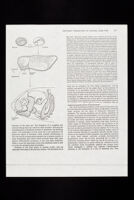
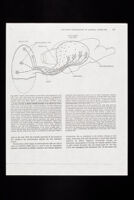
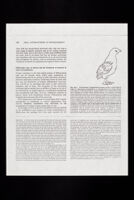
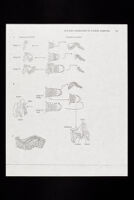
![induction also accounts for the size of embryonic rudiments. This example illustrates the general point that ectoderm only reacts developmentally where a suitable inductor lies in immediate conjunction with it. We can sum up the general features of embryonic induction by saying that single, specific forms of cell differentiation are selected and activated in embryonic cells as the direct result of a pre-programmed, invariant interaction with cells which themselves have already become committed to a single specific form of differentiation, which is quite independent of, and in no other way connected with, the form of differentiation induced. In attempting in the following sections to account for the way in which one inductive cell might be able to cause selective gene expression in uncommitted cells undergoing induction, we will have to consider the roles of both sets of cells. It cannot be assumed that patterns of differentiation brought about in uncommitted cells by induction are entirely due to the external factor of the inductor, for we have already seen that each developing cell contributes to its own developmental potentialities. On the contrary, the induced cells might achieve their developmental specializations on the basis of their own abilities to detect and respond appropriately to specific features of the inductor. The simplicity ' of the influence immediately due to the inductor, in terms both of spatial organization and of in formational content, is brought out by studies [9] in which various and bizarre agents have been applied to embryonic tissue in the course of attempts to identify the chemical nature of inductors. No more than a change in pH of the culture medium is sufficient to duplicate the action of the chordamesoderm in causing isolated gastrula ectoderm to undertake neural as opposed to epidermal differentiation [18]. A large number of chemical agents, applied either diffusely or focally to gastrula tissue, initiate the formation of distinct head or tail parts indistinguishable from those normally induced by parts of the chordamesoderm (Fig. 3.6.4d) [9]. The very simplicity and diversity of agents capable of bringing about quite normal and specific patterns of inductive consequences (Fig. 3.6.8d) [431, point to the possibility that the responding embryonic tissues contain all the information needed for their own possible future specific patterns of development, while the inductor provides no more than a basis for a choice among these alternatives. Sufficiently specific features to account for the choices made by responding cells may be provided in the states of developmental commitment which, as we have noted, are characteristically already possessed by tissues with inductive properties. On this view we would not have to propose any feature of inductors specifically associated with their actions on other cells in addition to properties they must anyway possess (Fig. 3.6.9). The possibility that embryonic cells may in effect be able to recognize the states of specialization of committed cells by reference to some aspect of their emerging adult differentia tion and to use these cues to control their own development, is supported by evidence from at least one developmental situation. During embryogenesis the axonal processes of nerve cells have to grow through long and complex routes in the nervous system in order to reach neurones with which they must connect in order to come into functional association. The specificity of the routes followed by the axons of outwardly identical nerve cells indicates that the developmental history of the cell has conferred on it high degrees of specialization which allow the axon to distinguish and follow its own choice of routes among the vast range of alternatives constantly available to axons (Fig. 3.6.10). An axon must be selecting routes on the basis of distinctive characteristics associated with the tissues it meets while growing. These may be provided by local nerve cells possessing their own specializations derived, like the particular specialization of the cell from which the axon grows, during the original independent embryonic development of the various parts of the nervous system. In the sections which follow we discuss whether embryonic induction, regardless of the nature of the cellular interaction involved, could alone form the basis for an explanation of all the phenomena of development. In particular it is necessary to consider the nature and derivation of the potentialities of embryonic cells undergoing induction. Only if the potentialities of these cells were entirely unrestricted could the specific character of their subsequent differentiation be solely ascribed to equally specific properties of the inductor; otherwise additional embryological mechanisms may have to be brought in. The induction model requires that the formation of all adult organs is preceded by the existence of an array of inductors with corresponding locations and specificities. How are we to account for the formation of the inductors themselves if, as the evidence for the equivalence of all early embryonic cells implies, they are not built into the egg from the start? How is the dorsal lip of the blastopore related to the formation of the first inductors? If specific inductive interactions are to be the only mechanism for choosing all cell specializations then it is important to know how the necessary confrontations between uncommitted embryonic cells and the appropriate inductor occur in such a way that cells of the correct specialization are formed at the location required in adult anatomy. The role of cell movements The way in which cell movements may serve as the means of achieving the confrontations between uncommitted tissues and their inductors which decide where new tissues will be formed, can be illustrated by following the sequence of events preceding lens formation (Fig. 3.6.8) [6, 67]. In the course of their formation during the massive cell movements of gastrulation, the specialized cells of the notochord and prechordal plate come to underlie the uncommitted ectoderm. This confrontation leads to the induction of the forebrain rudiment (Fig. 3.6.4d). As a result of later cell movements within this rudiment outgrowth of the optic vesicle occurs along with its associated commitment of](https://iiif.wellcomecollection.org/image/b18189337_PP_CRI_H_3_5_4_0050.jp2/full/800%2C/0/default.jpg)
 No text description is available for this image
 No text description is available for this image
 No text description is available for this image