Content advisory
This digitised material is free to access, but contains information or visuals that may:
- include personal details of living individuals
- be upsetting or distressing
- be explicit or graphic
- include objects and images of objects decontextualised in a way that is offensive to the originating culture.
Licence: In copyright
Credit: Monod, Jacob, Lwolf: Nobel Prize Lectures. Source: Wellcome Collection.
52/69
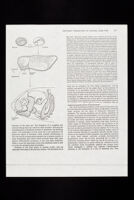
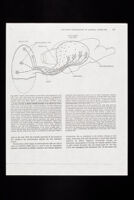
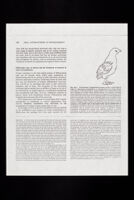
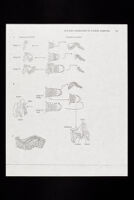
![these cells are uncommitted embryonic cells, they can meet a wide range of specific inductive cues at the various locations that they reach, and so give rise to a wide range of differentiated cell types. And to the extent that they are already committed, such migratory cells can act inductively on as yet uncommitted cells throughout the embryo, and so enormously increase the complexity of spatial arrangements and types of cells in tissues. Differential rates of mitosis and the formation of patterns in static cell populations Further variations in the final spatial pattern of differentiated cells can be brought about within static populations of differentiating cells by the activity of cells which have retained a primitive embryonic condition. Continued mitosis by these cells can vary the distribution of already differentiated structures (Fig. 3.6.16) or, by providing cells open to later embryonic induction, add to them. The elongation of the developing vertebrate limb is entirely due to addition of tissue at the tip of the limb-bud by an apical reservoir of proliferative ectodermal and mesodermal cells (Fig. 3.6.12A). Additional variation of pattern results from interactions between differentiated cells including those between cells of the same type. Thus melanocytes may interact to control each other's spatial arrangement or inductively to control pigmentation (Fig. 3.6.11). Inhibitory interactions may contribute to the arrangement of bristles in insect cuticle (Fig. 3.6.16). At all stages of limb outgrowth mesodermal cells just formed in the proliferative zone possess an initial predisposition to differentiate into cartilage [63]. One could account for the Fig. 3.6.11 The formation of pigmentation patterns specific to their breed of origin by melanocytes transplanted to a non-pigmented avian breed. Neural crest tissue of a male Barred Rock chicken embryo was transplanted into the early wing-bud of a female White Leghorn embryo. The patterns of barring within each feather and their variations across the wing are characteristic of the breed and the sex of the donor of the melanocytes 124). Banded pigmentation patterns are thought to be the result, following initial random invasion of the feather rudiment by premelanocytes, of the inhibition of pigmentation in white areas by inhibitory factors formed by pigmenting areas. Variations in banding patterns in different body regions and within each, feather may be due to variations in the growth rates of the feather which lead to different rates of accumulation of inhibitory factor 124]. Feathers in the non-pigmented breed are presumably able to promote the normal patterns of inhibition between transplanted premelanocytes because they undergo variations in growth homologous to feathers in the donor breed. In amphibian skin patterns of Fig. 3.6.12 A. The proximo-distal succession of formation of structures during the Outgrowth of the chick limb-bud. At three stages of limb outgrowth a comparable apical region of the limb-bud was removed. The limb parts which laier differentiate in the remaining limb-bud stumps are shown on the left. From the increasingly complete limbs that are formed it can be concluded that at the earliest stage only the most proximal limb parts have been laid down and that during subsequent stages the apical region has formed successively more distal parts; successively formed generations of cells are marked by dots and circles. Expiants of the apical regions of limb-buds to the coelomic cavity (on the right) successfully generate all the limb parts that had not already been laid down at the time of explantation. This confirms that the apical zone of a limb-bud is the source of the cells from which future distal limb parts are to be formed. It is also evident that all the prerequisites for the continued laying down of a succession of limb parts are inherent within this proliferative zone and that influences from the rest of the embryo are unnecessary. From Saunders [251. B. The proliferative limb tip retains a constant developmental potentiality at all stages of outgrowth. The limb tip of a late stage hindlimb (white) was transplanted onto the proximal stump of a similarly staged forelimb (black). Even though the transplant had already formed most adult limb parts (as shown by parts formed from the donor limb stump shown on the left) it retains an unchanged ability to form all limb parts, including, as shown here, proximal parts. In accordance with its new context the transplant forms successive distal parts starting from the proximal level of the host limb stump. That the new limb parts were formed by the transplant is shown by the marker carbon particles inserted at the original junction between the tissues and by the fact that all new parts were of hindlimb type. From Kieny 1261. This experiment demonstrates that the proliferative limb tip selects each successive limb part to be formed on the basis of cues from the immediately neighbouring tissues of the already formed limb proximal to it (see Fig. 3.6.13). The experiment also demonstrates the homology of structure and of development of the vertebrate forelimb and hindlimb. Even though the tissues of the two limbs retain their abilities to eventually generate the minor distinctions of structure which normally characterize them, they can share their basic patterns of initial laying down of a proximo-distal succession of cartilage rudiments. C. When mesoderm from proximal levels of the hindlimb (prospective thigh tissue, shown white) is transplanted beneath the apical ectoderm of the forelimb bud, it appeared to adopt the proximo-distal level of differentiation of its new surroundings; it formed distal hindlimb parts such as toes and claws I27|. A possible explanation, which is difficult to test, is that under the proliferative stimulus of the surrounding apical growth zone of the host limb-bud, the transplanted mesoderm formed distal parts autonomously (like explanted limb tips in A) without interacting with mesoderm of the host limb. This experiment shows that limb type is carried as a property of the mesoderm; the ectoderm of hindlimb structures (scales and claws) under the inductive action of the hindlimb mesoderm. The mosaic limbs obtained in this experiment are remarkably similar to the forelimbs partially transformed into hindlimbs in animals carrying the 'ametapodia' mutation 1281, whose effects may therefore be ascribed to a](https://iiif.wellcomecollection.org/image/b18189337_PP_CRI_H_3_5_4_0052.jp2/full/800%2C/0/default.jpg)
 No text description is available for this image
 No text description is available for this image
 No text description is available for this image