Content advisory
This digitised material is free to access, but contains information or visuals that may:
- include personal details of living individuals
- be upsetting or distressing
- be explicit or graphic
- include objects and images of objects decontextualised in a way that is offensive to the originating culture.
Licence: In copyright
Credit: Monod, Jacob, Lwolf: Nobel Prize Lectures. Source: Wellcome Collection.
55/69
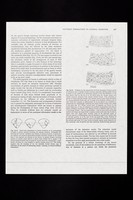
![/V JV «/> (a) Y (b) (c) (d) Fig. 3.6.13 Regeneration of the amphibian limb. The distal end of the limb is. first implanted into the flank to establish a second blood supply, then divided at the elbow (b). Both stumps underwent regeneration (shown in black in (d)). The forward limb stump simply replaced all missing parts to form a complete, Taken together these two patterns of regeneration are explained by and combine to demonstrate the operation of the same, single rule which governs the sequence of formation of limb parts during development; the proliferative tip (paralleling events during embryonic development, the regeneration blastema provides a source of cells from which increasingly distal limb parts are formed) only lays down the next most distal limb parts appropriate to the already formed limb parts with which it is in contact. This evidence from regeneration proves that the proliferative tip is influenced in its formation of new structures only by formed structures it is in immediate contact with; it forms new of the rest of the formed limb. of a complex sequence of morphogenetic and inductive interactions led by a multipotent growth zone as described above. The only reasonable explanation for this remarkable recovery of structure is that the same sequence of events can be repeated including the continuous supply of cells with sufficient multipotency that they can successively form the range of mesodermal cell types appropriate to each proximo-distal limb level. The regeneration blastema, which is the source of these cells, would have to acquire its mesodermal-type cells from the limb stump from which it is formed. There is direct evidence 136] that tissues of the differentiated proximal limb stump such as cartilage can give rise to a range of cell types sufficient to duplicate the range arising from the original mesoderm of the limb-bud—either as a result of an inherent potentiality for multiple forms of specialization of these cells, or possibly as a result of the persistence among them of some unchanged mesodermal cells. As for the replacement of parts originally derived from the limb-bud ectoderm, there is evidence to show that adult epithelial tissues in general (of which the stratum germinativum of the epidermis of the limb stump is an example) have an unexpected multipotency amply sufficient to permit them to differentiate in the variety of ways required. For example, differentiated mammary gland epithelium can undertake cornification [37], and epidermis, when in association with visceral connective tissue, can differentiate into ciliated secretory epithelium [38]. Corneal epithelium can even form feathers when suitably induced [39]. Regeneration of the lens from pigmented cells of the epithelium of the iris [40, 41] provides even more remarkable evidence for the persistence of multipotency in differentiated cells. These cells derive from a proliferative zone, at the margin of the optic cup, which supplies cells which differentiate into later formed parts of the retina and so might be expected, like its counterpart at the tip of the vertebrate limb, to have embryonic properties. The fact that these cells can form lens tissue, which is normally provided directly by neurula stage ectoderm, can only mean that despite having passed through all the events of neural induction and eye formation (Fig. 3.6.8) these cells have retained a range of potencies equal to that of their original stem cells, late gastrula ectoderm. During the regeneration of most tissues, any totipotent cells present will not be exposed to conditions any different from those in their normal sur roundings, which are consistent with the original form of differentiation of the tissue, and so would not be expected to show major departures from regeneration in the same form. That transformation of iris to lens should stand out as a rare exception in this respect may be explicable in terms of unique anatomical features of the eye which permit the inductive factors [41, 67] normally maintaining the lens to act on cells of the iris after lens removal. It can therefore be concluded that throughout development there are some cells which retain a complete range of potentialities similar to that of blastula cells, and that it is from such cells that most newly differentiating cells are formed by induction. Thus regardless of time or location—whether the cells subject to induction are derived from the stratum germinativum itself or from representatives of the original ectodermal stem cell line like those at the growing margin of the eyecup—the choice of a cell's pattern of differentiation must be solely due to the specific nature of its inductor. The formation of all differentiated cell types may be accounted for in terms of two factors; the specific state of the inductor which may be based on its own previous commitment to a certain form of differentiation and, secondly, a cell with the potentiality to switch on any form of differentiation derived directly as a result of what each cell inherits from the egg. There must be built into the embryo a set of rules dictating the fixed relationship between a particular type of inductor cell and the form of differentiation which results in the induced cell. Of course the available evidence does not exclude the possibility that embryonic cells may reach their final adult states of differentiation by passing through intermediate states of specialization which are reversible like the states of](https://iiif.wellcomecollection.org/image/b18189337_PP_CRI_H_3_5_4_0055.jp2/full/800%2C/0/default.jpg)
 No text description is available for this image
 No text description is available for this image
 No text description is available for this image