Arrangements of vegetable tissues and organs, analyses of natural orders, and other tables : for the use of students of botany.
- Date:
- 1846
Licence: Public Domain Mark
Credit: Arrangements of vegetable tissues and organs, analyses of natural orders, and other tables : for the use of students of botany. Source: Wellcome Collection.
Provider: This material has been provided by The Royal College of Surgeons of England. The original may be consulted at The Royal College of Surgeons of England.
8/32 (page 4)
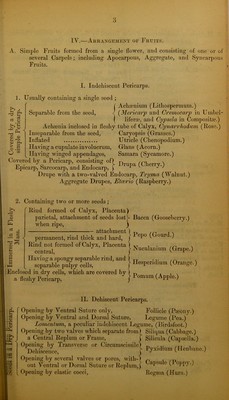
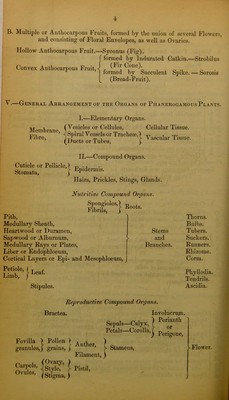
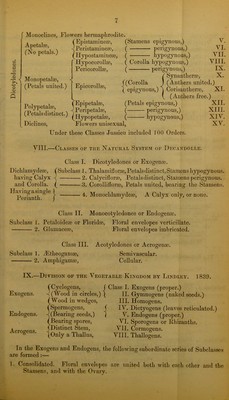
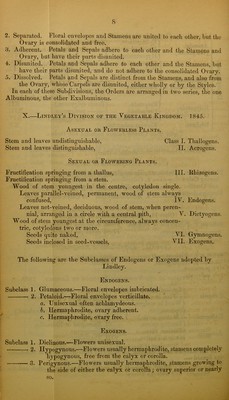
![4? B. Multiple or Anthocarpous Fruits, formed by the union of several Flowers, and consisting of Floral Envelopes, as well as Ovaries. Hollow Anthocarpous Fruit.—Syconus (Fig). f formed by Indurated Catkin.—Strobilus Convex Anthocarpous Fruit, < c (Fn C°ne). formed by Succulent Spike. — Sorosis (Bread-Fruit). V.—General Arrangement of the Organs of Phanerogamous Plants. Membrane, Fibre, I.—Elementary Organs. ( Vesicles or Cellules, -< Spiral Vessels or Tracheae,) (Ducts or Tubes, ) Cellular Tissue. Vascular Tissue. II.—Compound Organs. Cuticle or Pellicle, Stomata, j- Epidermis. Hairs, Prickles, Stings, Glands. Nutritive Compound Organs. Spongioles,) R Fibrils, Y n00tS- Pith, Medullary Sheath, Heartwood or Duramen, Sapwood or Alburnum, Medullary Rays or Plates, Liber or Endophloeum, Cortical Layers or Epi- and Mesophloeum, Petiole, ) T c T . , ’ } Lear, lamb, J Stipules. Stems and Branches. Thorns. Bulbs. Tubers. Suckers. Runners. Rhizome. Corm. Phyllodia. Tendrils. Ascidia. Reproductive Compound Organs. Bractea. Fovilla ) Pollen ( granules,) grains, j Carpels, Ovules, (Ovary, ) •] Style, ( (Stigma,) Anther, Filament, Pistil, Sepals—Calyx, Petals—Corolla, Involucrujn. ) Perianth >- or ) Perigoue, Stamens, ► Flower.](https://iiif.wellcomecollection.org/image/b22435359_0008.jp2/full/800%2C/0/default.jpg)