Licence: Public Domain Mark
Credit: Savill on the electrical changes of so-called idiopathic myopathy. Source: Wellcome Collection.
Provider: This material has been provided by The University of Glasgow Library. The original may be consulted at The University of Glasgow Library.
1/12
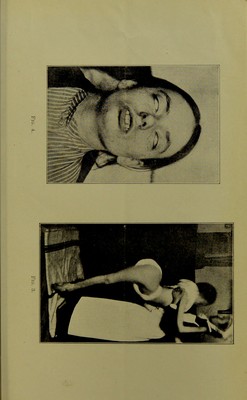
![/ [Reprinted from Brain, vol. xoiii., Winter No., 1895.] Savill on the Electrical Changes of so-called Idiopathic Myopathy. In the Nouvelle Iconographie de la Salpetriere,1 Dr. T. D. Savill publishes full particulars' of an interesting case which cor- l-esponds in its history and clinical features with the Infantile Idiopathic Amyotrophy of Duchenne, but which, nevertheless, presents certain interesting changes in the electrical reactions of the muscles both to faradism and galvanism. Examples of this disease have generally been described as unattended by any electrical changes, and have consequently been regarded as due to inherent alteration in the muscle itself (a primitive myopathy), independent of any neuro-spinal lesion. The observation before us goes to show that this is not invariably so. Cases of this class tend, to gravitate, after visiting the different hospitals, to the metropolitan infirmaries, and Dr. Savill expresses the belief, founded on his experience at the Paddington Infirmary, that cases of so-called idiopathic or primary myopathy nearly always, at some time in their history, present electrical changes of some kind. This is contrary to the hitherto accepted view that this feature of unaltered electrical reactions is (after the age at which the symptoms first appear) the chief one which distinguishes cases of idiopathic myopathy from the larger group of progressive amyotrophic paralyses (anterior polio-myelitis). Dr. Savill further holds the view that many of the phenomena attending those cases are explicable on the assumption that there is a chronic generalised neuritis of very insidious onset and slow march. Certainly the case he describes presented, at one time, tenderness and pain along the course of the nerves and electrical changes, which would tally with this opinion. A case which tends to support this view has also been recorded by Guinou in the Noitvelle Iconographie;1 1 May, 1894](https://iiif.wellcomecollection.org/image/b2145727x_0003.jp2/full/800%2C/0/default.jpg)