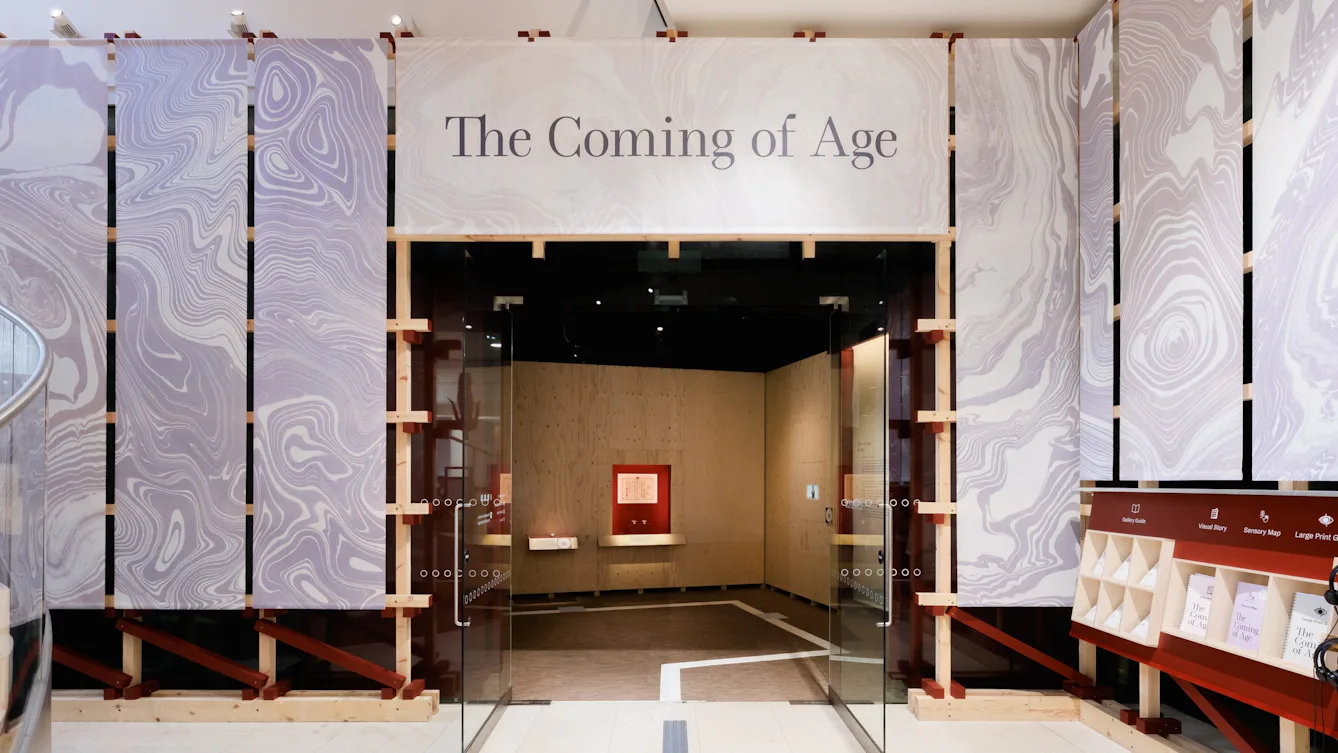
Hello, I am Shamita Sharmacharja, the curator of ‘The Coming of Age’ exhibition, which explores experiences and perceptions of ageing, from adolescence to older age. It does this by bringing together different perspectives from art, science and popular culture across time.
Globally, people are living longer – one in ten children in the UK can expect to live beyond 100 – yet many face health and social inequalities throughout life that impact older age.
Government campaigns, adverts and media stories all encourage us to make healthy lifestyle choices. They put the responsibility on individuals to “age well”. But longer lives and better health are connected to a range of social and economic factors. Your home environment, wealth and access to services will all impact your lifespan. The exhibition asks how societies can adapt to ensure everyone ages better.
There are over 120 objects in the exhibition, including a broad range of materials. These range from historical prints from the 1500s through to contemporary artworks made just earlier this year. They include photographs, large sculptures, paintings and drawings, films and installations. Some of these involve sound and flashing lights. Stops 3 and 12 feature displays that can be touched.
Many of the historical objects in the exhibition are sensitive to light damage. To help preserve them, the light levels are lower in some areas of the exhibition. There are also some spaces showing films where the light levels are low.
The gallery is divided into four main sections. The walls in each area are made out of wood, which is a material we chose because it shows its age. They are stained, so there are visible grains and knots, or painted in different soft shades of colour, creating a calm and restful atmosphere throughout the gallery.
Here, in the introductory space, the walls are natural plywood. As you move through the gallery, the colours start to change and accents of burgundy red begin to appear.
The first section of the exhibition is called ‘Living Longer’. It examines current trends in life expectancy and the historically rooted quest for a long life – and its links with preserving youth.
The second section is called ‘Life’s Courses’. It questions the idea that there is a set shape to life and that it is a narrative of development and decline.
Section 3, ‘Acting your Age?’, looks at stereotypes around ageing, from adolescence through mid-life to older age, and presents works by contemporary artists who disrupt these assumptions.
The last section is called ‘Connection and Care’. It explores what care structures are needed to support people through all stages of life, with a focus on intergenerational connection.
At the end of the exhibition there is an interactive installation, which features oral histories that play out loud and objects that you can touch.
Outside the exhibition there is a feedback area where you can contribute your own thoughts about age if you would like to. Please ask the Visitor Experience team for more details.
This is the end of Stop 2.