405 results filtered with: Green

- Digital Images
- Online
Vanillin crystals, LM
Stefan Eberhard
- Digital Images
- Online
Pancreatic cancer cells grown in culture, SEM
Anne Weston, Francis Crick Institute
- Digital Images
- Online
Healthy human adult brain viewed from the side, tractography
Dr Flavio Dell'Acqua
- Digital Images
- Online
Hoverfly eye
Kevin Mackenzie, University of Aberdeen
- Digital Images
- Online
Human heart (mitral valve) tissue displaying calcification
Sergio Bertazzo, Department of Materials, Imperial College London
- Digital Images
- Online
Macrophages infected with candida yeast, LM
Kevin Mackenzie, University of Aberdeen
- Digital Images
- Online
Human heart (aortic valve) tissue displaying calcification
Sergio Bertazzo, Department of Materials, Imperial College London
- Digital Images
- Online
Cellular architecture of normal human skin imaged by whole mount tissue microscopy. Human skin has a rich network of white blood cells (specifically dendritic cells, T cells and macrophages) which form sheaths around blood vessels. In this image, blood vessels (string-like structures stained for CD31; green), lymphatic vessels (ribbon-like structures stained for LYVE-1; blue) and T cells (stained for CD3; red) can be seen. T cells are only found around dermal blood vessels. Macrophages (stained for LYVE-1; blue) are also present. This normal cellular architecture is grossly disrupted in diseased skin (see related images). X10 magnification. Scale bar (white) represents 200 micrometres.
Dr. Xiao-nong Wang, Human Dendritic Cell Laboratory, Newcastle University
- Digital Images
- Online
Sanguinaria canadensis (Bloodroot, Pucoon or Indian paint)
Dr Henry Oakeley
- Digital Images
- Online
Raynaud's Phenomenon
Thermal Vision Research
- Digital Images
- Online
Petasites hybridus (L.)G.Gaertn., B.Mey. & Scherb. Asteraceae. Butterbur, Bog rhubarb. Distribution: Europe, NW Asia. Culpeper (1650) writes: “The roots are ... exceeding good in violent and pestilential fevers, they provoke the terms, expel poison, and kill worms.” Modern herbalists recommend it for a wide range of therapies, but it contains pyrrolizidine alkaloids, which are hepatotoxic and cause liver cancers. Nevertheless, in a trial aimed at reducing frequency of migraine attacks, a standardised commercial preparation was well tolerated, and was effective at higher doses, but placebo in this trial reduced migraines by over 50% in 49% of the patients (Neurology 2004
Dr Henry Oakeley
- Digital Images
- Online
Artery cell
Kevin Mackenzie, University of Aberdeen
- Digital Images
- Online
Mammary gland, 4 day-old mouse
Olivia Harris, Felicity Davis, Bethan Lloyd-Lewis and Christine Watson, University of Cambridge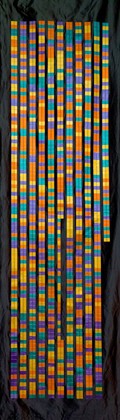
- Digital Images
- Online
DNA sequence of CCR5 Delta 32 gene mutation
Emei Ma, P/C Guy McLoughlin
- Digital Images
- Online
Danae racemosa (L.) Moench Asparagaceae. Alexandrian or Poet's laurel. Distribution: Turkey to Iran. A monotypic genus with supreme adaptation to dry conditions, bearing its flowers and fruits on phylloclades, leaf like expanded stems. The phylloclades are too thick for sunlight to pass through so have chlorophyll containing cells on both sides (the cells in the middle do not) and stomata on both sides to facilitate CO2 diffusion into the plant. Photographed in the Medicinal Garden of the Royal College of Physicians, London.
Dr Henry Oakeley
- Digital Images
- Online
Silk fibres
Macroscopic Solutions
- Digital Images
- Online
Human heart (mitral valve) tissue displaying calcification
Sergio Bertazzo, Department of Materials, Imperial College London
- Digital Images
- Online
Woodlouse, SEM
Anne Weston, Francis Crick Institute
- Digital Images
- Online
Antidepressant drug blocking dopamine transporter protein
RCSB Protein Data Bank
- Digital Images
- Online
Sanguinaria canadensis (Bloodroot, Pucoon or Indian paint)
Dr Henry Oakeley
- Digital Images
- Online
Imaginary Herbaria of Dr James Miranda Barry
Alessandra Pirovano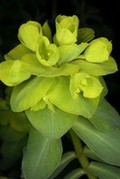
- Digital Images
- Online
Euphorbia nicaeensis All. Euphorbiaceae. Distribution: North Africa, Southern Europe to Turkey. Root extracts have been shown to have cytotoxic and anti-inflammatory action in experimental situations. Euphorbia species all have toxic sap, and had many names in early literature, eg esula, about which Culpeper (1650) says that '(taken inwardly) are too violent for vulgar use
Dr Henry Oakeley
- Digital Images
- Online
Symmetric cell division in a live zebrafish embryo
Paula Alexandre, UCL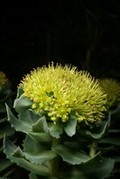
- Digital Images
- Online
Rhodiola rosea L. Crassulaceae Golden root, roseroot Distribution: Arctic, Eastern North America, mountains of central Asia. Herbalists regard it as having curative properties for diseases as diverse as cancer, influenza, depression and other conditions. It has not been licensed for use in manufactured herbal medicines in the UK. Photographed in the Medicinal Garden of the Royal College of Physicians, London.
Dr Henry Oakeley
- Digital Images
- Online
Mouse neuromuscular junctions
James N. Sleigh