Information to help you plan and prepare for your visit to the exhibition.
Rudy Loewe: Intimacies of Care – Spaces of Grief and Possibility visual story
Introduction to Rudy Loewe: Intimacies of Care – Spaces of Grief and Possibility
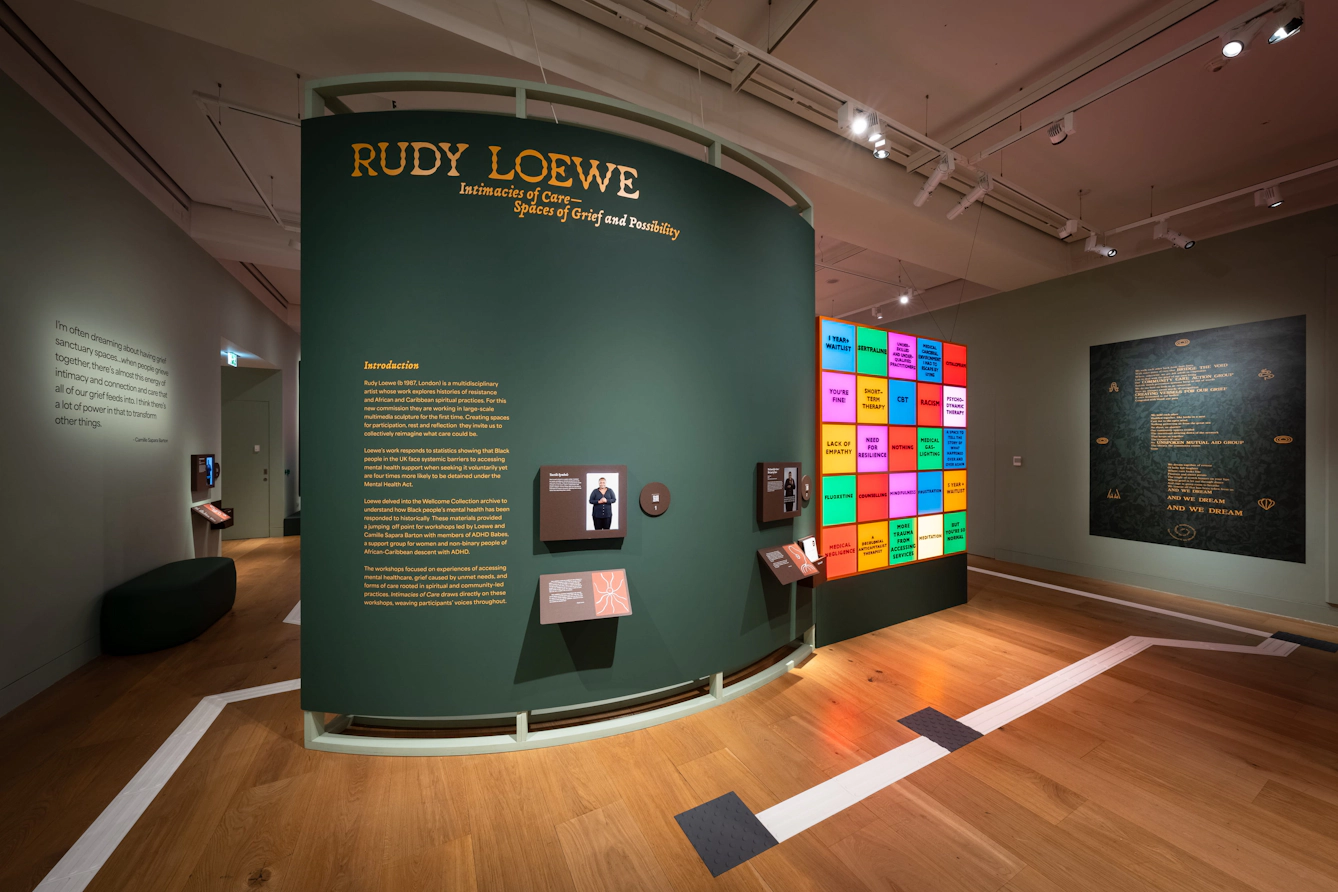
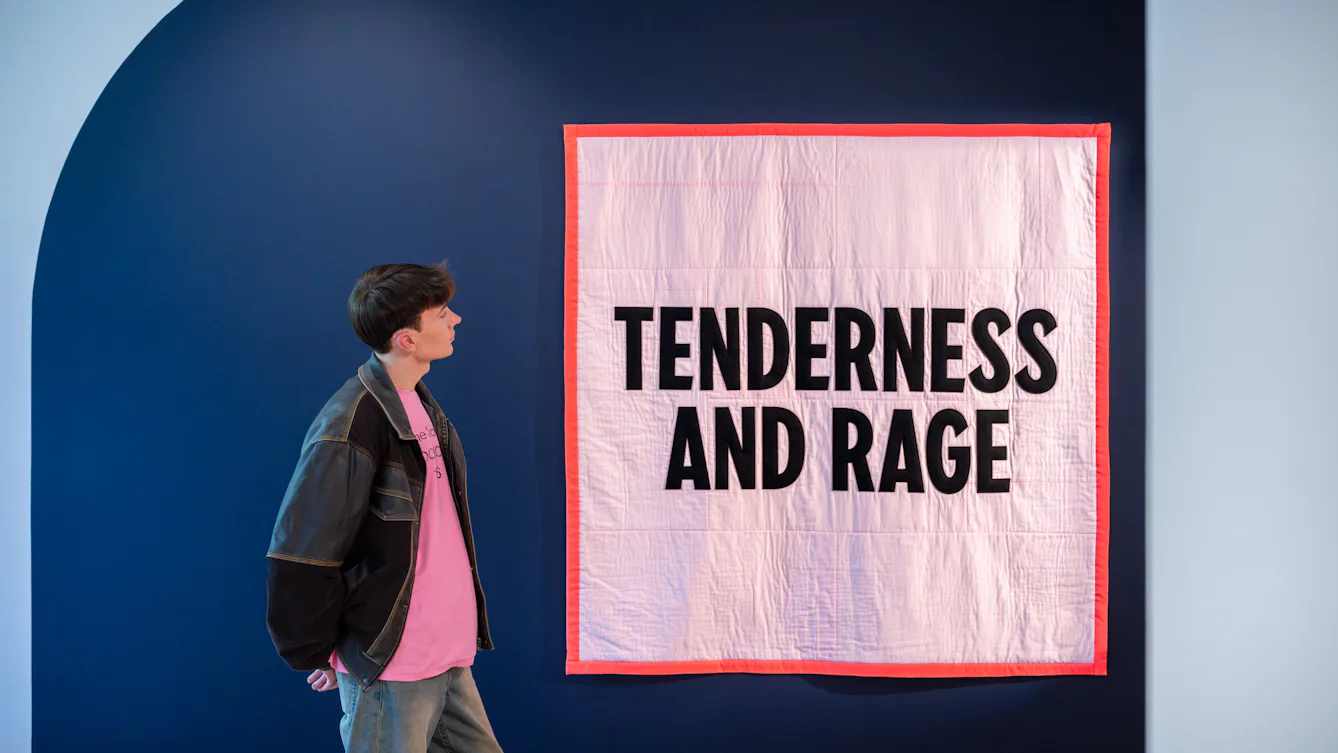
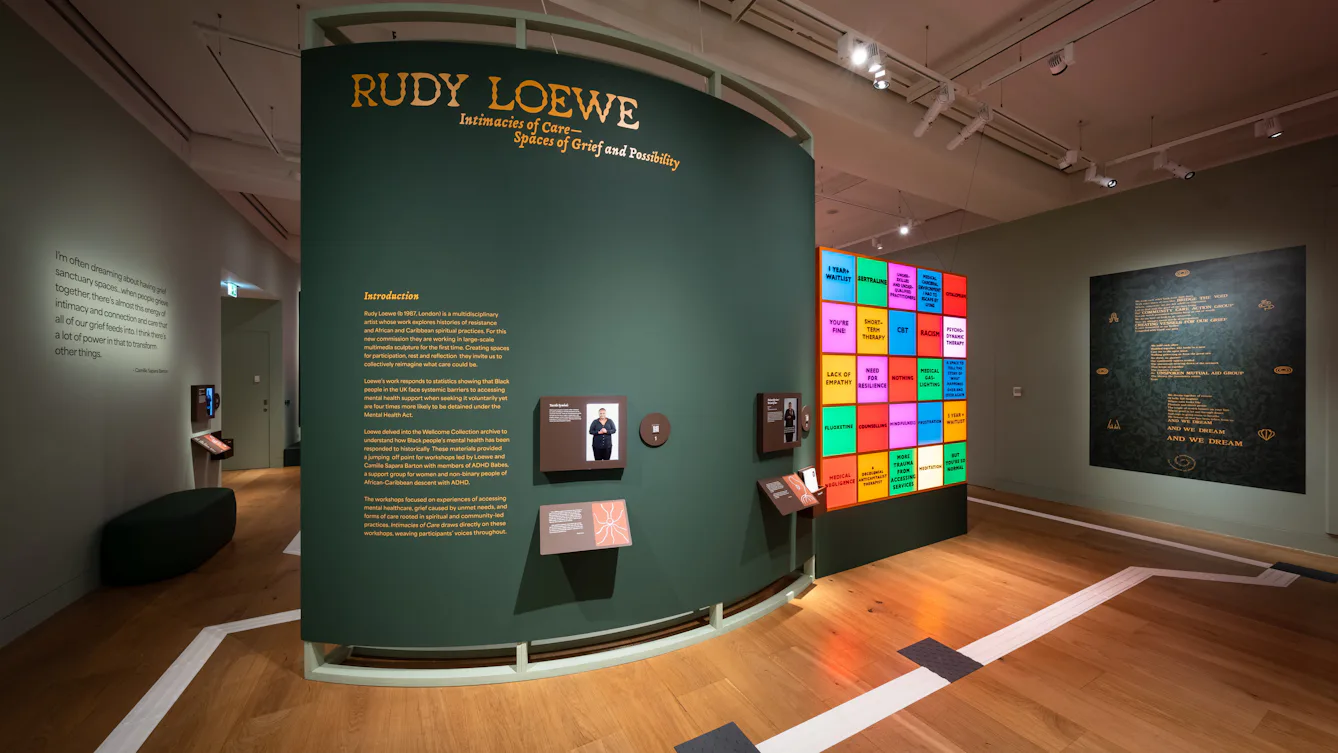
‘Rudy Loewe: Intimacies of Care – Spaces of Grief and Possibility’ exhibition at Wellcome Collection, Gallery Photo: Benjamin Gilbert. © Wellcome Collection. Attribution-NonCommercial 4.0 International (CC BY-NC 4.0).
‘Rudy Loewe: Intimacies of Care – Spaces of Grief and Possibility’ is an exhibition.
An exhibition is a collection of things to look at and learn about.
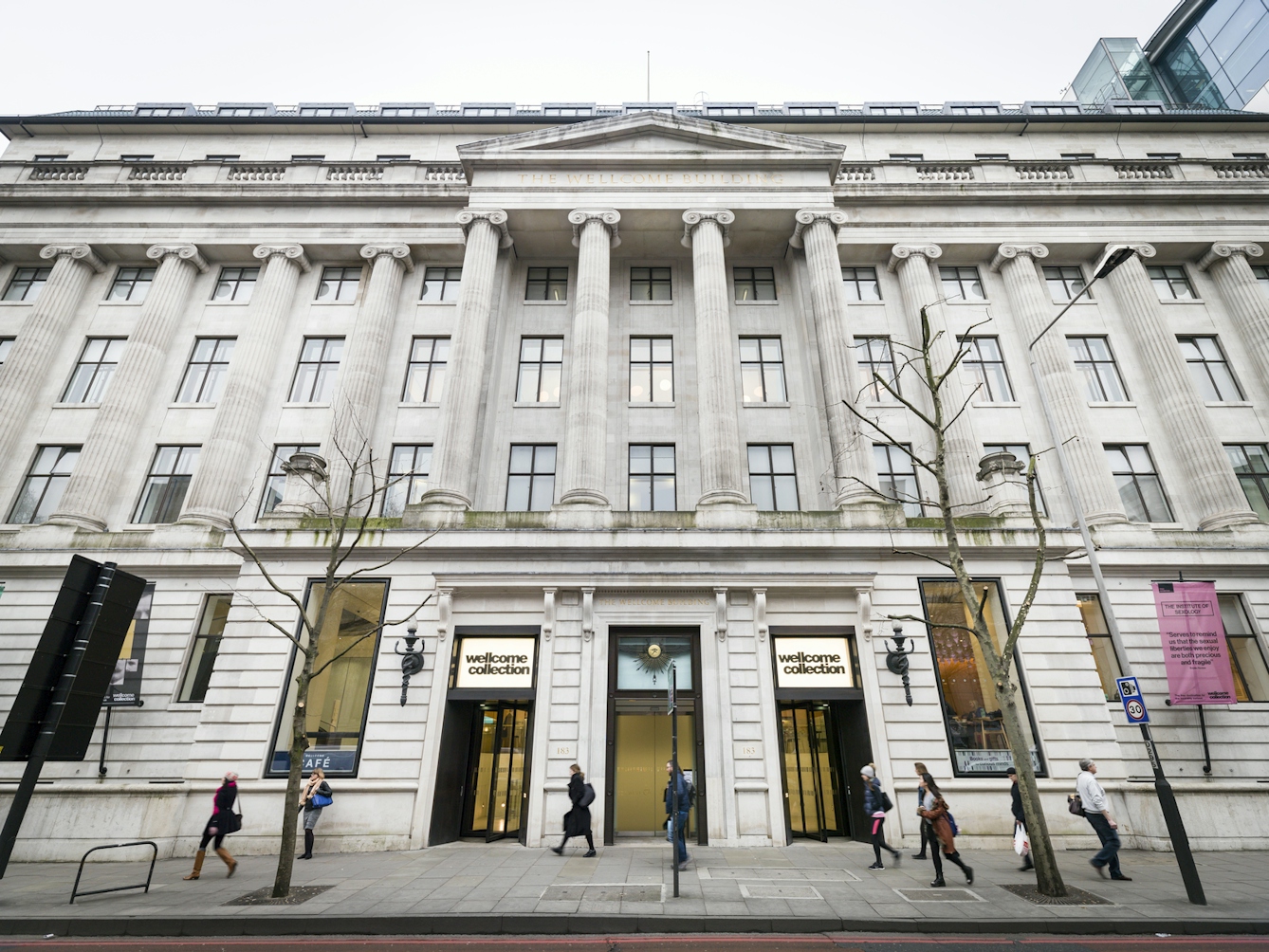
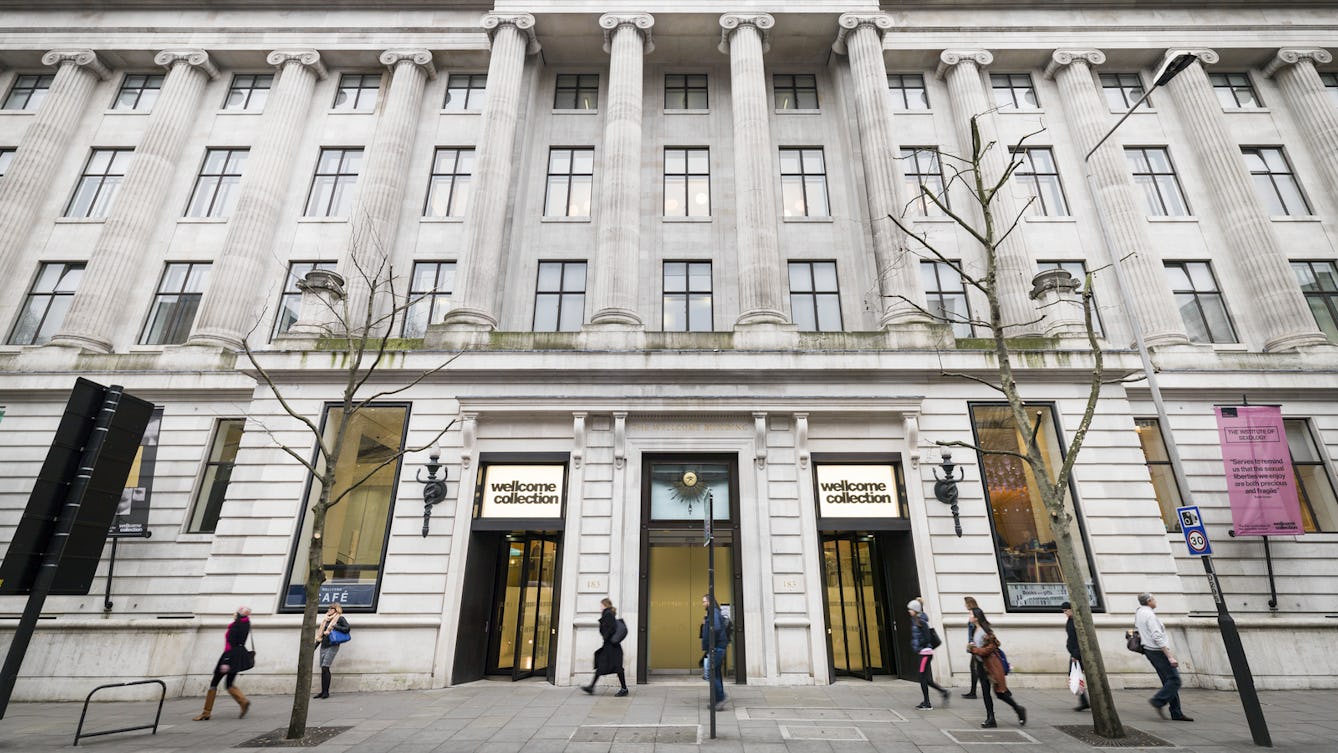
Wellcome Collection building. © Wellcome Collection.
The exhibition is at Wellcome Collection.
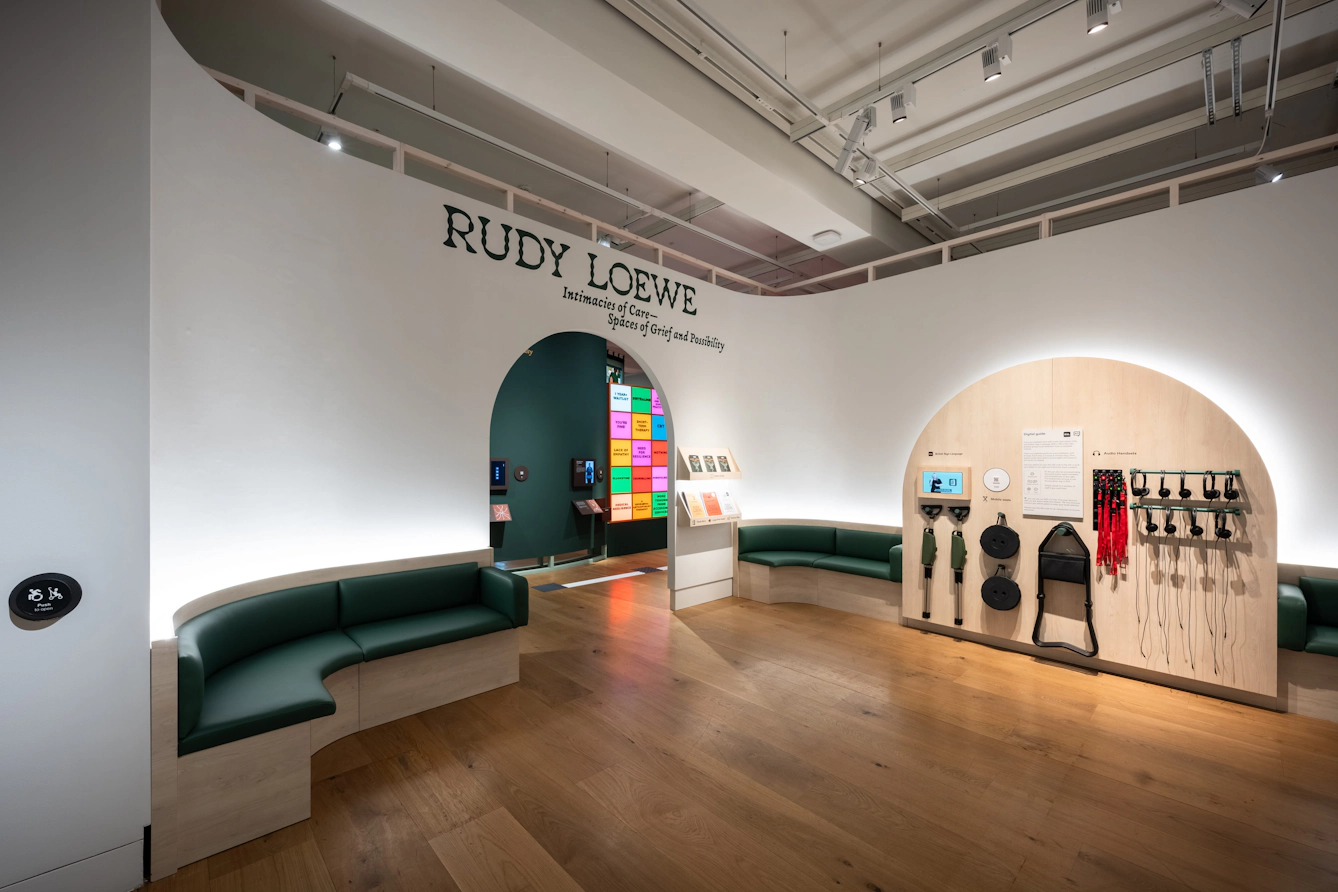
‘Rudy Loewe: Intimacies of Care – Spaces of Grief and Possibility’ exhibition at Wellcome Collection, Gallery Photo: Benjamin Gilbert. © Wellcome Collection. Attribution-NonCommercial 4.0 International (CC BY-NC 4.0).
The exhibition is in Gallery 2 on level 1 of our building.

The exhibition starts on Friday 10 July 2026.

The exhibition ends on Sunday 7 February 2027.

You do not have to pay to visit the exhibition.

You do not need to book a ticket. Just turn up.
Visiting Wellcome Collection
For more information about:
- opening times
- accessibility
- travel
click on this link: Visiting Wellcome Collection visual story.
About the exhibition
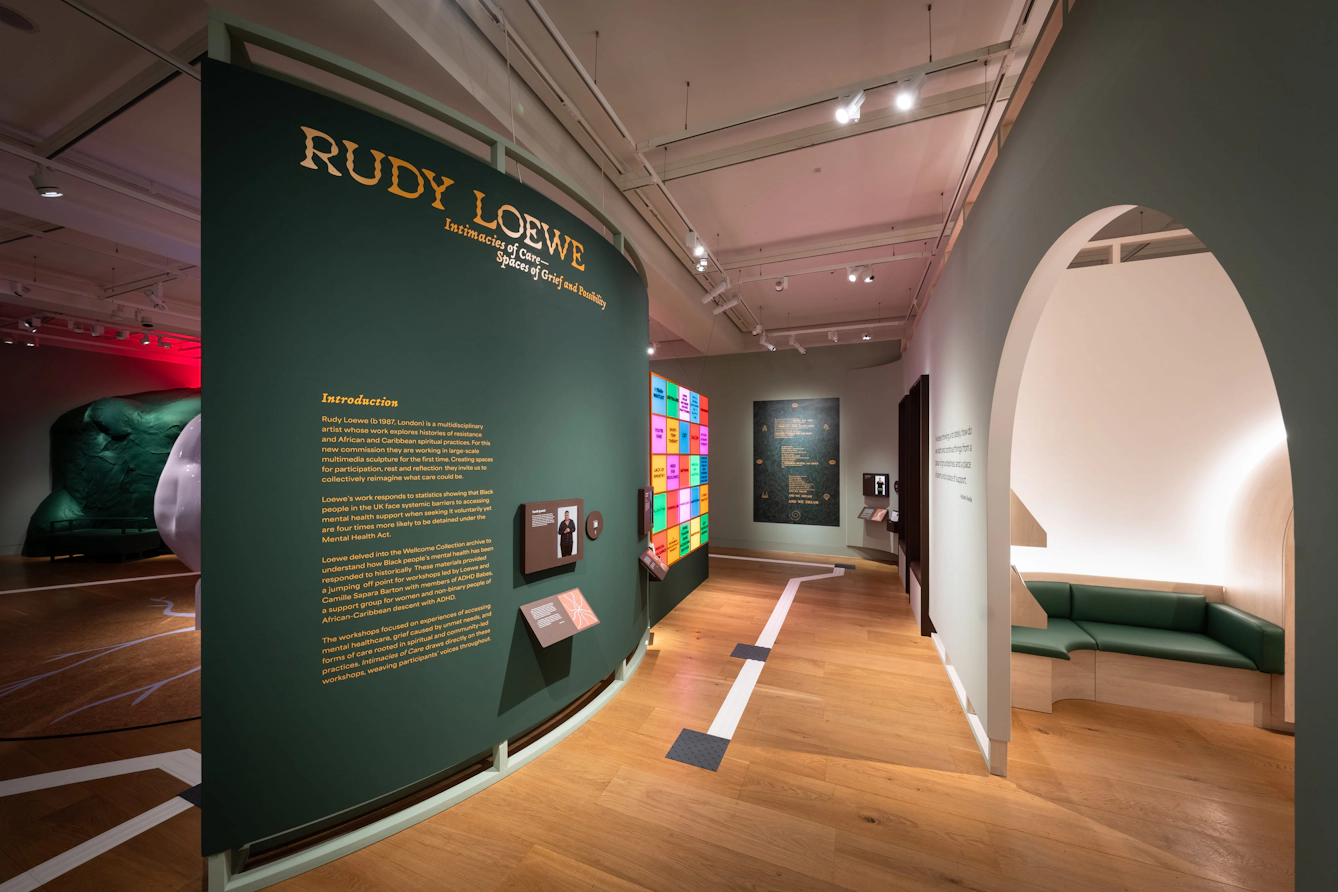
‘Rudy Loewe: Intimacies of Care – Spaces of Grief and Possibility’ exhibition at Wellcome Collection, Gallery Photo: Benjamin Gilbert. © Wellcome Collection. Attribution-NonCommercial 4.0 International (CC BY-NC 4.0).
‘Intimacies of Care – Spaces of Grief and Possibility’ is an exhibition. It is by artist Rudy Loewe.
This exhibition is about mental health. Mental health is how we think and feel in daily life.
Everyone has mental health. Like physical health, people can experience mental health problems. Mental health problems are sometimes called mental illness.
Having a mental illness can make everyday life difficult. People with mental illness may need care or treatment.
Care can mean help from services like doctors or therapy. It can also mean help from friends, family and community.
When Black people in the UK need mental health care, they are sometimes treated differently to others.
This can be because of racism. Racism means being treated unfairly because of your race.
Sometimes people giving care do not understand Black people’s lives. This might mean the care they give is not right.
Artist Rudy Loewe wants us to think about how mental health care could be made better for everyone.
The artworks in this exhibition are designed to be spaces for thinking and rest.
We invite you to spend as much or as little time in the exhibition space as you like.
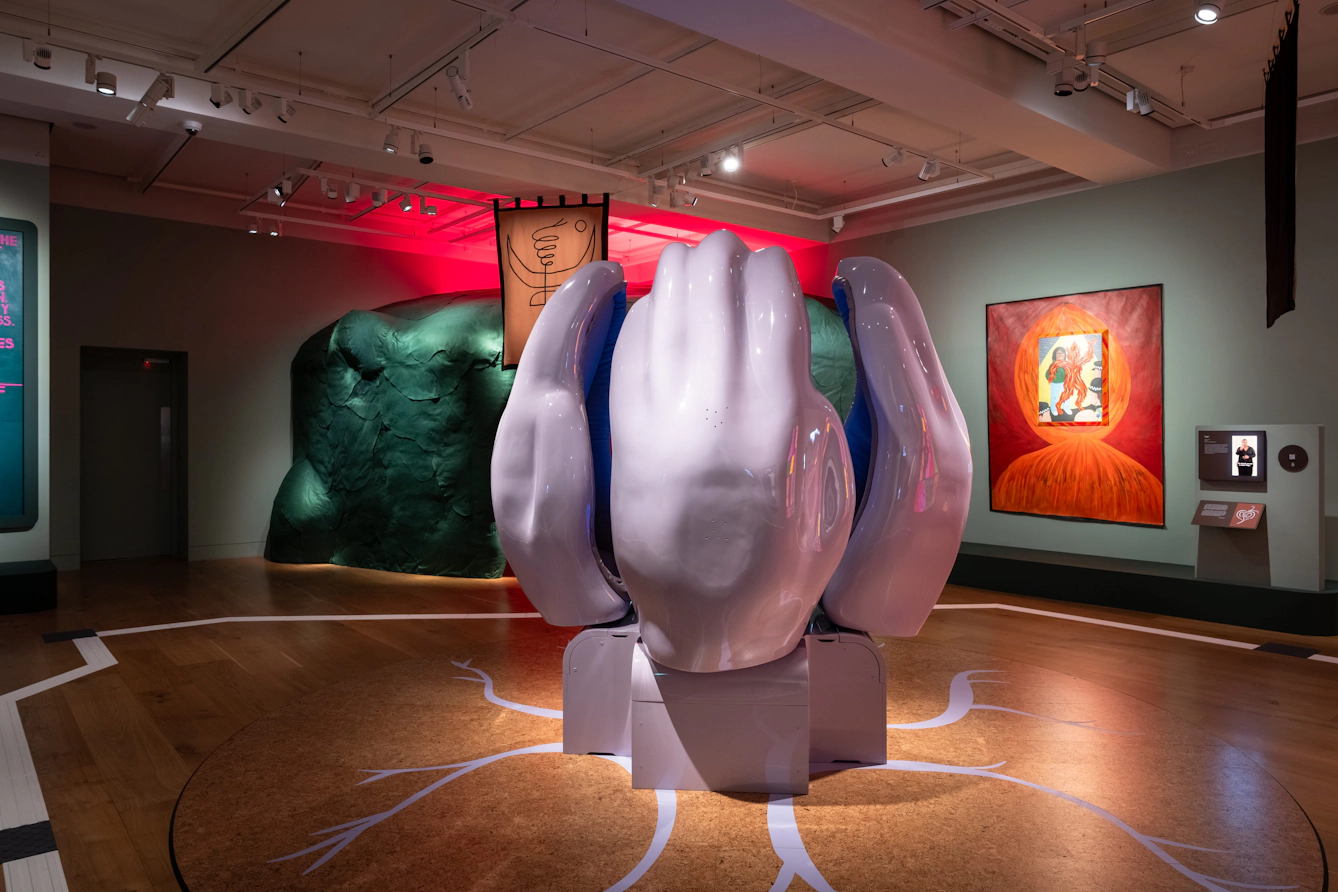
‘Activation Sculpture’, Rudy Loewe, 2026, Commissioned by Wellcome Collection. ‘Rudy Loewe: Intimacies of Care – Spaces of Grief and Possibility’ exhibition at Wellcome Collection, Gallery Photo: Benjamin Gilbert. Attribution-NonCommercial 4.0 International (CC BY-NC 4.0).
There are 8 artworks in the exhibition. These include:
- sculptures
- sound work
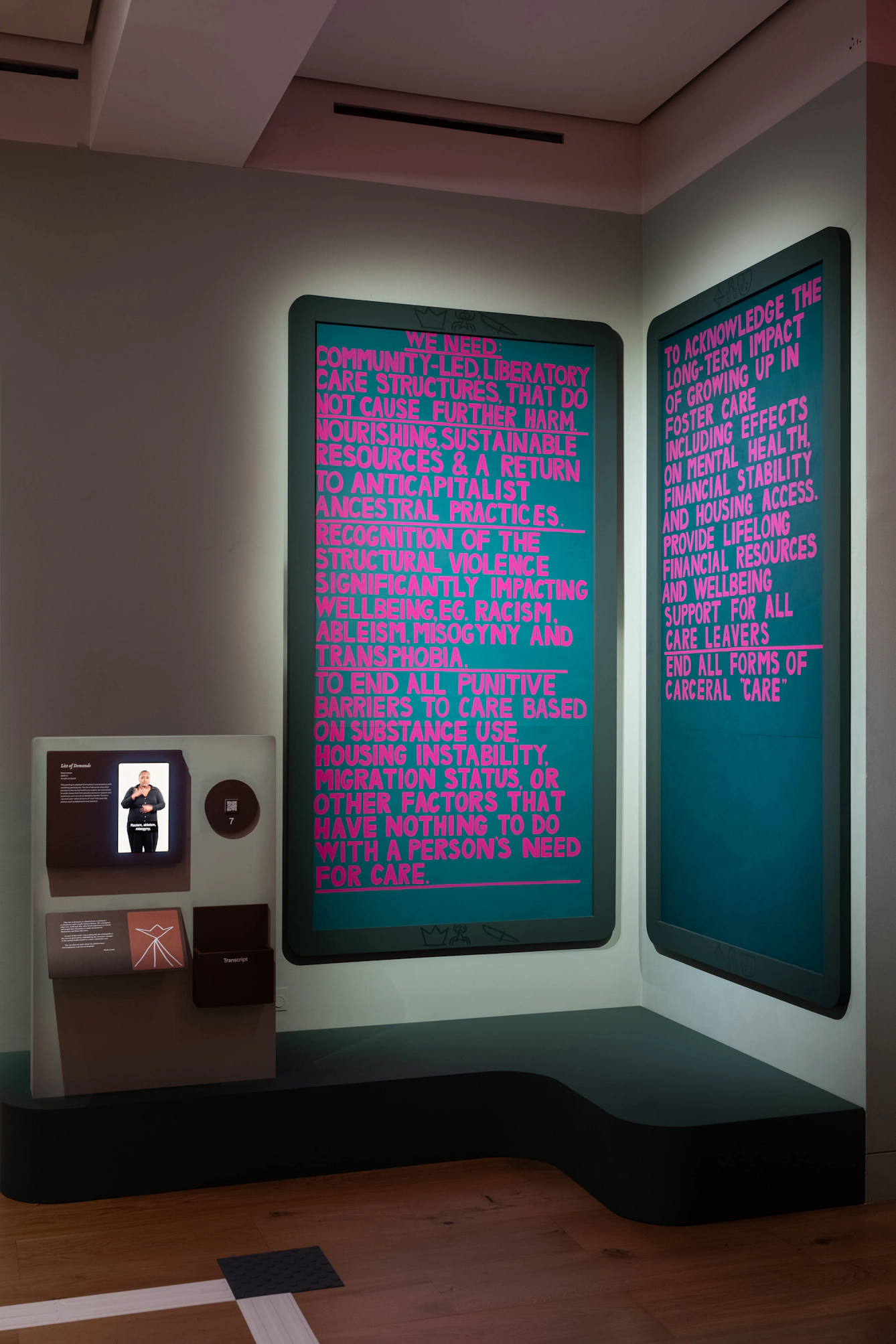
‘List of Demands’, Rudy Loewe, 2025–6, Commissioned by Wellcome Collection. ‘Rudy Loewe: Intimacies of Care – Spaces of Grief and Possibility’ exhibition at Wellcome Collection, Gallery Photo: Benjamin Gilbert. Attribution-NonCommercial 4.0 International (CC BY-NC 4.0).
- paintings
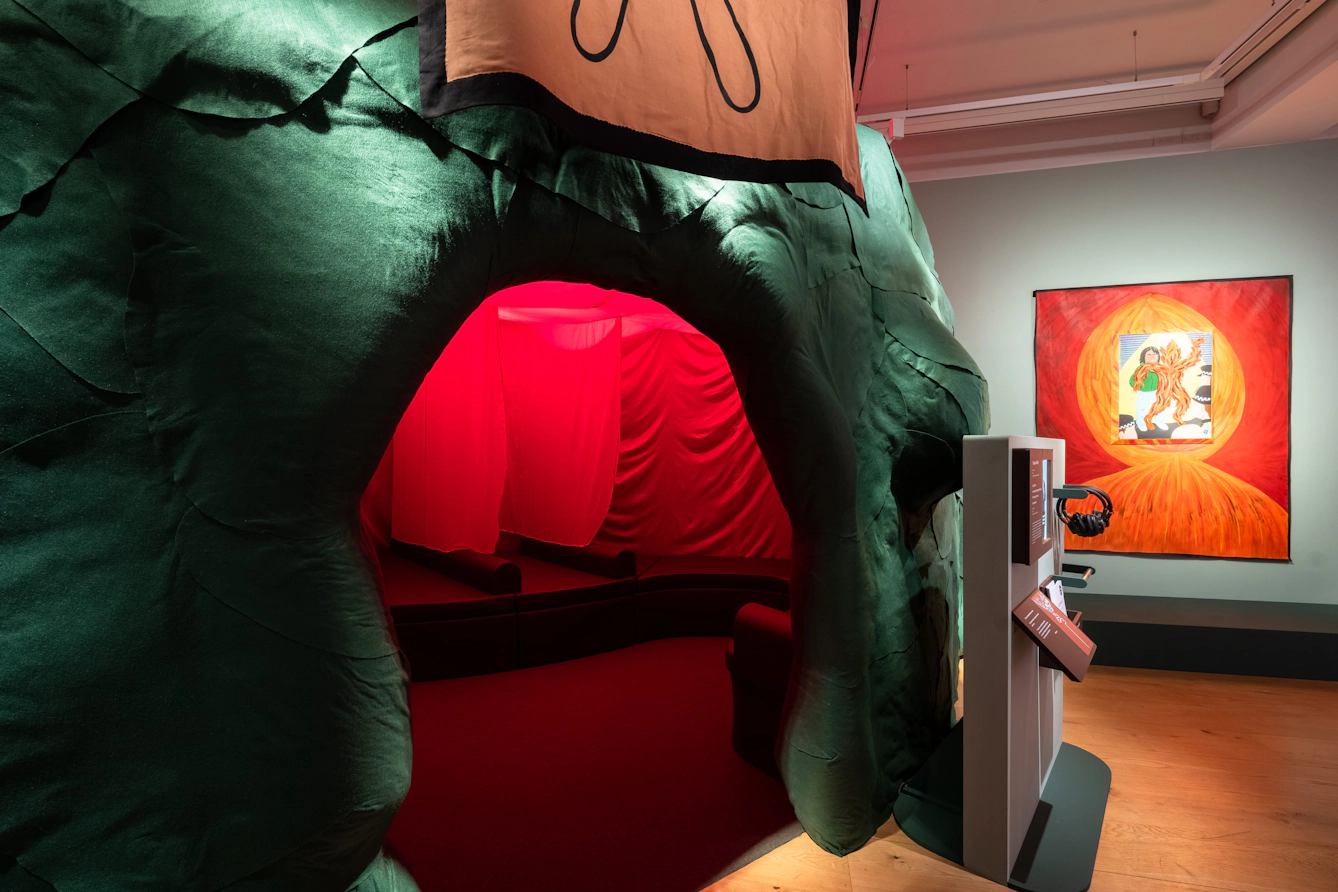
‘The Space Within’, Rudy Loewe, 2026, Commissioned by Wellcome Collection. ‘Rudy Loewe: Intimacies of Care – Spaces of Grief and Possibility’ exhibition at Wellcome Collection, Gallery Photo: Benjamin Gilbert. Attribution-NonCommercial 4.0 International (CC BY-NC 4.0).
- a large structure you can sit inside.
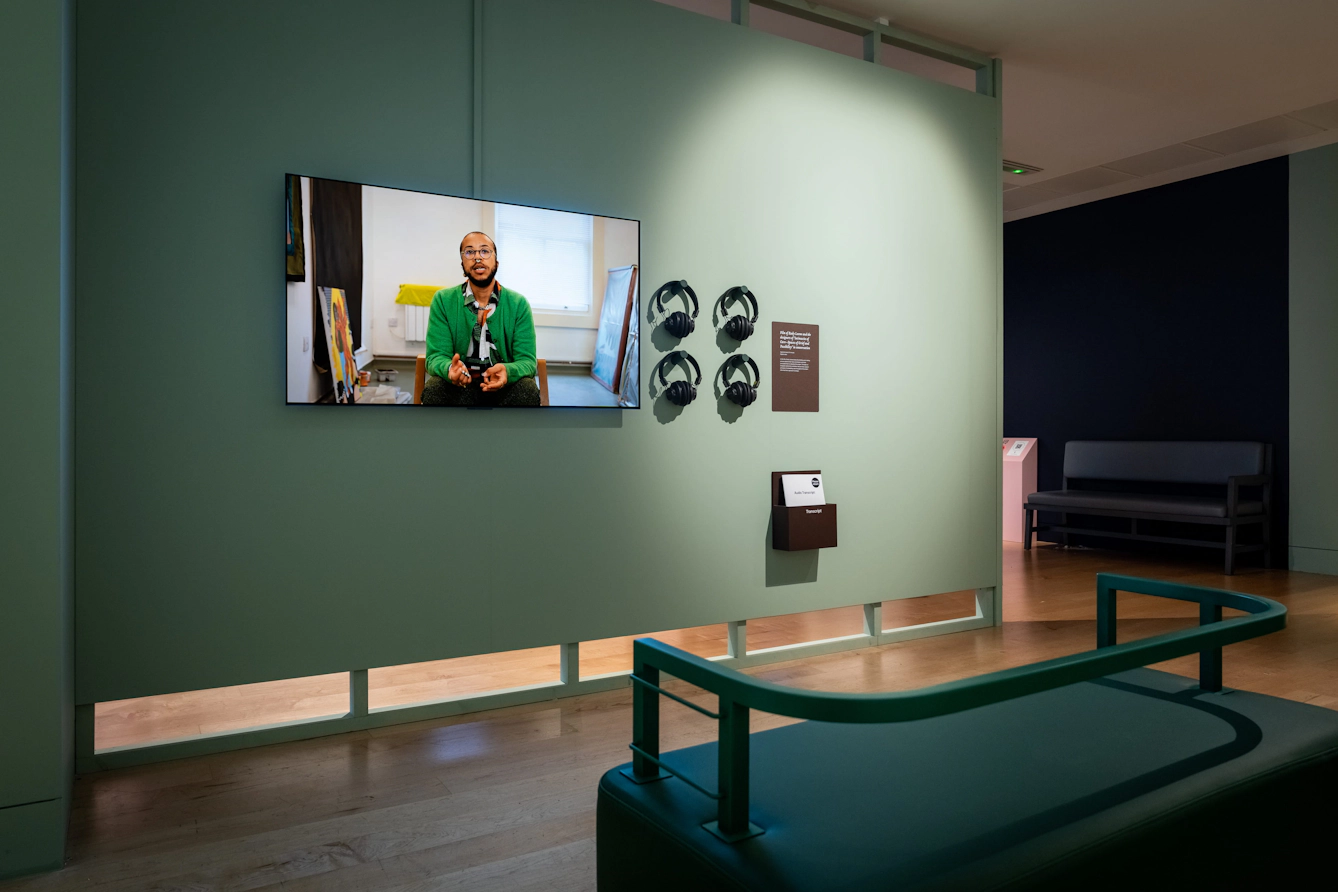
Film of Rudy Loewe and the designers of ‘Intimacies of Care: Spaces of Grief and Possibility’ in conversation. ‘Rudy Loewe: Intimacies of Care – Spaces of Grief and Possibility’ exhibition at Wellcome Collection, Gallery Photo: Benjamin Gilbert. Attribution-NonCommercial 4.0 International (CC BY-NC 4.0).
There is also a film of artist Rudy talking about their work.

You can listen to the film using headphones.

Some of the things in this exhibition are about:
- Mental illness. Illness can affect the body or the mind. Mental illness affects the mind. It can change how someone feels, thinks or acts.
- Discrimination. Discrimination is when someone is treated unfairly because of who they are.
- Racism. Racism means treating someone unfairly because of their race.
- Death and grief. Grief is the difficult emotions we feel when someone dies.
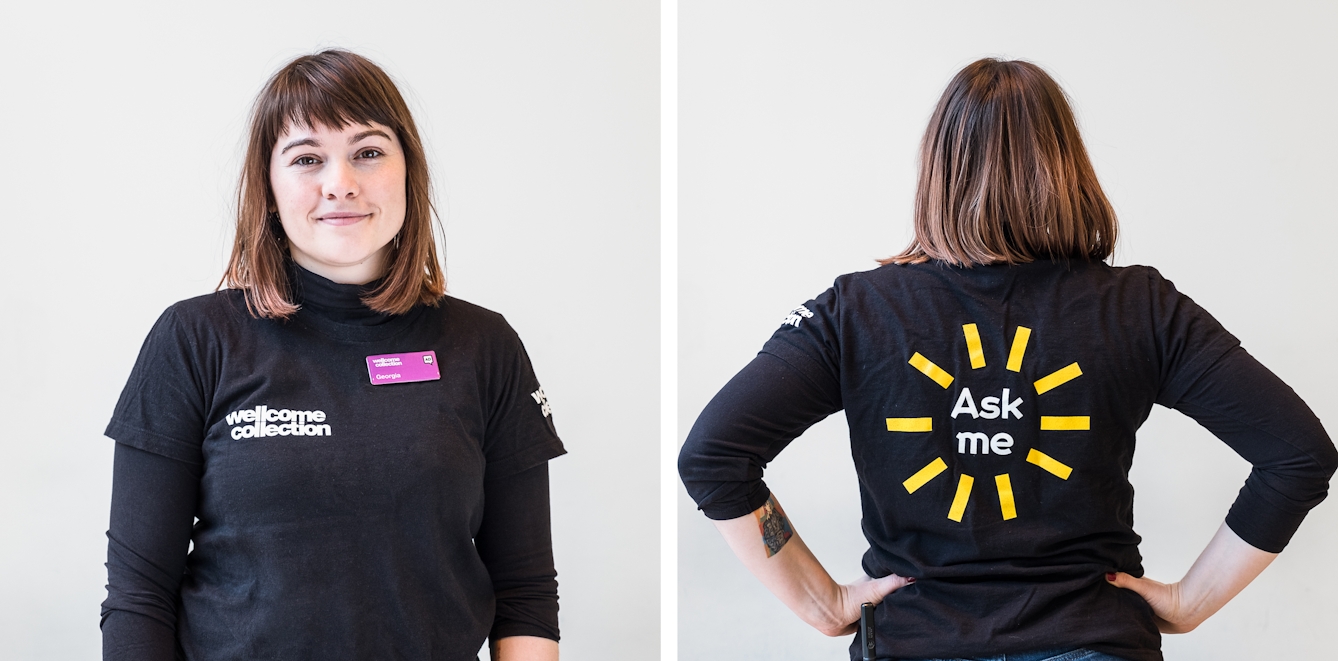
Visitor Experience Assistant, Kevin Percival. Source: Wellcome Collection. Attribution-NonCommercial 4.0 International (CC BY-NC 4.0).
If you need any help, you can speak to a member of our team.
Sensory information
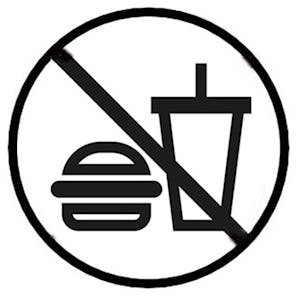
You cannot eat or drink in the exhibition.

But you can breastfeed or bottle-feed babies.
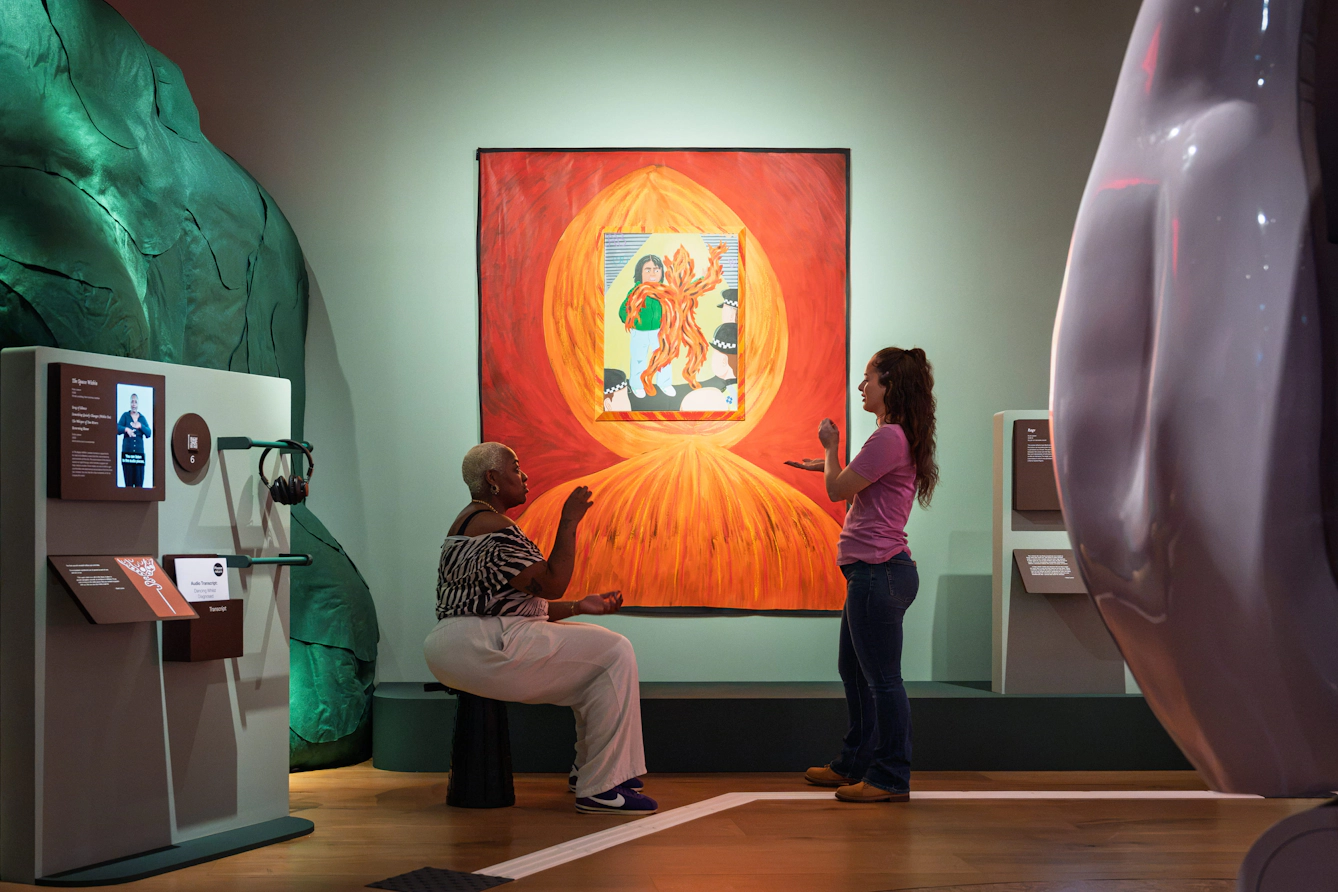
‘Rage’, Rudy Loewe, 2025–6, Commissioned by Wellcome Collection. ‘Rudy Loewe: Intimacies of Care – Spaces of Grief and Possibility’ exhibition at Wellcome Collection, Gallery Photo: Benjamin Gilbert. Attribution-NonCommercial 4.0 International (CC BY-NC 4.0).
People sometimes speak quietly at an exhibition. But you do not have to speak quietly.
The lights are not very bright in the exhibition. This is to help make the space feel calm.

This exhibition includes:
- Works you can touch. These have a picture of a hand on the label or next to the object.
- Objects with sound. This sound can be out loud or on headphones.

- A structure that you can sit inside.
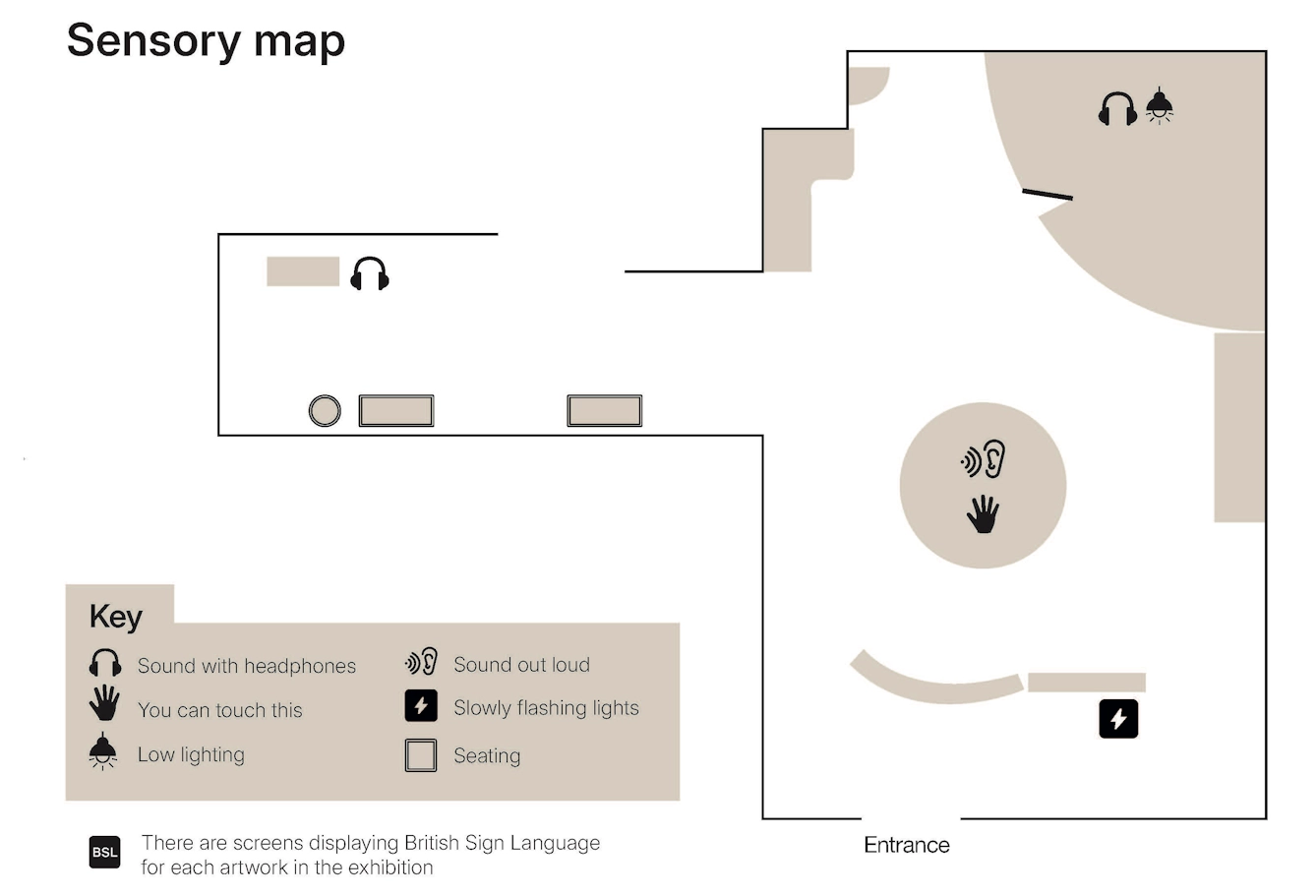
The sensory map shows you where these things are.
We will tell you more about them later in this visual story.
What is in the exhibition
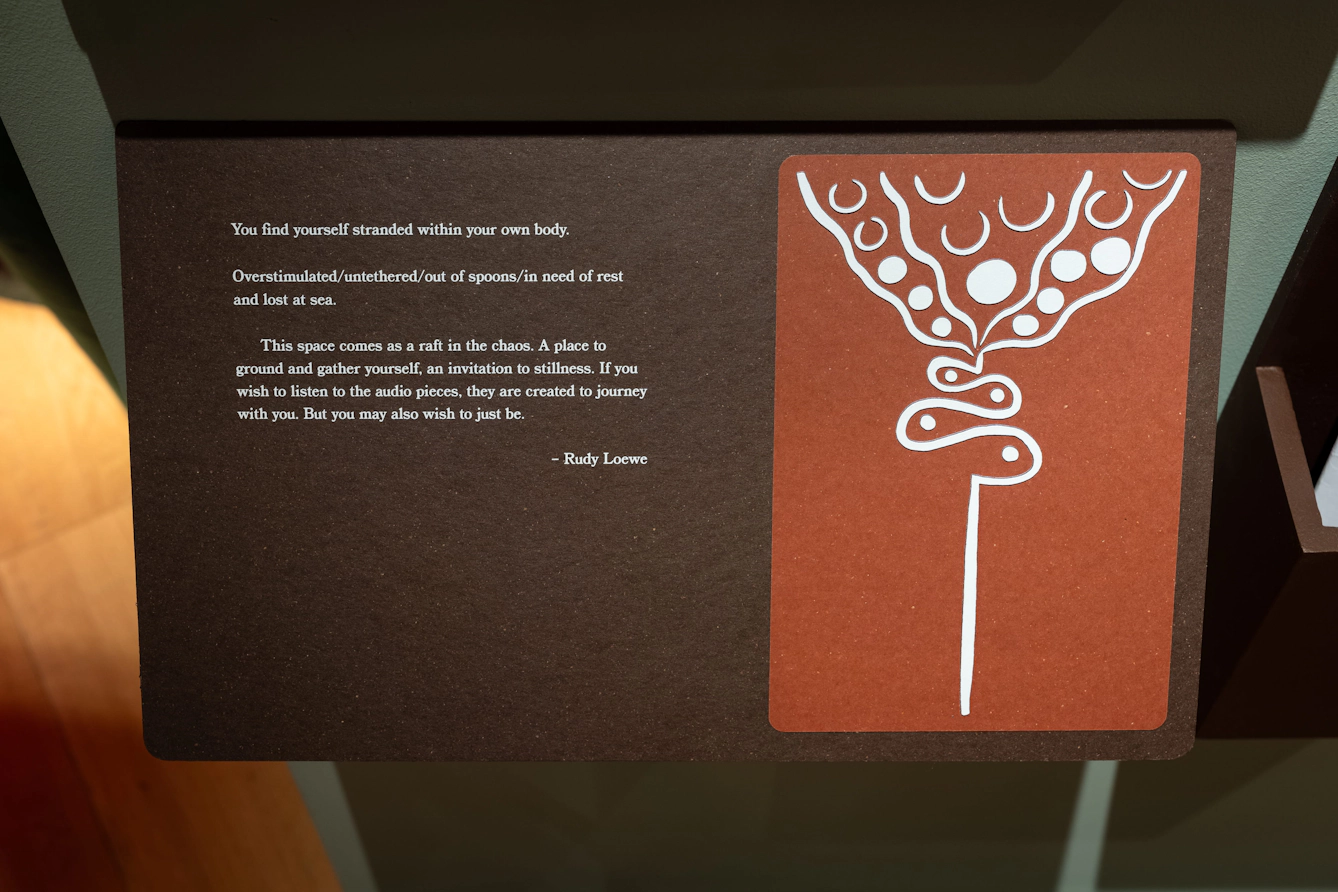
Artist’s invitation. ‘Rudy Loewe: Intimacies of Care – Spaces of Grief and Possibility’ exhibition at Wellcome Collection, Gallery Photo: Benjamin Gilbert. Attribution-NonCommercial 4.0 International (CC BY-NC 4.0).
Artist Rudy Loewe has written words to go with each artwork. The words give us ideas of things to think about when looking at the artwork.
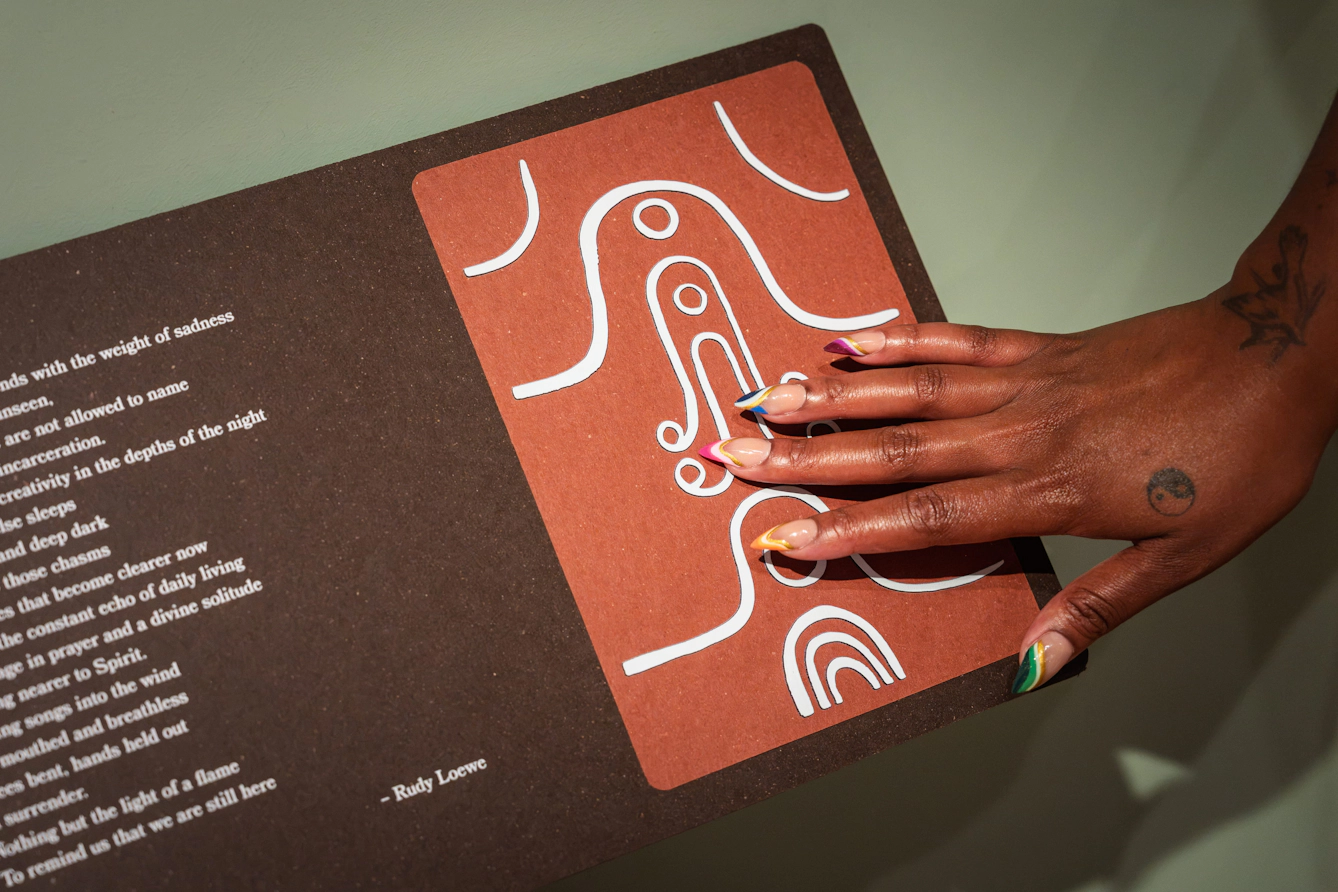
Tactile symbol. ‘Rudy Loewe: Intimacies of Care – Spaces of Grief and Possibility’ exhibition at Wellcome Collection, Gallery Photo: Benjamin Gilbert. Attribution-NonCommercial 4.0 International (CC BY-NC 4.0).
Rudy has designed some tactile symbols for each artwork. You can touch these.
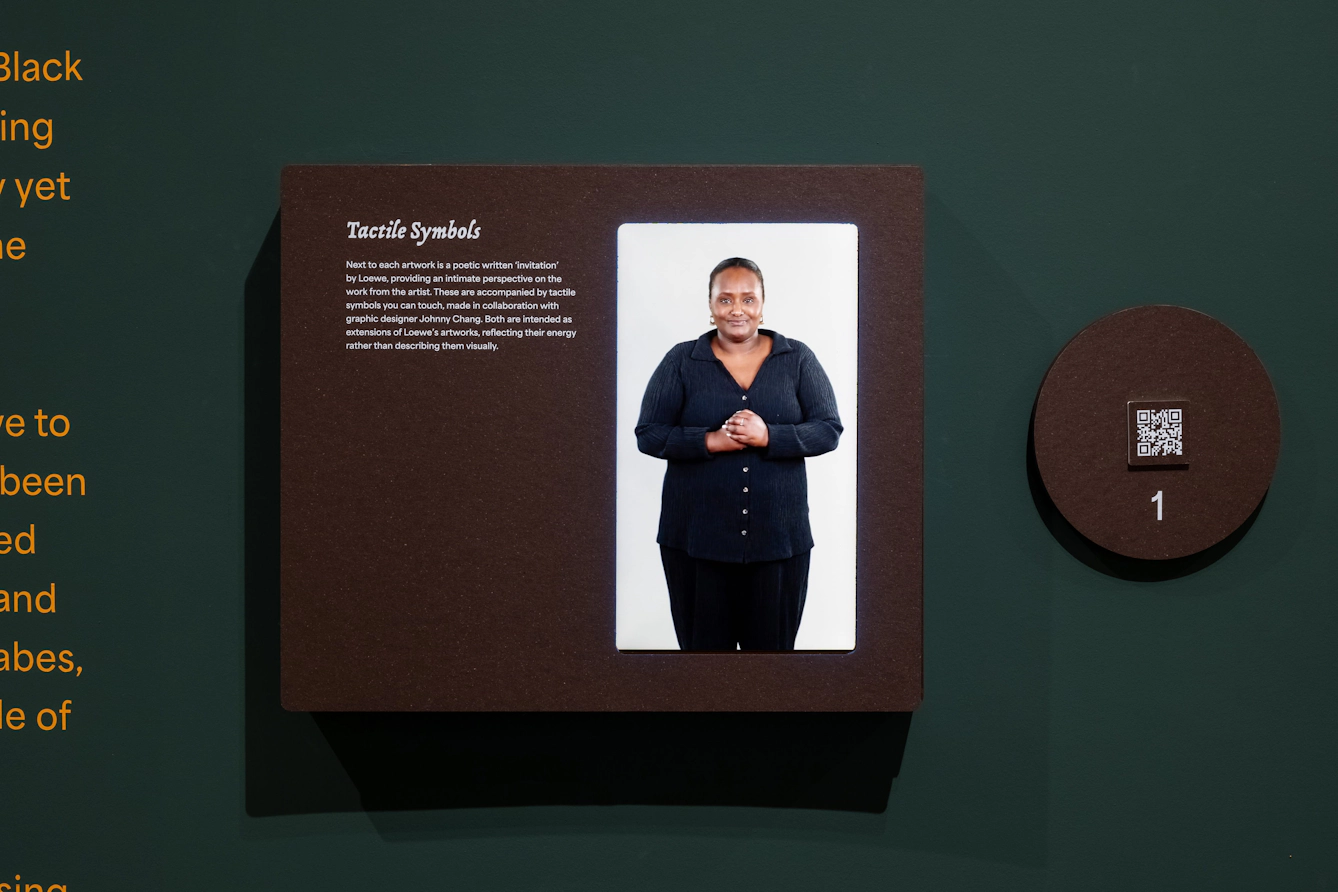
British Sign Language video. ‘Rudy Loewe: Intimacies of Care – Spaces of Grief and Possibility’ exhibition at Wellcome Collection, Gallery Photo: Benjamin Gilbert. Attribution-NonCommercial 4.0 International (CC BY-NC 4.0).
There is a screen with a British Sign Language video on the wall next to each artwork.
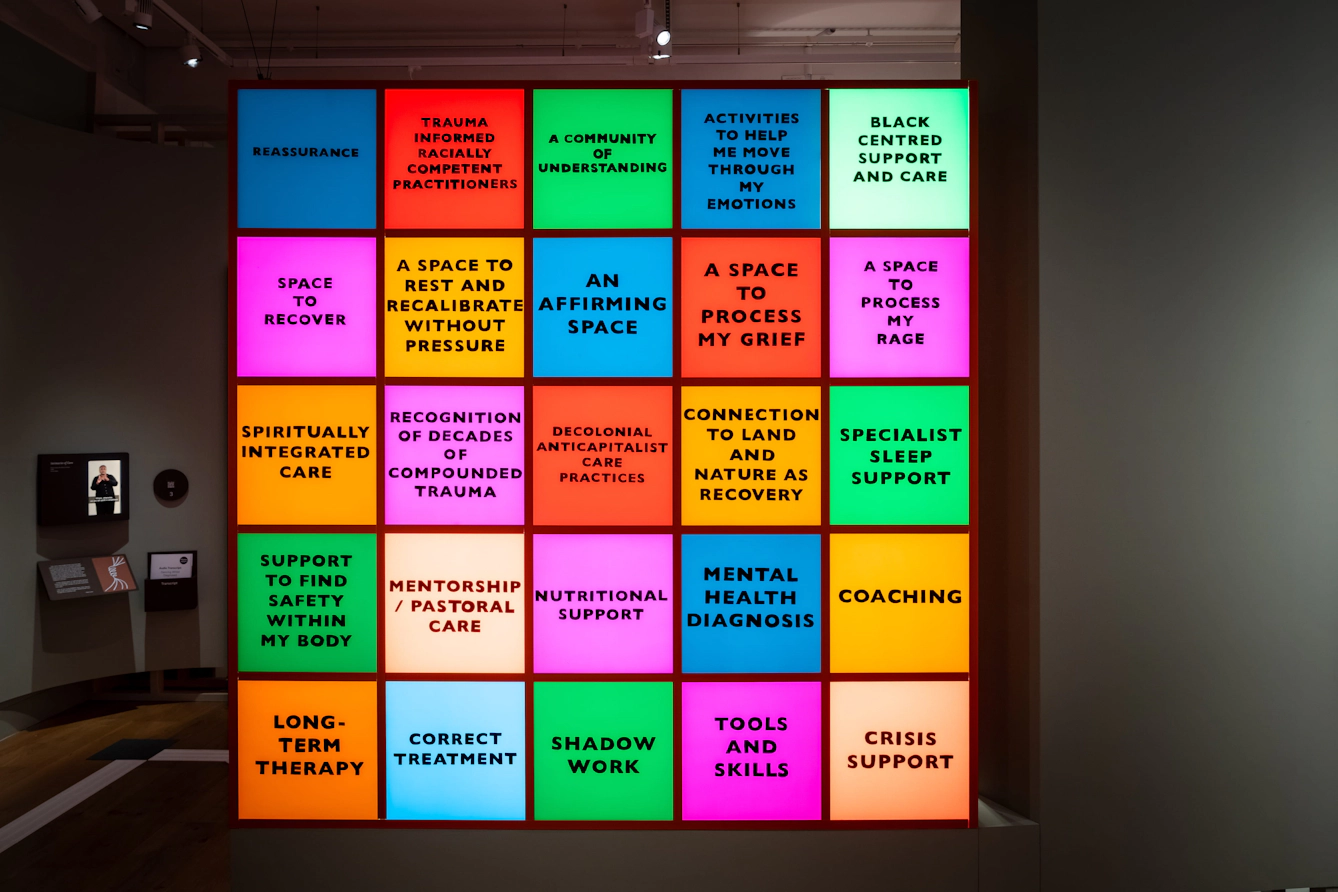
‘The Search for Care / The Lack of Care’, Rudy Loewe, 2026, Commissioned by Wellcome Collection. ‘Rudy Loewe: Intimacies of Care – Spaces of Grief and Possibility’ exhibition at Wellcome Collection, Gallery Photo: Benjamin Gilbert. Attribution-NonCommercial 4.0 International (CC BY-NC 4.0).
‘The Search for Care / The Lack of Care’ by Rudy Loewe
This artwork is a large, grid-shaped sculpture.
It is made from different coloured squares that light up.
You can look at both sides. On one side it has positive words. On the other, it has negative words.
The words are about the different experiences people can have when they experience mental health care.
The artist wants a future where we only have the positive experiences.
They made this artwork so we can think about different people’s experiences of care.
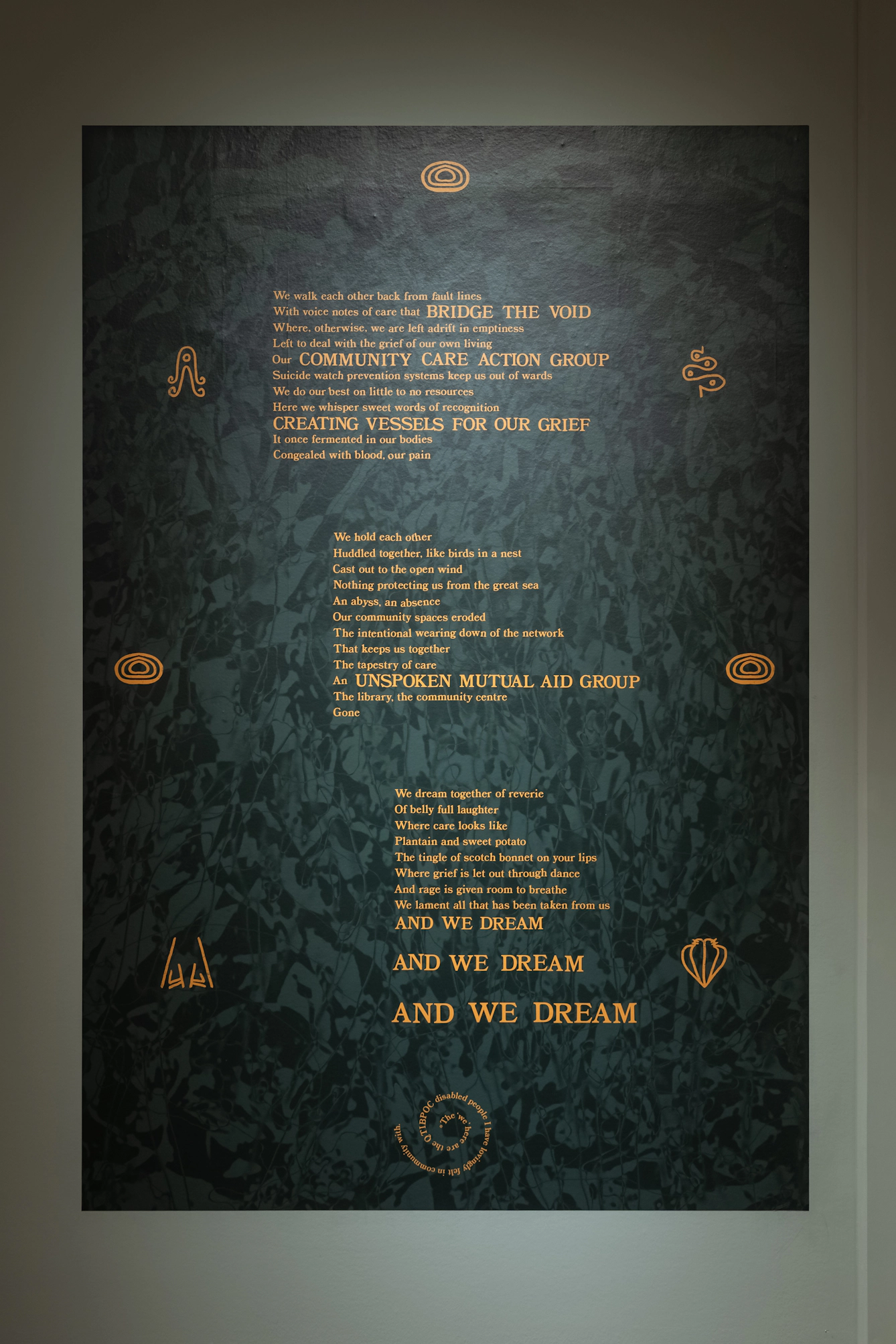
‘Intimacies of Care’, Rudy Loewe and Johnny Chang, 2026. ‘Rudy Loewe: Intimacies of Care – Spaces of Grief and Possibility’ exhibition at Wellcome Collection, Gallery Photo: Benjamin Gilbert. Attribution-NonCommercial 4.0 International (CC BY-NC 4.0).
‘Intimacies of Care’ by Rudy Loewe and designer Johnny Chang
This artwork is a poem. It is printed like a poster.
It is about caring for people when they are sick.
It shows how the artist has been supported by their community. There are many ways to support someone.
The artist’s community includes other disabled QTIPOC+ people.
QTIPOC+ stands for queer, trans and intersex people of colour.
The poem invites us to think about how we can help others and make them feel supported.
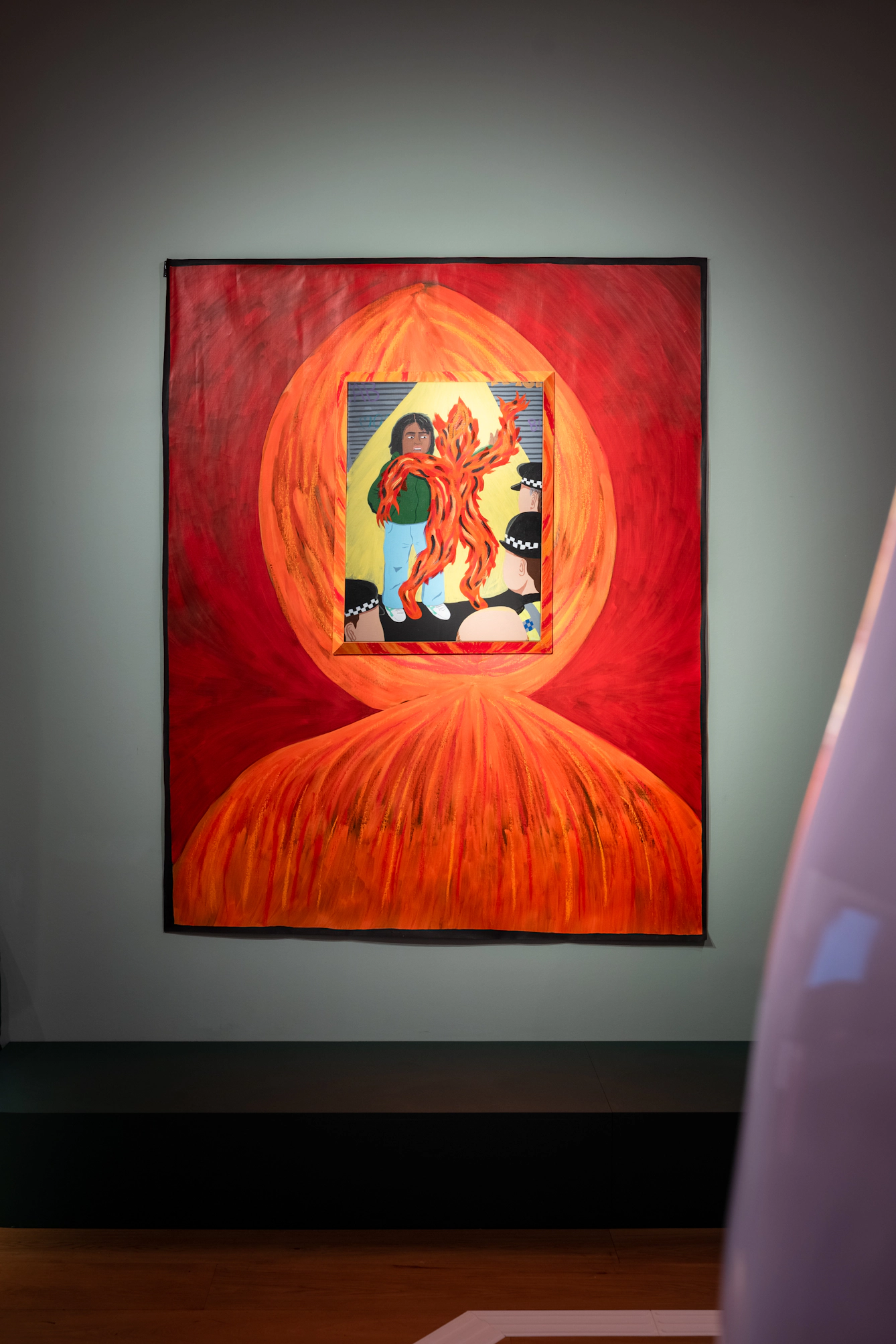
‘Rage’, Rudy Loewe, 2025–6, Commissioned by Wellcome Collection. ‘Rudy Loewe: Intimacies of Care – Spaces of Grief and Possibility’ exhibition at Wellcome Collection, Gallery Photo: Benjamin Gilbert. Attribution-NonCommercial 4.0 International (CC BY-NC 4.0).
‘Rage’ by Rudy Loewe
This painting shows a Black person and police officers.
The artist wants us to think about what is happening.
The person may be experiencing mental health problems.
Their behaviour may be misunderstood.
They may be seen as a threat.
The person may need care and support.
The police officers may not understand what the person needs.
The police officers may think the person is dangerous.
This can make the situation become more serious.
The police stand in a line. They form a barrier.
They stand between us and the person in the painting.
The artist wants us to think about how this feels.
We may feel fear.
We may feel anger.
We may feel unable to help.
The flame-headed figure represents strong feelings.
It represents rage.
Rage means very strong anger that is hard to control.
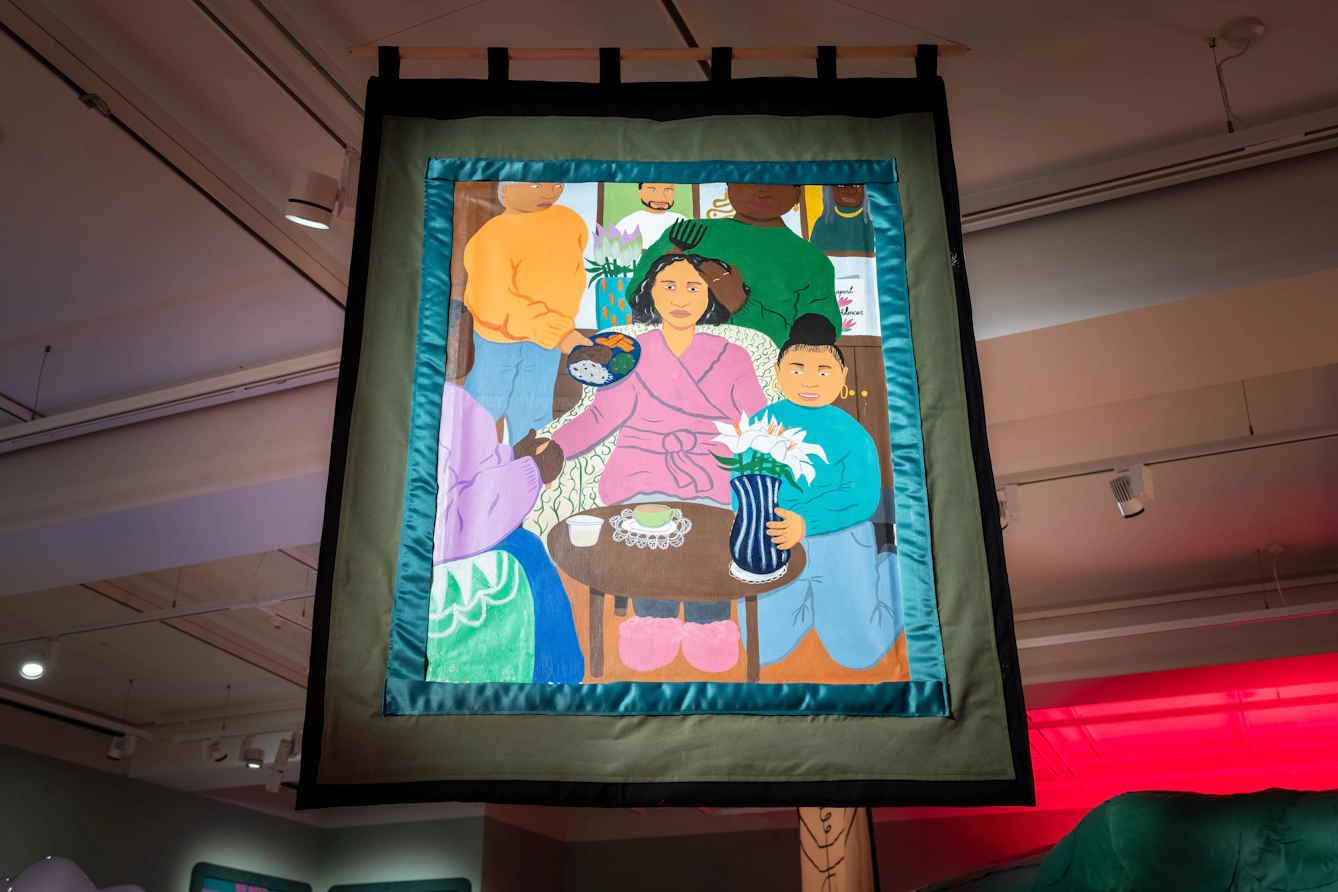
‘It Takes a Community to Hold These Wounds’, Rudy Loewe, 2025–6, Commissioned by Wellcome Collection. ‘Rudy Loewe: Intimacies of Care – Spaces of Grief and Possibility’ exhibition at Wellcome Collection, Gallery Photo: Benjamin Gilbert. Attribution-NonCommercial 4.0 International (CC BY-NC 4.0).
‘It Takes a Community to Hold These Wounds’ by Rudy Loewe
This painting is about how we feel after someone dies.
We often experience strong, sad emotions, called grief. This painting shows someone feeling grief. People have come to take care of them.
Artist Rudy Loewe wants us to think about how it is important to take care of people when someone has died.
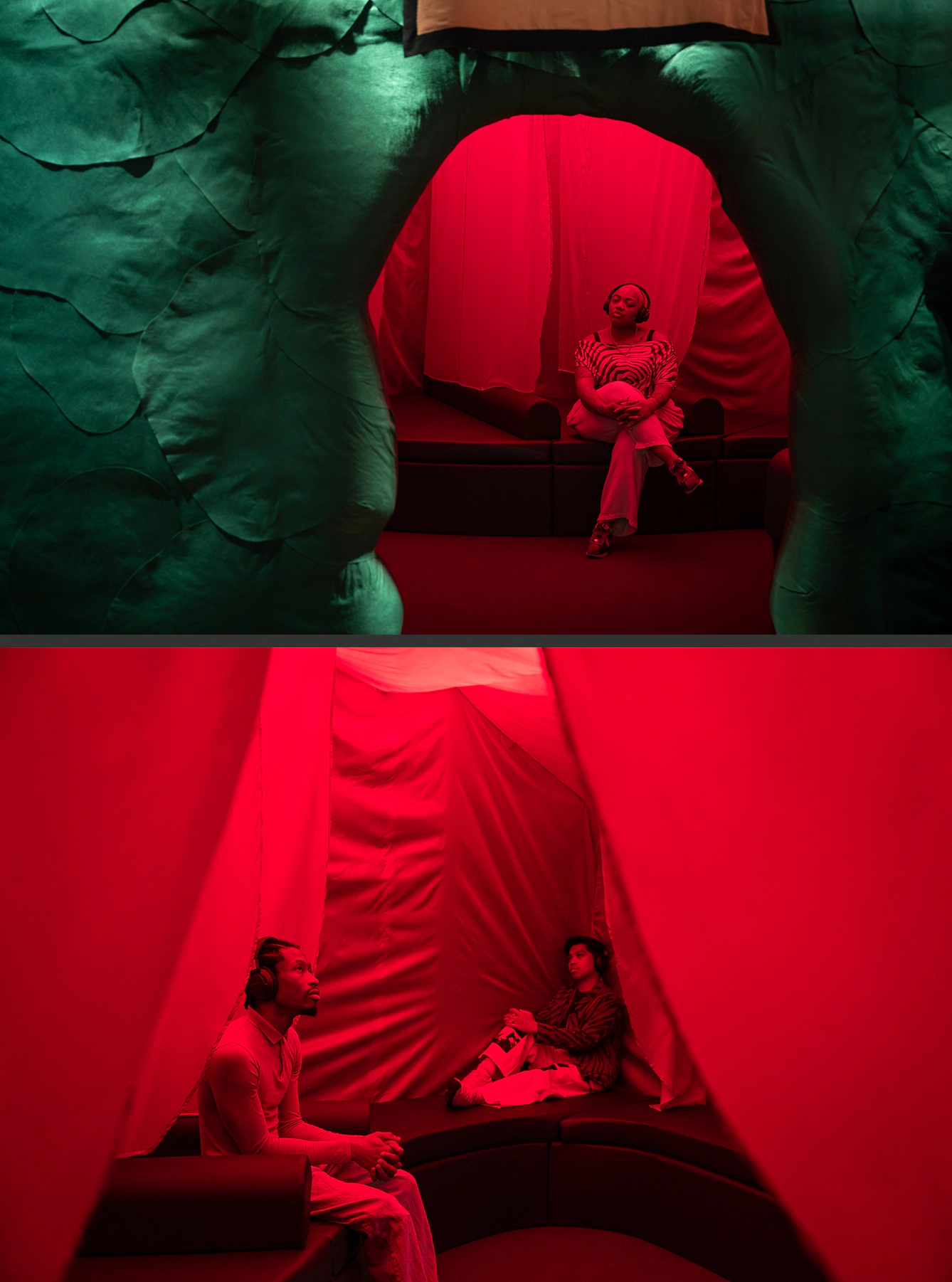
‘The Space Within’, Rudy Loewe, 2026, Commissioned by Wellcome Collection. ‘Rudy Loewe: Intimacies of Care – Spaces of Grief and Possibility’ exhibition at Wellcome Collection, Gallery Photo: Benjamin Gilbert. Attribution-NonCommercial 4.0 International (CC BY-NC 4.0).
‘The Space Within’ by Rudy Loewe
This is a sculpture that you can walk inside.
The city can be very busy. Some people can find this stressful. Sometimes we might need a place to rest.
Artist Rudy Loewe designed this sculpture to be somewhere people can rest.
There is a red light in the space. This is to help the space feel calm.
There is music playing in the space.
You can sit inside for as long as you like.
Please remember that other people want to use the space too.
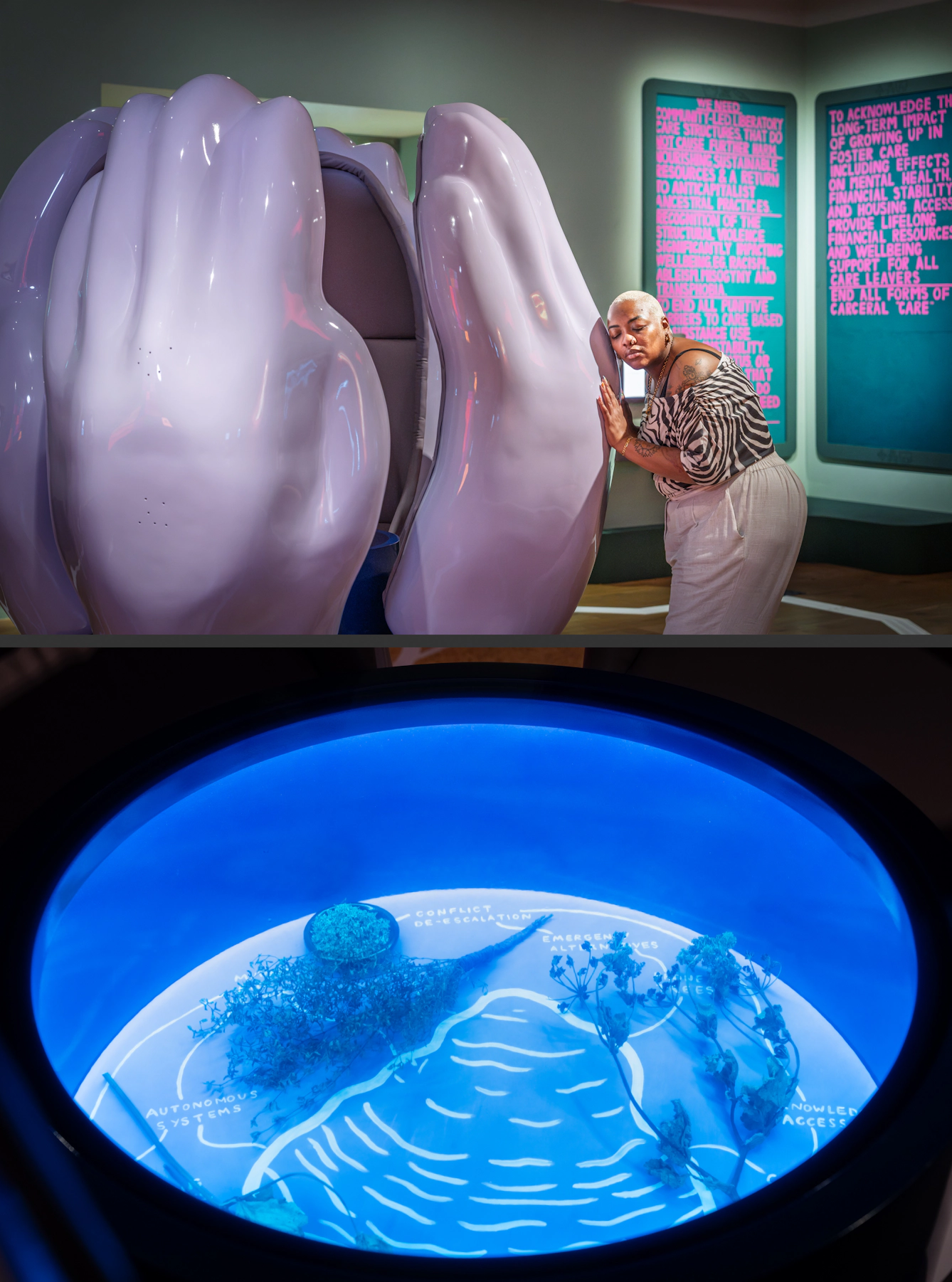
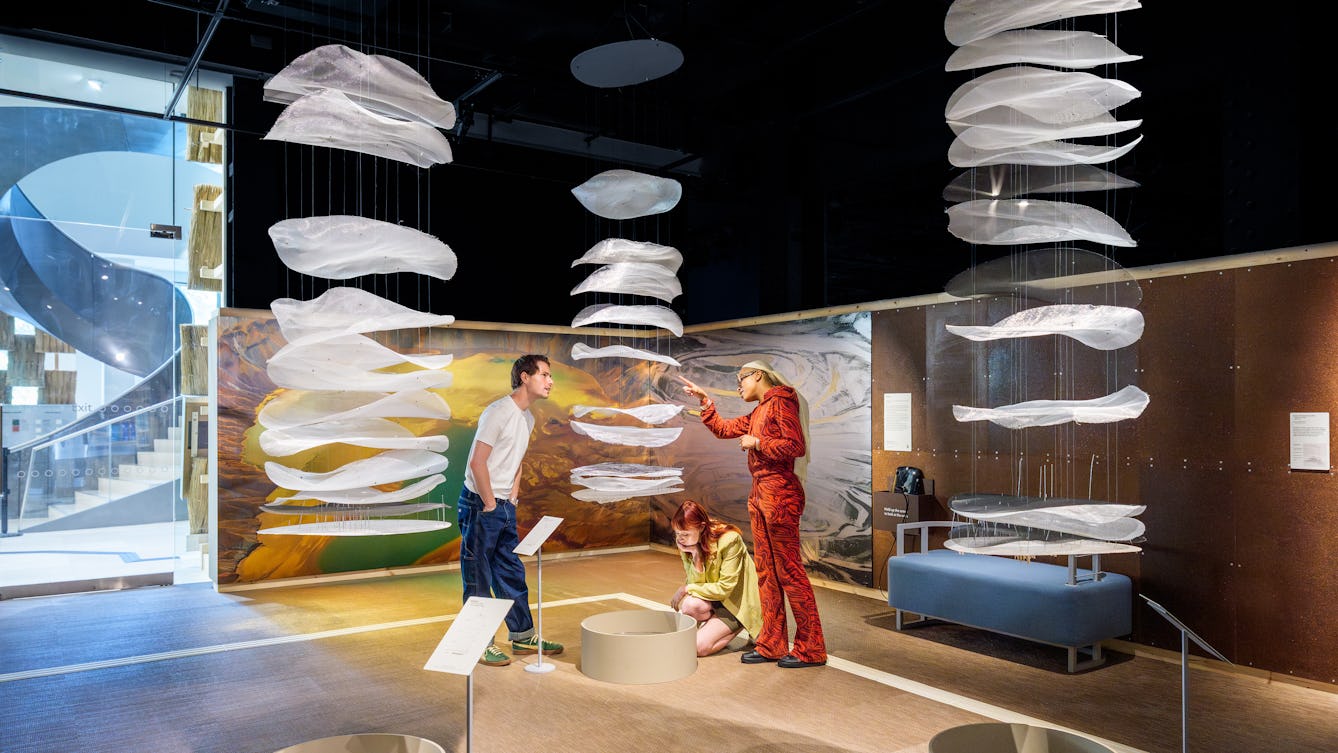
‘Activation Sculpture’, Rudy Loewe, 2026, Commissioned by Wellcome Collection. ‘Rudy Loewe: Intimacies of Care – Spaces of Grief and Possibility’ exhibition at Wellcome Collection, Gallery Photo: Benjamin Gilbert. Attribution-NonCommercial 4.0 International (CC BY-NC 4.0).
‘Activation Sculpture’ by Rudy Loewe
This is a sculpture.
It is made to look like four hands holding each other.
The sculpture is about healing and care.
The sculpture makes sound. The voices are from people who did workshops with the artist.
Sometimes the sculpture changes.
The hands open out.
When this happens, you can sit inside the space.
It becomes a place to rest and gather.
The sculpture is about people holding and caring for each other.
It is also about taking time to heal together.
You can touch the sculpture.
You can also put your ear close to listen to the sound.
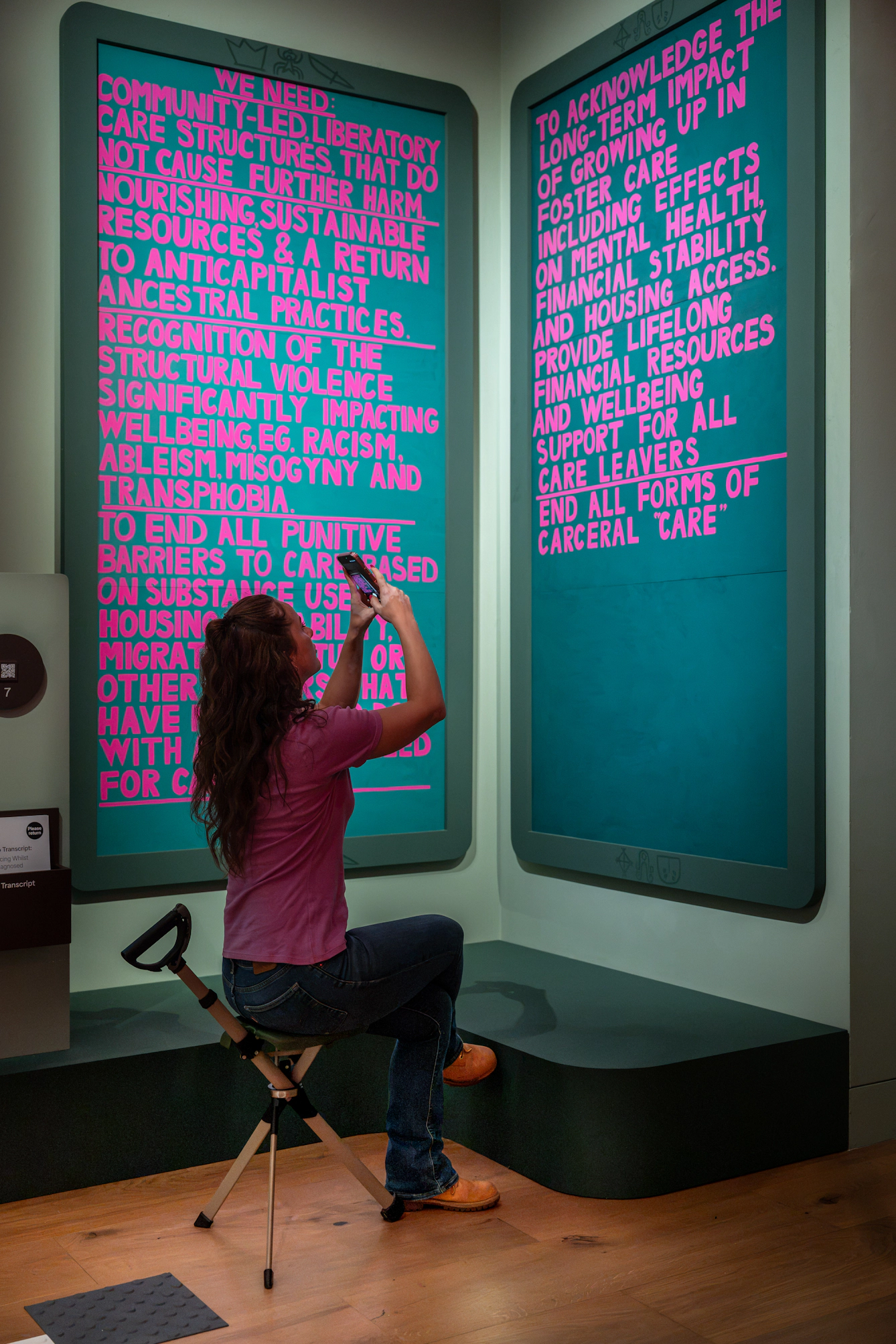
‘List of Demands’, Rudy Loewe, 2025–6, Commissioned by Wellcome Collection. ‘Rudy Loewe: Intimacies of Care – Spaces of Grief and Possibility’ exhibition at Wellcome Collection, Gallery Photo: Benjamin Gilbert. Attribution-NonCommercial 4.0 International (CC BY-NC 4.0).
‘List of Demands’ by Rudy Loewe
Artist Rudy Loewe worked with other people to make this painting. They had workshops where people shared their ideas. The workshops were about experiences of mental health care.
The painting shows a list of demands. Demands are things people want. These demands are about changes to mental health care. Rudy plans to send this list to the government.
The painting also uses the phrase carceral care. Carceral care means forms of care that can feel like being in prison. For example, being made to stay in hospital when you don’t want to.
Rudy has made this work to try and improve how we care for people.
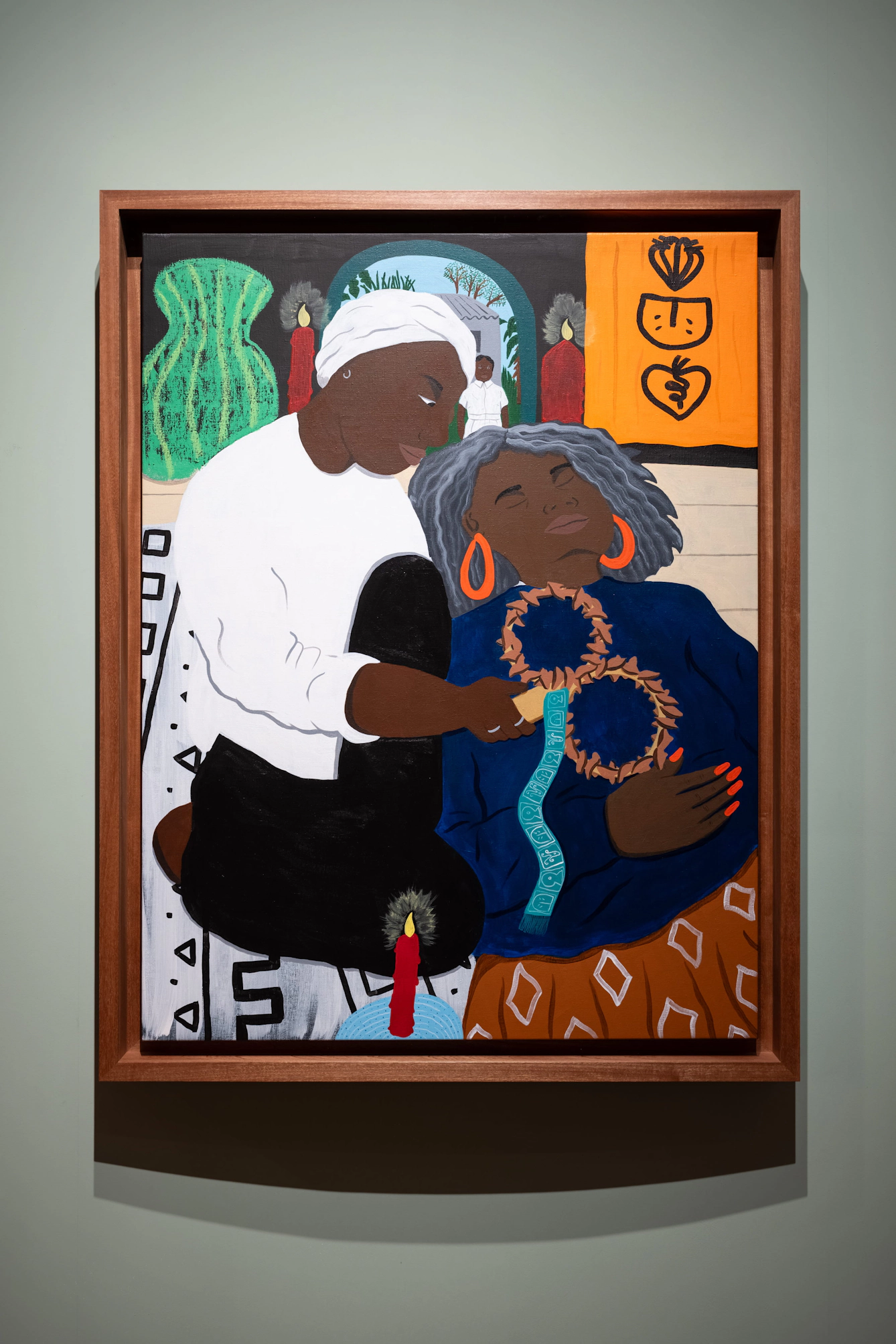
‘And Here We Found One Another’, Rudy Loewe, 2025–6, Commissioned by Wellcome Collection. ‘Rudy Loewe: Intimacies of Care – Spaces of Grief and Possibility’ exhibition at Wellcome Collection, Gallery Photo: Benjamin Gilbert. Attribution-NonCommercial 4.0 International (CC BY-NC 4.0).
‘And Here We Found One Another’ by Rudy Loewe
This painting is about healing.
It shows one person helping another person.
It shows a healing ritual. A ritual is a set way of doing something important. A ritual often has strong meaning for the people taking part.
The painting is about healing using family traditions. Family traditions are ways of doing things that are passed down through families.
Artist Rudy Loewe wants us to think about how we can understand what is meaningful to other people.
Accessibility in the exhibition
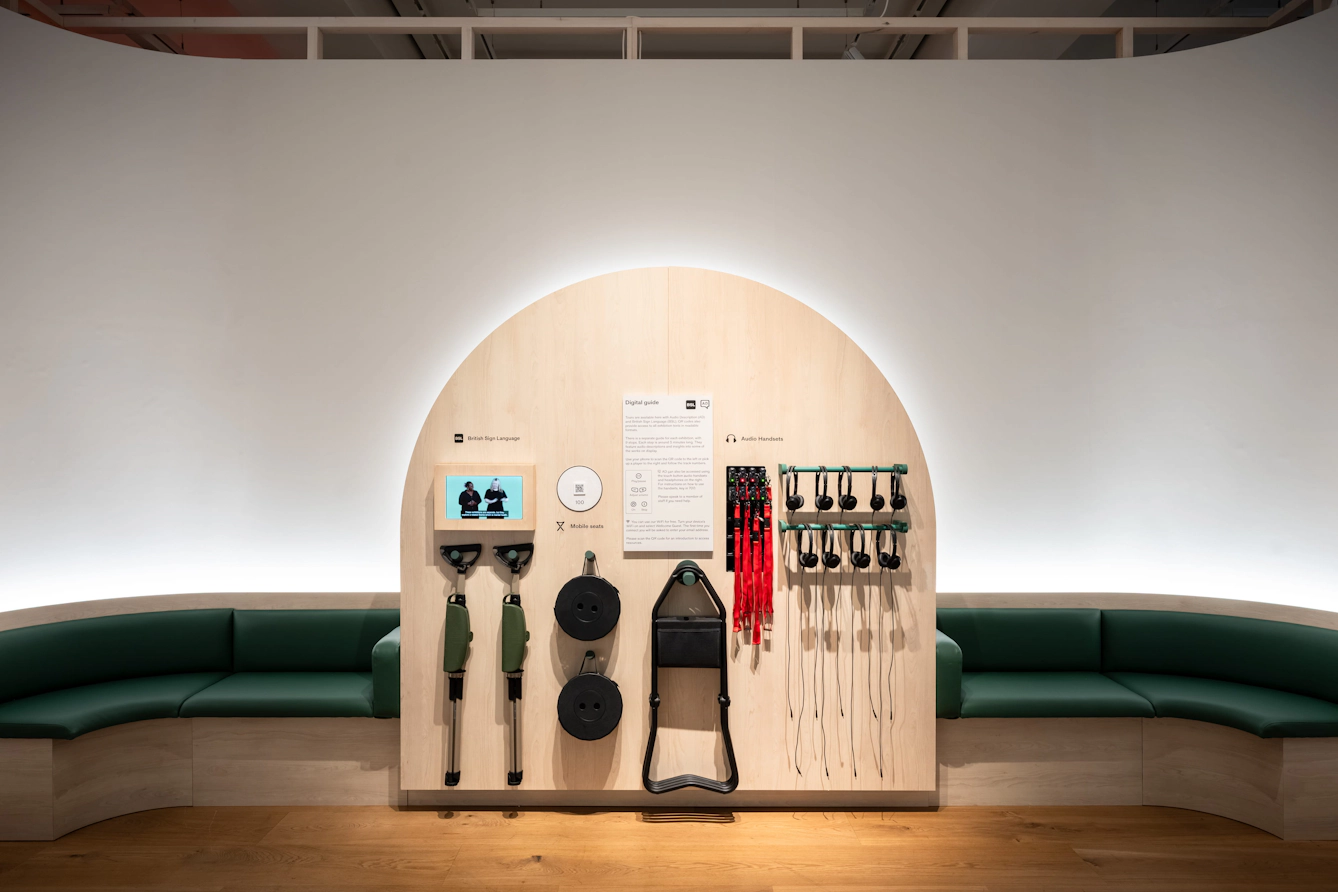
‘Rudy Loewe: Intimacies of Care – Spaces of Grief and Possibility’ exhibition at Wellcome Collection, Gallery Photo: Benjamin Gilbert. © Wellcome Collection. Attribution-NonCommercial 4.0 International (CC BY-NC 4.0).
You can find accessible guides at the start of the exhibition.
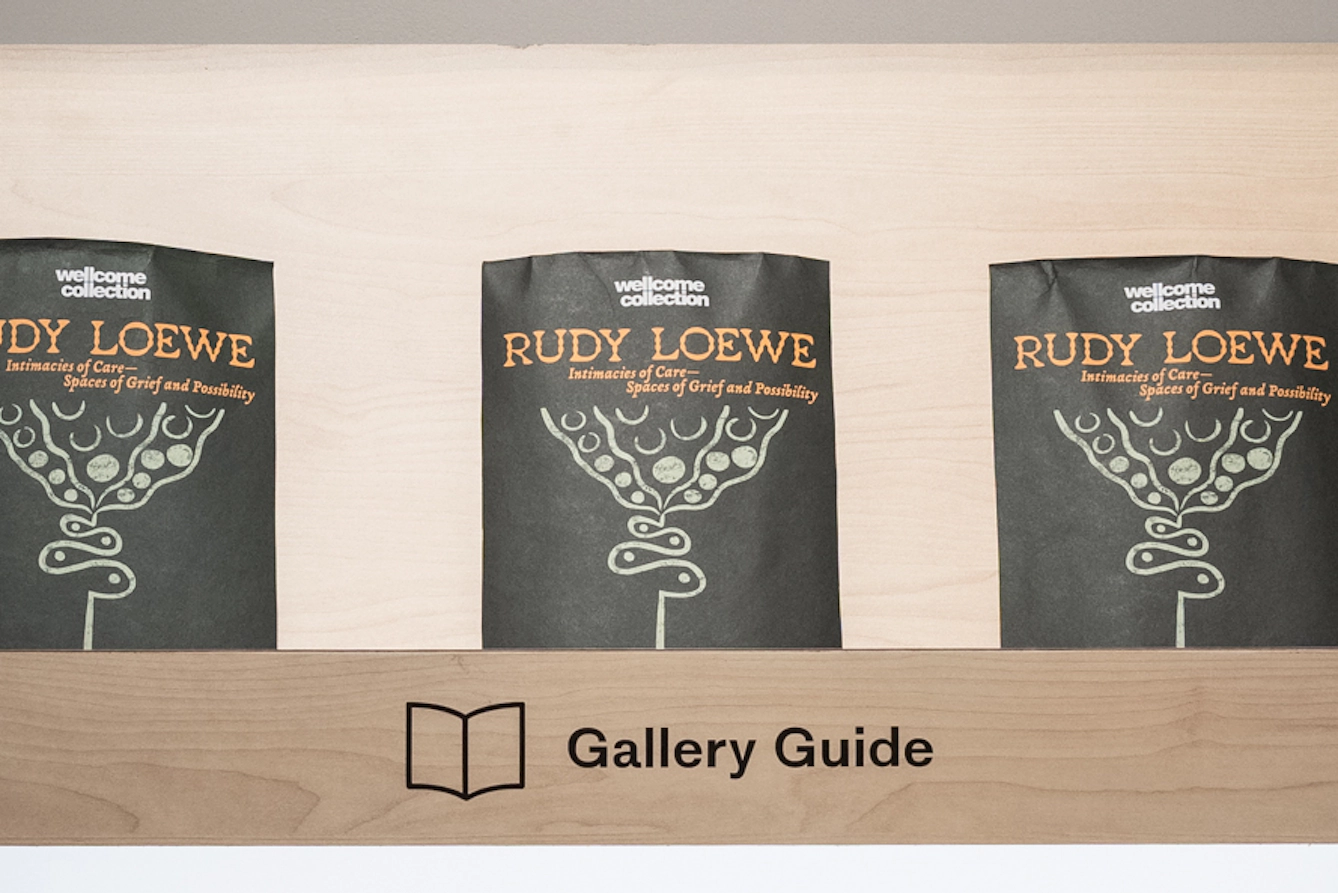
‘Rudy Loewe: Intimacies of Care – Spaces of Grief and Possibility’ exhibition at Wellcome Collection, Gallery Photo: Benjamin Gilbert. © Wellcome Collection. Attribution-NonCommercial 4.0 International (CC BY-NC 4.0).
The guides are:
- a gallery guide with words and pictures
- a large-print guide
- a visual story
- a sensory map. A sensory map shows you where there are things like:
- out-loud sound
- objects to touch
- seating


- digital guides. There are 2 digital guides that you can use:
- an audio-described guide to hear what artworks in the exhibition look like
- a British Sign Language guide of videos for people who use BSL.
The digital guides are on our website.
‘Rudy Loewe: Intimacies of Care – Spaces of Grief and Possibility’ exhibition at Wellcome Collection, Gallery Photo: Benjamin Gilbert. © Wellcome Collection. Attribution-NonCommercial 4.0 International (CC BY-NC 4.0).
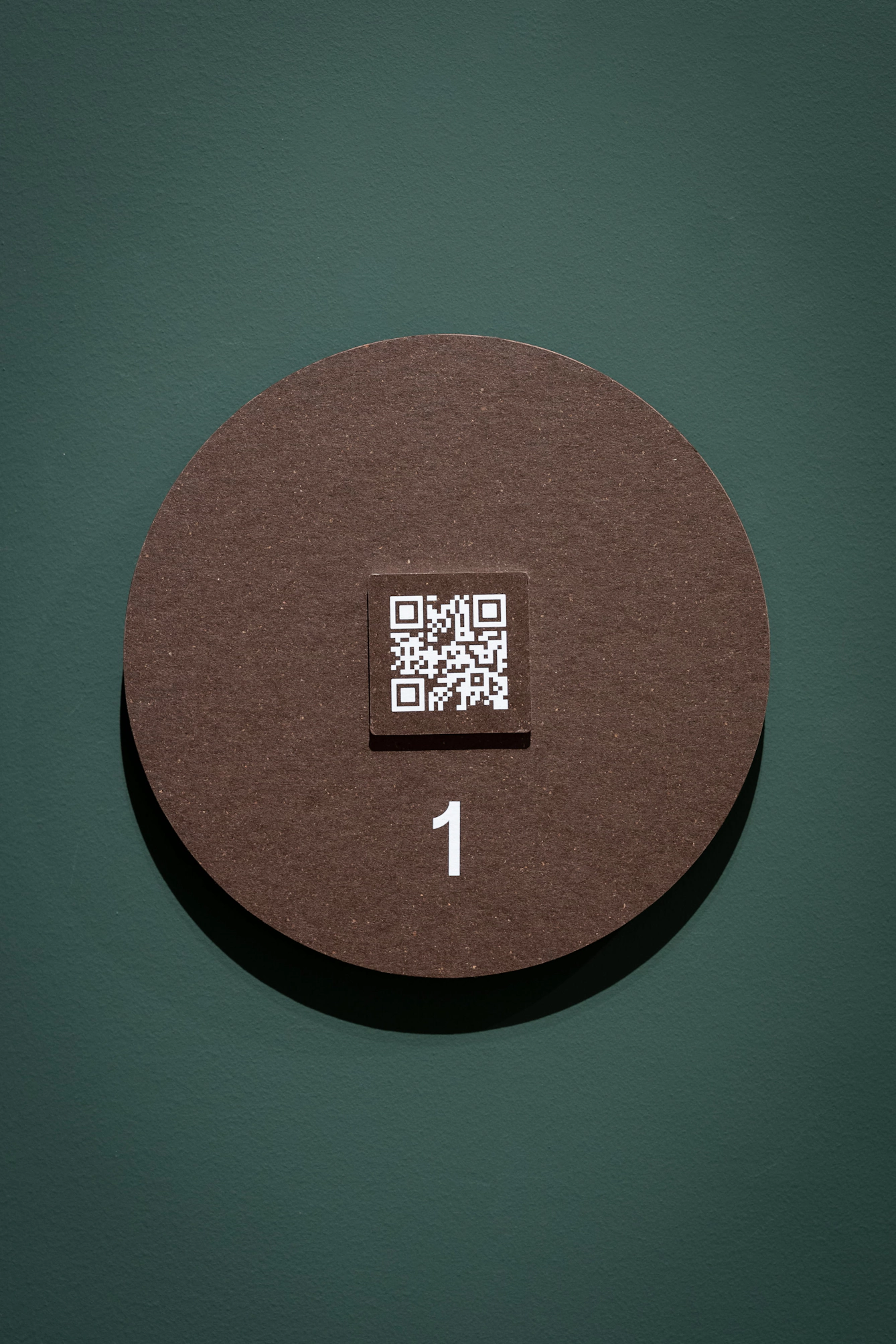
There are 9 stops in the digital guides.
There is a number and a QR code next to each stop in the exhibition. You can scan the QR codes with your phone to get the digital guides.
To scan a QR code:
1) open the camera on your phone
2) point it at the QR code
3) click on the link that appears.
If you do not know how to scan a QR code, we can help you.
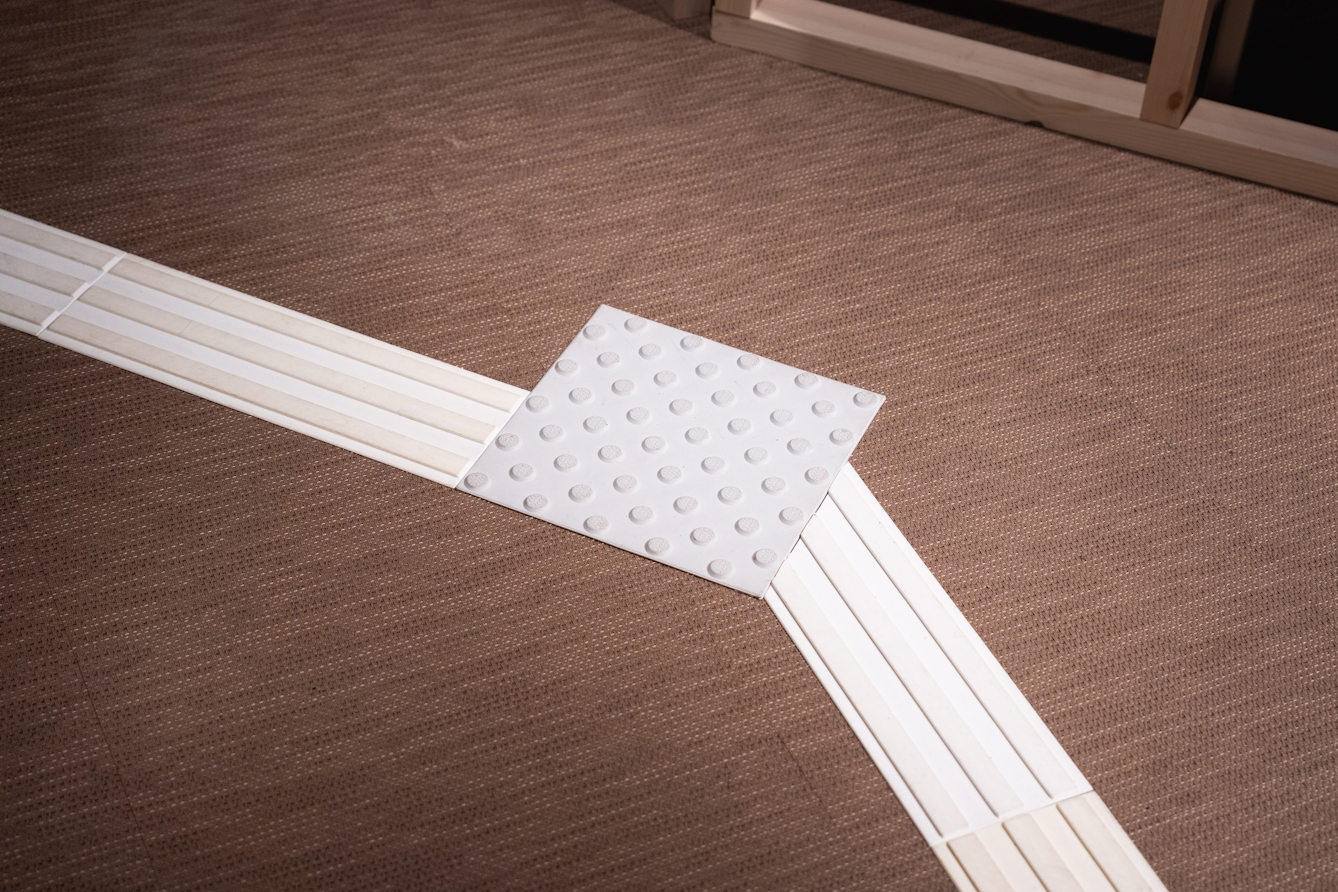
Tactile floor line in Hard Graft Exhibition at Wellcome Collection, Gallery Photo: Steven Pocock, 2024. Attribution-NonCommercial 4.0 International (CC BY-NC 4.0).
There is a white line on the exhibition floor. Follow the white line to get to each stop.
The white line has a pattern that you can feel with your feet.
If you want to watch the BSL guide on your phone or other device, you can:
1) scan the QR code with your phone camera
2) choose ‘Watch British Sign Language videos’.
If you want to listen to the audio-described guide on your phone or other device, you can:
1) scan the QR code with your phone camera
2) choose ‘Listen to audio’.
‘Rudy Loewe: Intimacies of Care – Spaces of Grief and Possibility’ exhibition at Wellcome Collection, Gallery Photo: Benjamin Gilbert. © Wellcome Collection. Attribution-NonCommercial 4.0 International (CC BY-NC 4.0).
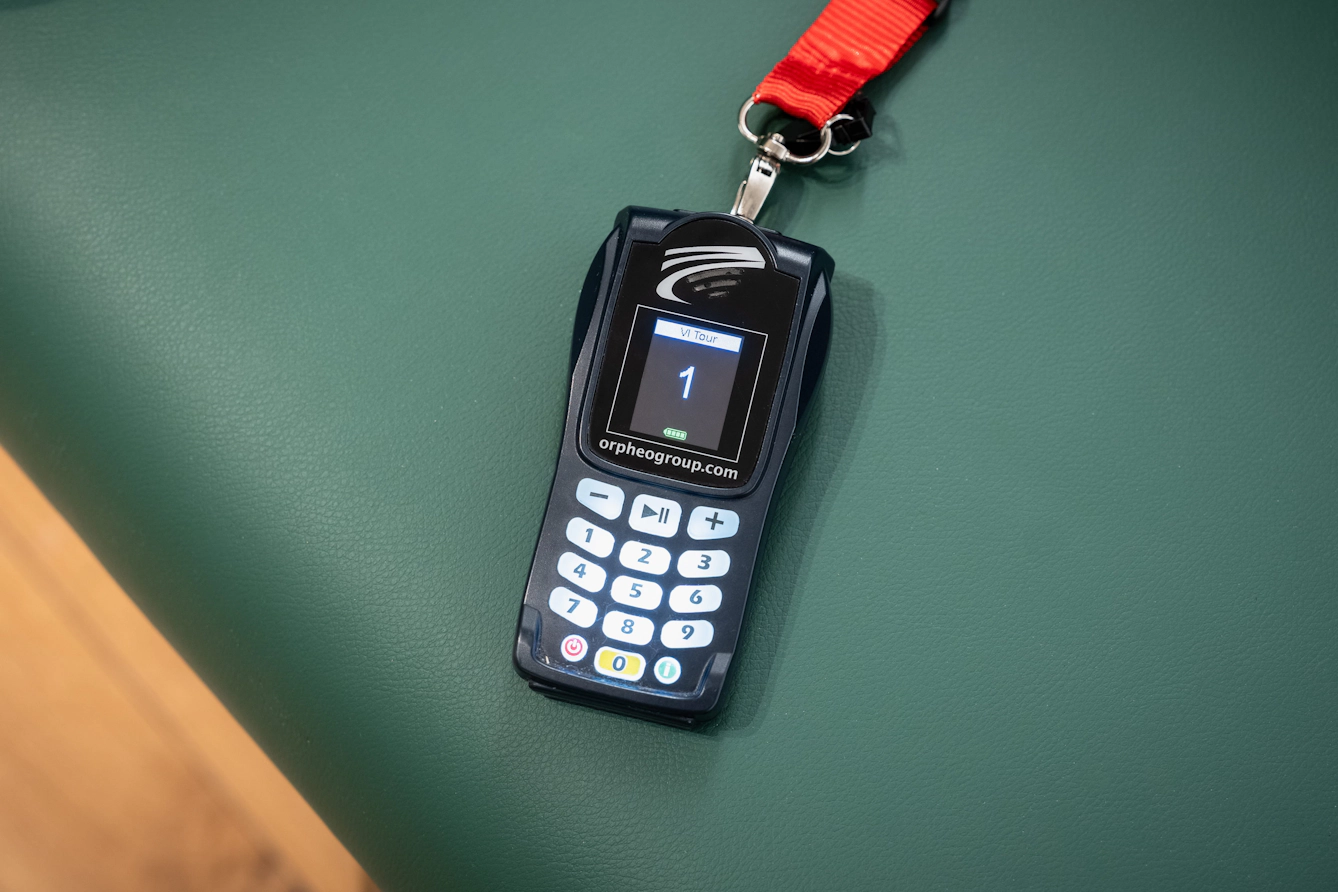
Or you can listen to the audio-described guide by:
1) picking up a touch-button handset in the exhibition
2) pressing the number of the audio stop.
You can also book an audio-described tour. On this tour a member of our team will explain what the things in the exhibition look like. You can look on the website for dates.
If you want an audio-described tour for your visit today, please tell a member of our gallery team.
‘Rudy Loewe: Intimacies of Care – Spaces of Grief and Possibility’ exhibition at Wellcome Collection, Gallery Photo: Benjamin Gilbert. © Wellcome Collection. Attribution-NonCommercial 4.0 International (CC BY-NC 4.0).
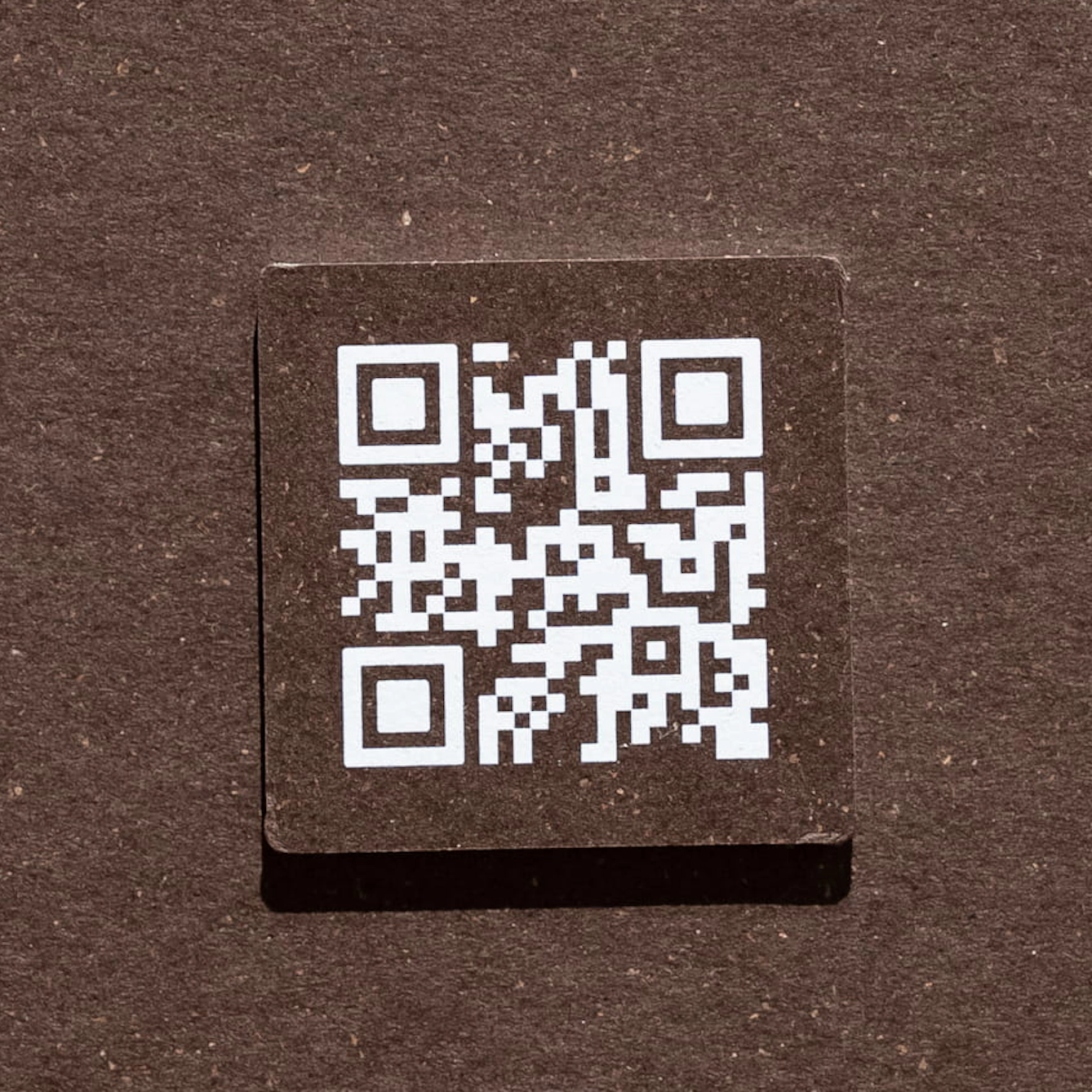
You can get all the information that is on the exhibition labels and panels by scanning the QR code with your phone. The information can be read by a screen reader.
To scan a QR code:
1) open the camera on your phone
2) point it at the QR code
3) click on the link for ‘Read captions and transcripts’.
If you do not know how to scan a QR code, we can help you.

You can use our WiFi for free. To do this, you need to:
1) turn your phone’s WiFi on
2) choose Wellcome WiFi
3) tick a box to accept our terms and conditions
4) choose ‘Connect’.
Visitor Experience Assistants. Source: Wellcome Collection. Attribution-NonCommercial 4.0 International (CC BY-NC 4.0).
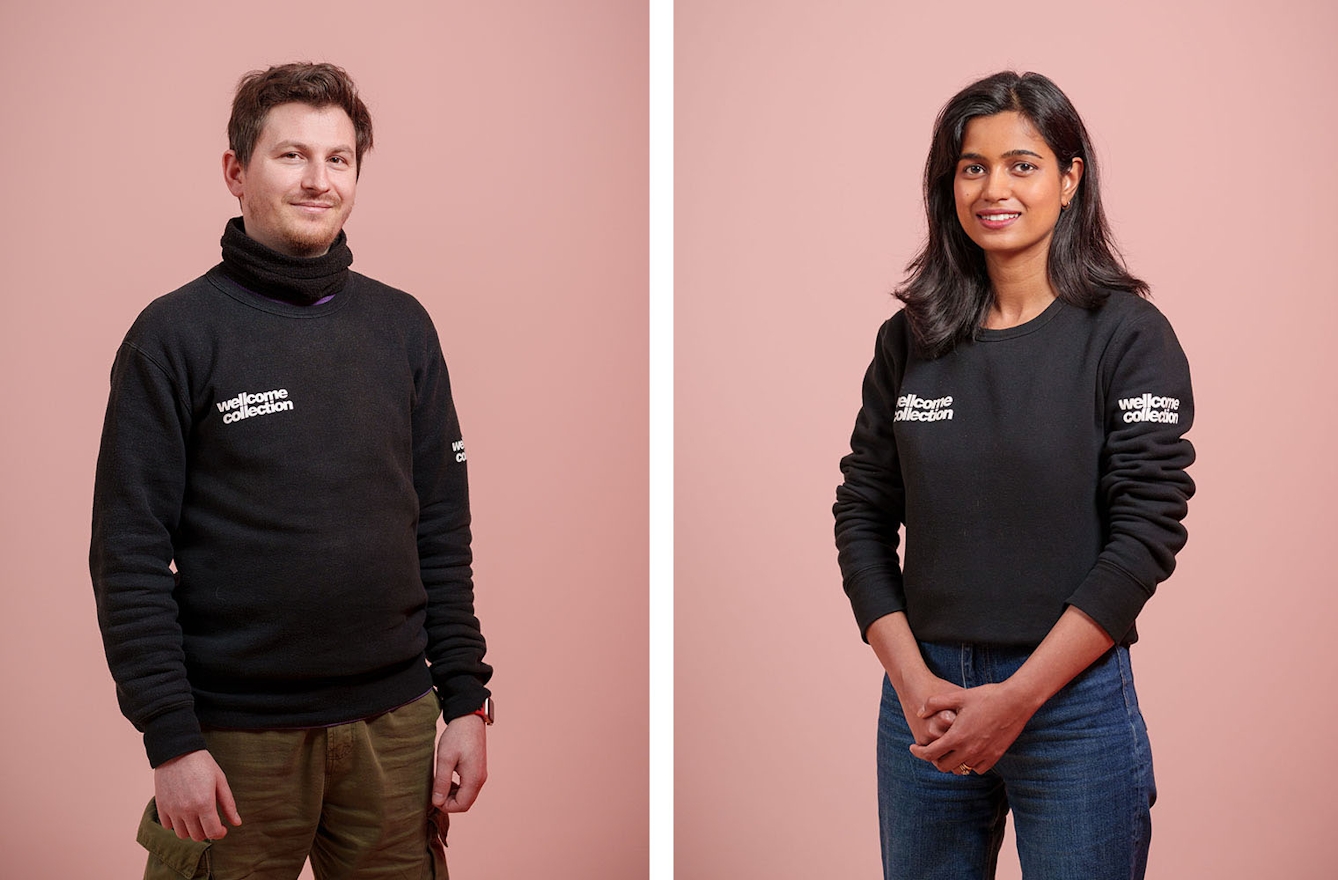
If you need help with anything, you can ask a member of our gallery team.
Relaxed Openings
‘Rudy Loewe: Intimacies of Care – Spaces of Grief and Possibility’ exhibition at Wellcome Collection, Gallery Photo: Benjamin Gilbert. © Wellcome Collection. Attribution-NonCommercial 4.0 International (CC BY-NC 4.0).
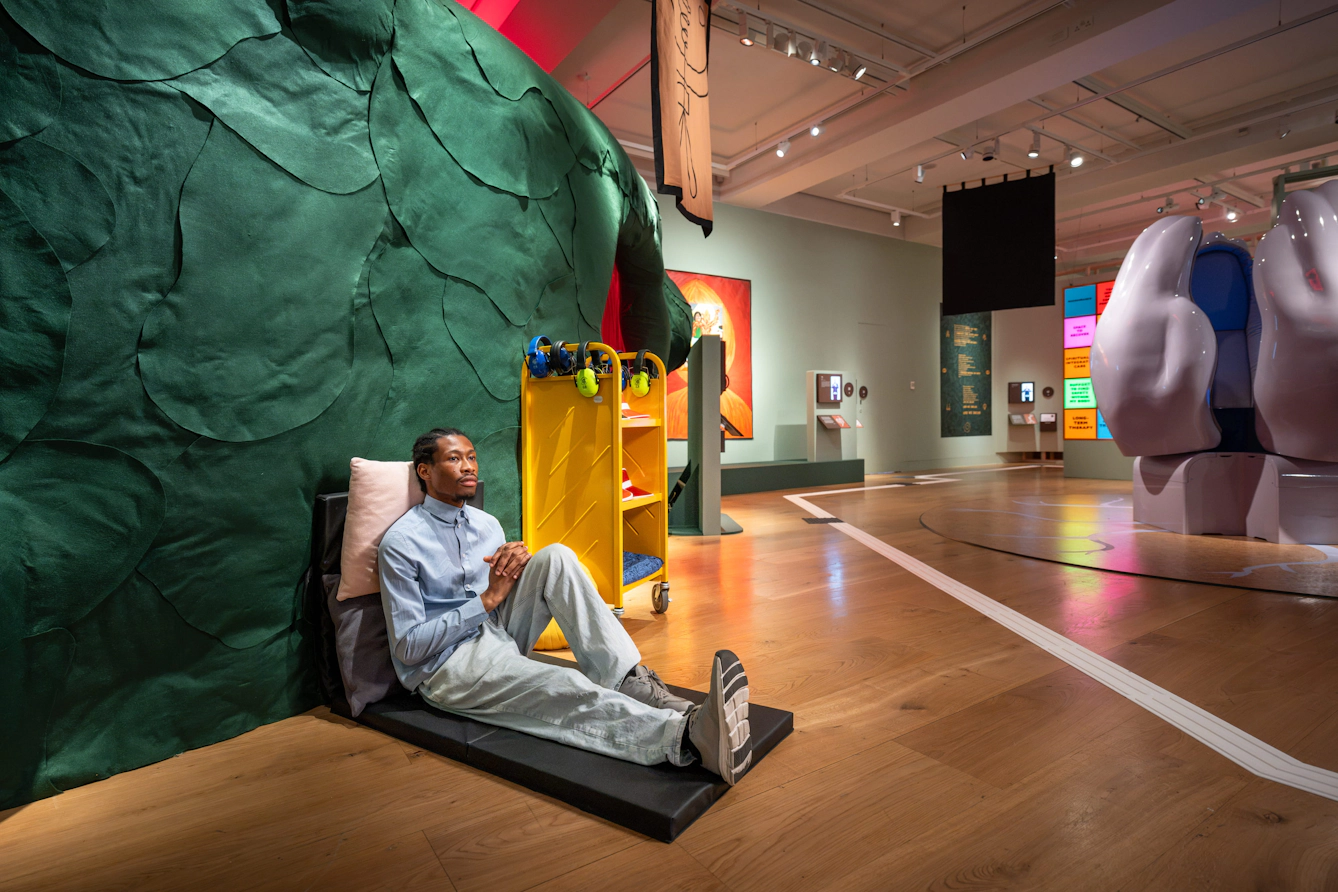
If you need additional support to enjoy this exhibition, join us for a Relaxed Opening. At a Relaxed Opening there will be:
- fewer visitors
- extra gallery staff to help you.
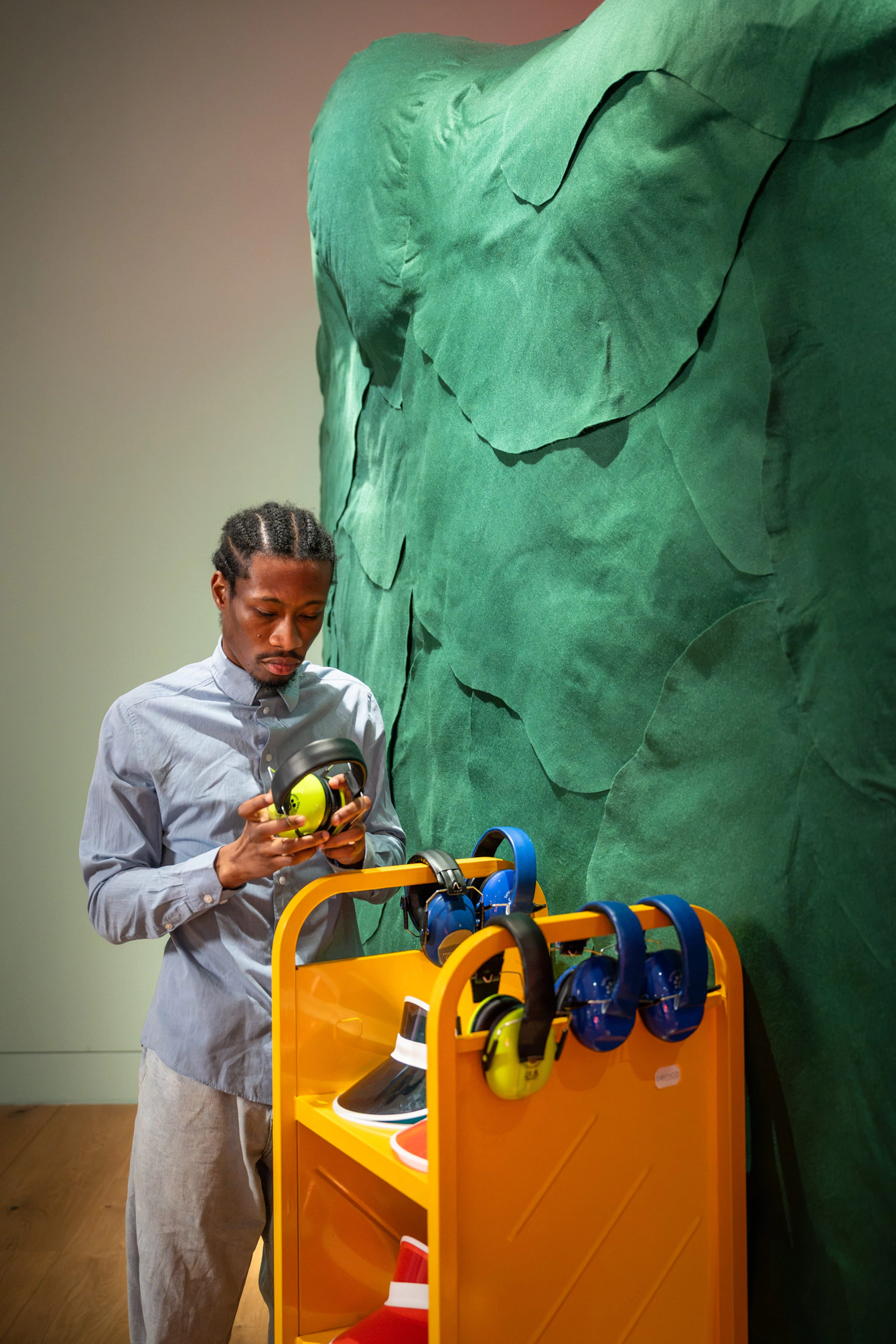
‘Rudy Loewe: Intimacies of Care – Spaces of Grief and Possibility’ exhibition at Wellcome Collection, Gallery Photo: Benjamin Gilbert. © Wellcome Collection. Attribution-NonCommercial 4.0 International (CC BY-NC 4.0).
At a relaxed opening you can use our:
- cushions
- ear defenders
- tinted glasses
- tinted visors
- weighted lap pads.
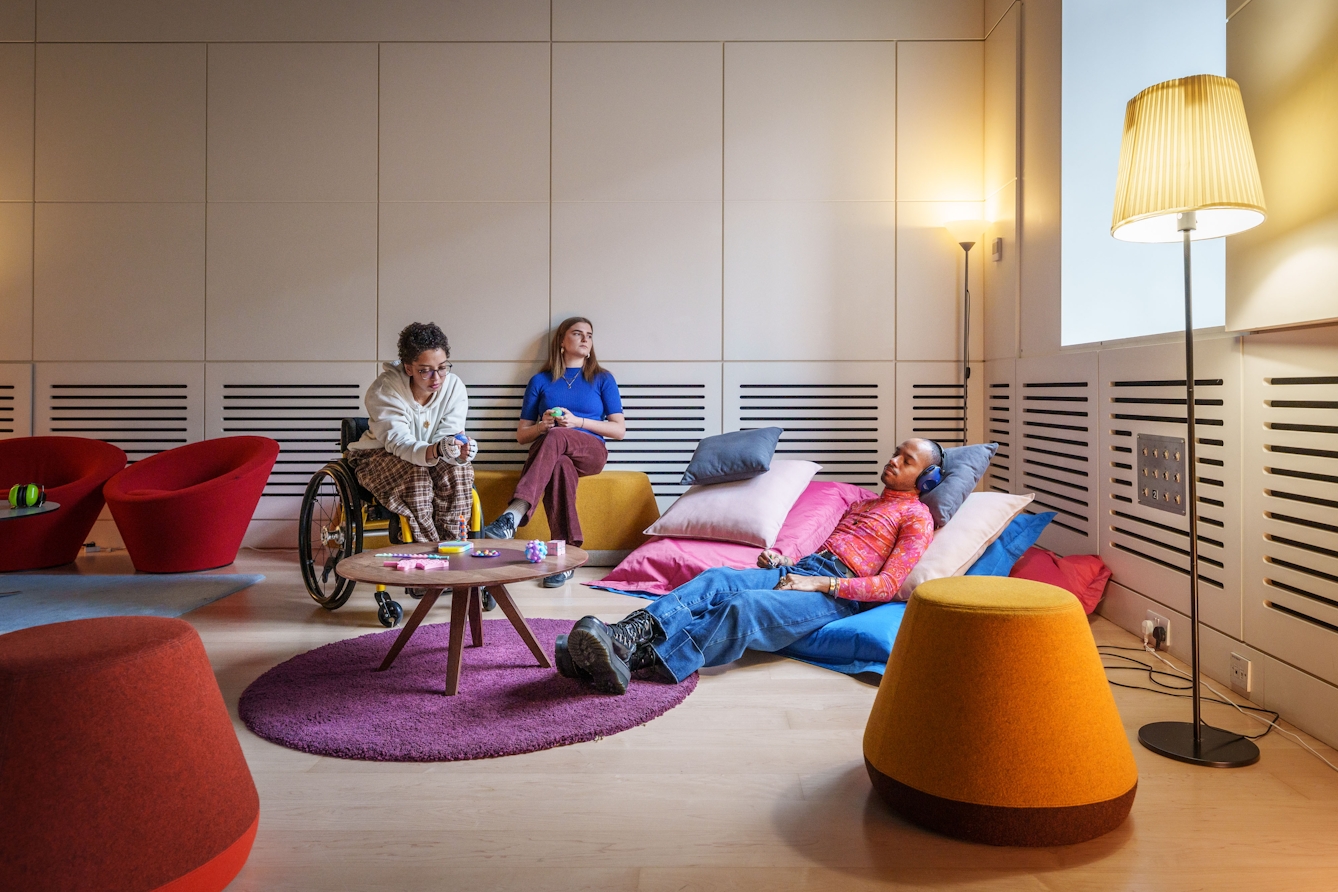
Chill-Out Room at Wellcome Collection. Source: Wellcome Collection. © Wellcome Collection.
At a relaxed opening there will be a chill-out room. The chill-out room has:
- low lighting
- soft seats
- sensory and fidget toys.

Relaxed openings are free.
You need to book a ticket.
You can book your ticket on our website. You will be able to find them on our events page.